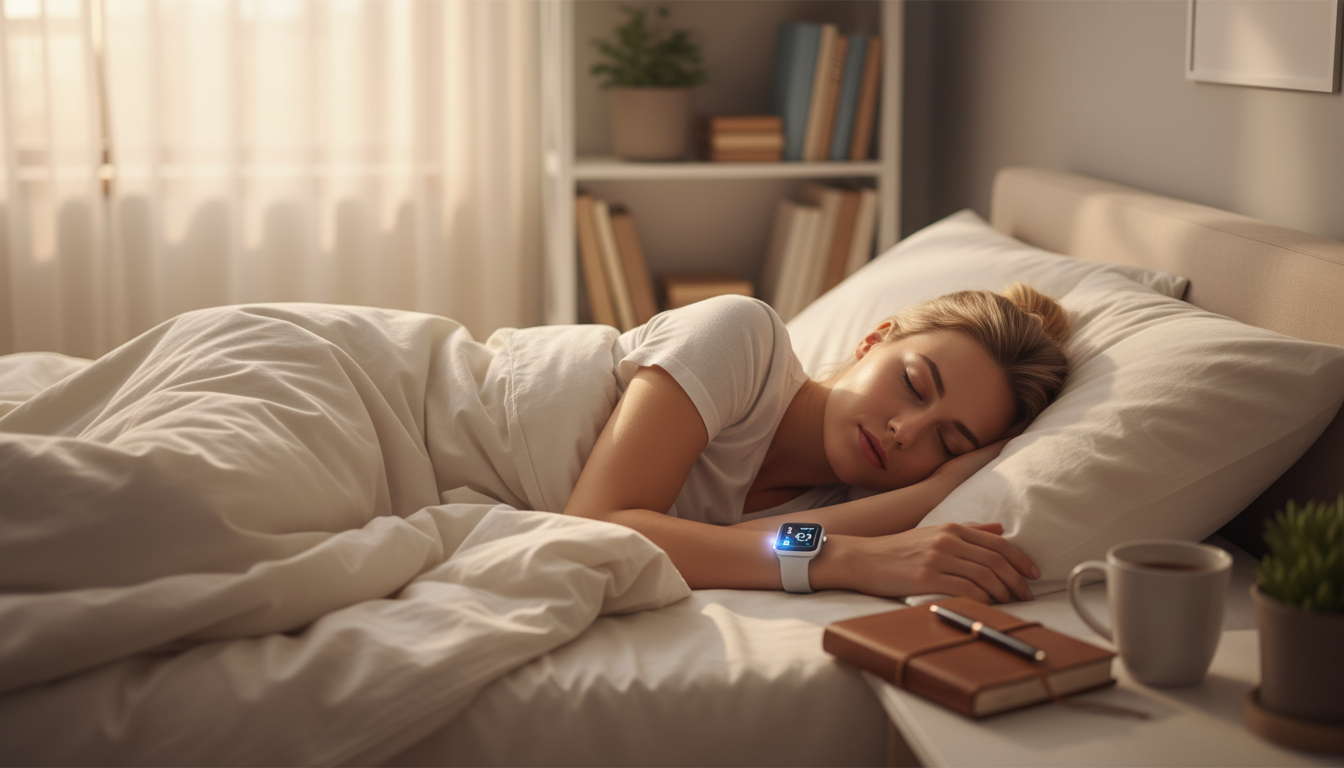
Wearables can turn everyday signals—heart rate trends, sleep stages, and recovery scores—into habits that actually help you feel calmer and sleep deeper. The key is using the data as a compass, not a scoreboard. With a few simple setup steps and a low-friction routine, your device can highlight patterns (like late caffeine, training load, or a too-warm room) so you can make small changes and watch the trend move in the right direction.
Most wearables estimate stress and sleep using a mix of signals: heart rate (HR), resting HR, heart rate variability (HRV), respiration rate, skin temperature trends, sleep duration, sleep timing, awakenings, and movement. Used well, these metrics help you spot your personal “inputs” (work stress, alcohol, late meals) and “outputs” (restlessness, elevated resting HR, lower HRV).
Trends matter far more than any single night. Travel, illness, alcohol, late dinners, and hard training can temporarily skew readings—sometimes dramatically. Also, remember the limits: sleep staging is an estimate, algorithms differ by brand, and “stress” is usually inferred from physiology rather than directly measured. The sweet spot is pattern-finding: test one small change, then see whether your 7-day averages improve.
| Metric | What it may reflect | A practical next step |
|---|---|---|
| HRV trend | Recovery balance and autonomic stress load | Reduce intensity for 24–48 hours; add an earlier wind-down and hydration check |
| Resting heart rate | Illness, fatigue, alcohol, overtraining, poor sleep | Prioritize sleep opportunity; keep caffeine earlier; choose light activity |
| Sleep duration and timing | Sleep opportunity and circadian alignment | Fix wake time first; then shift bedtime in 15–30 minute steps |
| Awakenings / restlessness | Environment, late eating/drinking, stress carryover | Adjust room temperature, reduce late fluids, add a 10-minute pre-bed decompression routine |
| Respiration rate | Training load, congestion, illness, anxiety | Add nasal breathing practice; check allergies/illness; reduce late intense exercise |
| Skin temperature trend | Illness, menstrual cycle shifts, overheating | Optimize bedding and room temp; consider earlier shower; monitor for illness patterns |
Before adjusting your routine, make sure the device is collecting clean, consistent data. Wear it on the same wrist, with a snug (not constricting) fit and stable placement. If your wearable supports sleep detection, confirm the sleep window is catching late nights and naps correctly.
Turn on key features only if they improve adherence. For some people, constant alerts increase stress rather than reduce it. Next, establish a baseline: give yourself 7–14 days of “normal life” before making big changes. During that baseline, log major confounders like alcohol, illness, travel, late meals, and heavy training.
A simple tagging system makes insights much easier to interpret. Common tags that pay off: “late caffeine,” “late meal,” “work stress,” “workout intensity,” and “screen late.”
The most sustainable tracking systems are short and repeatable. Try this daily loop for two weeks:
If you want the highest return on effort, start with the basics that most consistently move wearable trends:
For evidence-based sleep basics and sleep hygiene guidance, refer to the CDC’s sleep resources and the National Sleep Foundation’s sleep hygiene guide.
Mastering Stress and Sleep with Wearables – Practical Ebook Guide focuses on turning HRV, resting HR, and sleep trends into simple actions you can stick with.
For extra support on the “downshift” side—especially after stressful days—consider pairing your tracking routine with guided relaxation practices from Yoga Techniques for Full Relaxation and Recovery: 4-in-1 Digital Download Bundle.
Usually 1–2 weeks is enough to establish a baseline. Noticeable improvements often show up within 1–3 weeks when you change one habit at a time and review trends weekly.
Use HRV as a trend-based signal alongside sleep duration, resting heart rate, soreness, and mood. Avoid making a big decision from a single low reading unless other signs also point to poor recovery.
Sleep staging and scoring are estimates and can be imperfect. Prioritize consistent wake time, total sleep, and daytime functioning, and use the wearable mainly to spot patterns over time.





Leave a comment