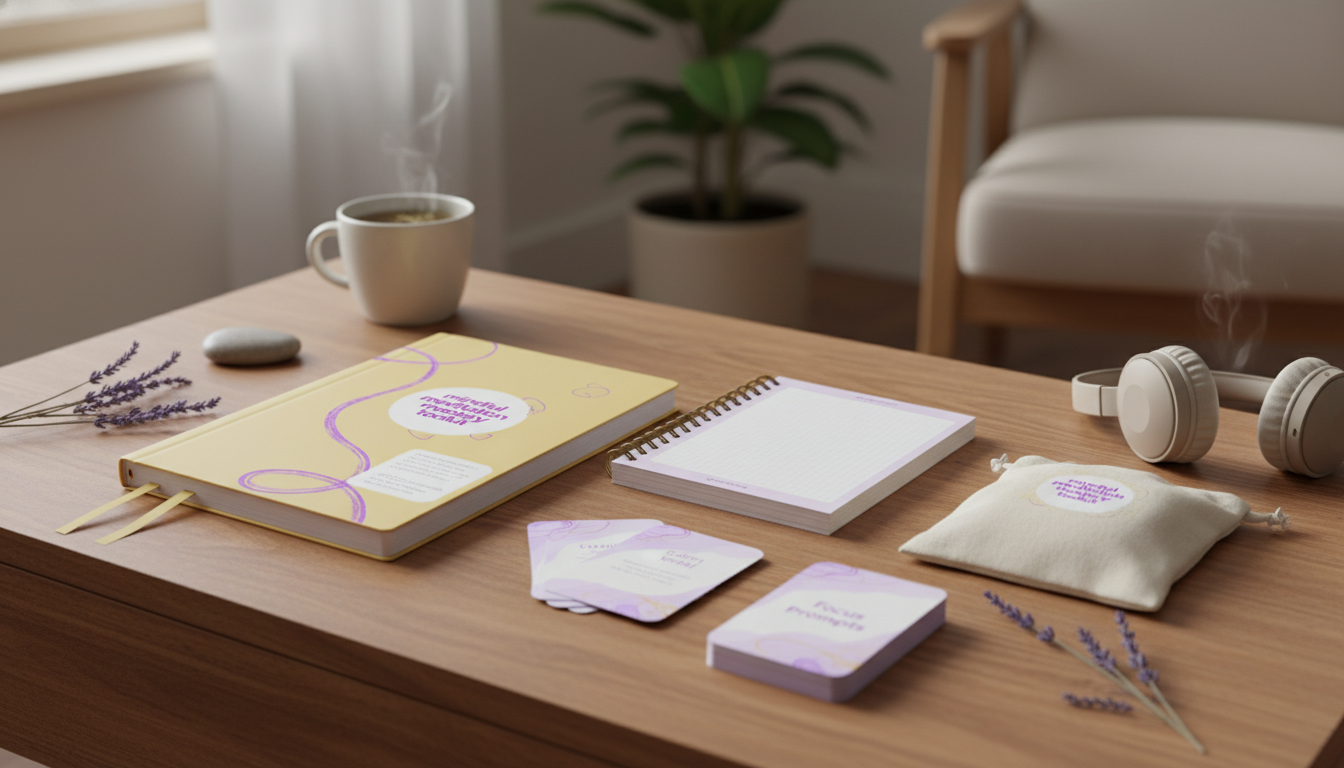
When attention feels scattered and days blur into constant notifications, a structured mindfulness practice can help bring the mind back to what matters. The Mindful Meditation Mastery Toolkit – 4-in-1 Digital Bundle for Clarity, Focus & Productivity is designed to make meditation easier to start, simpler to sustain, and practical to apply to clarity, focus, and everyday productivity. Instead of relying on occasional inspiration, it supports repeatable routines you can use when you’re busy, stressed, or mentally overloaded.
The Mindful Meditation Mastery Toolkit is a digital 4-in-1 mindfulness bundle built around consistency and application. It’s designed for real modern challenges: mental clutter, inconsistent focus, stress-driven procrastination, and decision fatigue. Because it’s digital, it’s quick to access on your phone, tablet, or computer—so fitting in a short session before work, between tasks, or after a meeting becomes much more realistic.
It can work well for beginners who want structure, and for experienced meditators who want a tighter routine with more accountability. The goal is not to “empty your mind,” but to practice returning—again and again—to something steady (like the breath), so you recover faster when distraction hits.
This bundle tends to fit people who want calm without losing momentum. Busy professionals and students often use mindfulness to steady attention before deep work. Creatives and entrepreneurs use it to reduce stress and keep ideation clearer, without spiraling into overthinking. It can also be a helpful, skills-based approach for managing everyday stress without medication.
It may not be a match for someone expecting instant results without daily practice. And while mindfulness can support mental health, it’s not a replacement for clinical care—if you’re dealing with severe anxiety, depression, or trauma symptoms, professional support may be needed alongside any self-guided routine.
| Situation | What to Try with the Toolkit | Best Session Length |
|---|---|---|
| Morning brain fog | A short grounding practice before checking messages | 5–10 minutes |
| Midday distraction loop | A reset practice between tasks to reduce context switching | 3–7 minutes |
| Stress before a meeting | Breath-led calming practice to steady speech and attention | 2–5 minutes |
| Evening mental replay | Wind-down practice to reduce rumination before sleep | 7–15 minutes |
Mindfulness is practical because it trains a skill you use all day: noticing what’s happening in your mind and choosing what to do next. That skill connects directly to clarity, focus, and productivity.
Consistency matters more than intensity. Short daily sessions often outperform occasional long sessions because they build a dependable baseline. Progress is often felt first as quicker recovery from distraction—not as never getting distracted at all.
For research-backed context on mindfulness and stress reduction, see the American Psychological Association overview and the NCCIH review of effectiveness and safety.
A structured week helps turn “I should meditate” into a routine you actually keep. Use the toolkit as your guidance, but keep the plan minimal enough to sustain.
If you want additional beginner-friendly guidance on building a simple mindfulness habit, the NHS guide to getting started with mindfulness offers helpful fundamentals.
| Item | Details |
|---|---|
| Title | Mindful Meditation Mastery Toolkit – 4-in-1 Digital Bundle for Clarity, Focus & Productivity |
| Price | 284.16 USD |
| Availability | In stock |
| Type | Digital bundle |
| Use cases | Clarity, focus, stress regulation, productivity support |
If you’re ready to build a consistent routine, you can find it here: Mindful Meditation Mastery Toolkit – 4-in-1 Digital Bundle for Clarity, Focus & Productivity.
Consider: Yoga Techniques for Full Relaxation and Recovery: 4-in-1 Digital Download Bundle. Pairing mindfulness with restorative routines can reduce overall stress load and make daily consistency easier over time.
Many people notice small changes—like less stress reactivity and faster attention recovery—within 1–2 weeks of near-daily short sessions. Deeper shifts typically take longer and depend more on consistency than on perfect sessions.
Yes. Beginners can start with short sessions, use a simple anchor like the breath, and follow a structured plan so practice feels clear rather than overwhelming. Starting with a minimal daily routine tends to work best.
Mindfulness supports better task choice and calmer transitions, which can improve follow-through without adding more pressure. Brief resets between work blocks and a short wind-down practice are often enough to feel a difference.







Leave a comment