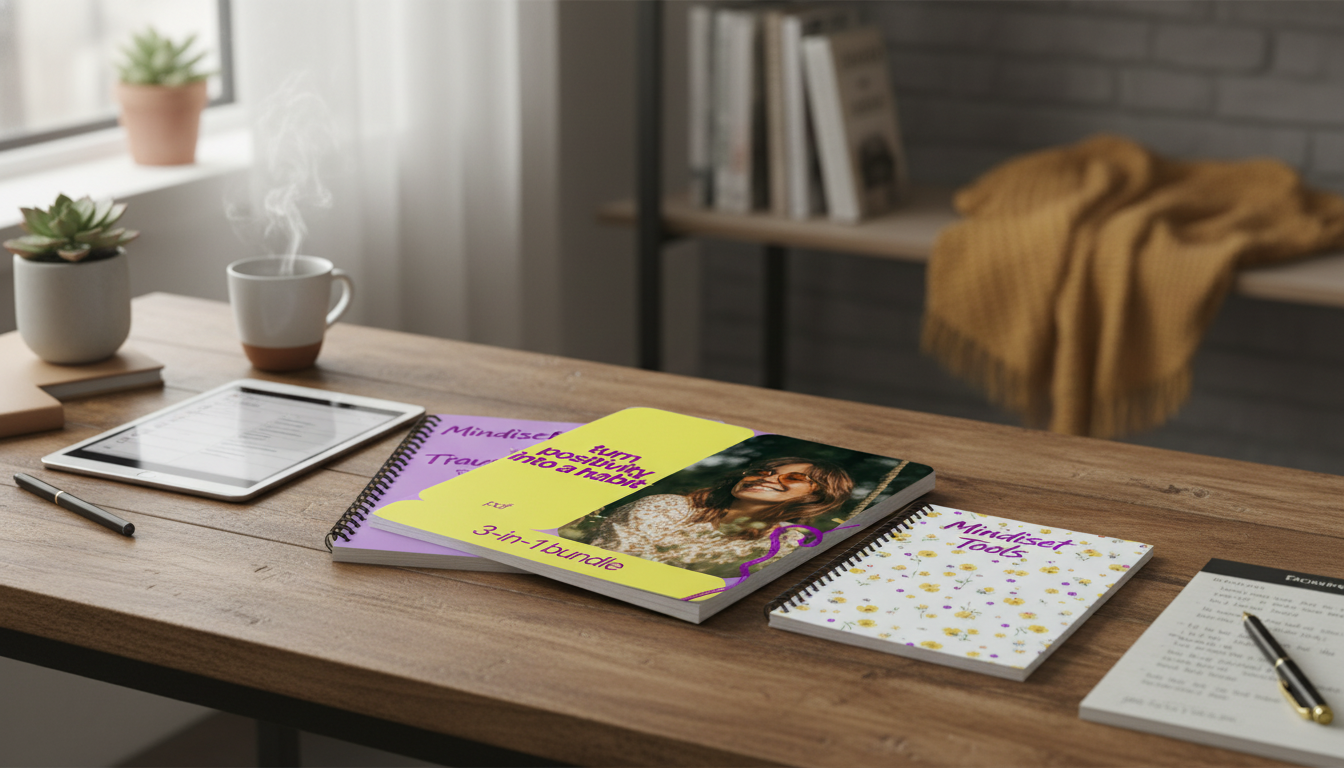
Positive thinking is easier to admire than to practice consistently—especially when stress, notifications, and packed schedules pull attention in every direction. A simple system helps: short guided reads to reset perspective, practical checklists to turn intention into action, and repeatable mindset tools that make optimism feel automatic rather than forced.
“A positive mindset” holds up best when it’s attached to small, repeatable behaviors—quick reflection, gentle reframing, gratitude, and kinder self-talk. When those steps are already decided, the mind doesn’t have to negotiate its way into them every time life gets busy.
Habits also cut decision fatigue. Instead of asking, “How should I handle this?” in the middle of an emotional moment, a preset routine makes the next move obvious: read a short prompt, run a tiny checklist, apply one tool, continue the day.
Most importantly, a realistic positivity practice leaves room for hard days. The goal isn’t constant cheerfulness; it’s building a slightly higher baseline over time—more calm recovery, fewer spirals, and quicker returns to what matters.
Modern stressors can quietly sabotage even the best intentions:
That’s why a positivity plan works best when it’s short, structured, and easy to restart.
This method is designed for real life—fast, repeatable, and flexible.
Guided reads are short, structured prompts that help name what’s happening and choose a more helpful perspective. They act like a reset button: not a pep talk, but a quick shift from overwhelm to clarity.
Checklists translate mindset into behavior. Instead of “be positive,” the checklist gives tiny actions you can complete even when energy is low: a morning reset, a mid-day recalibration, or a quick evening review.
Mindset tools are reusable frameworks for reframing thoughts, strengthening self-compassion, and staying consistent. They’re built for in-the-moment use, when you need support fast.
Best results come from stacking: read → check → apply one tool in real time.
| Time of day | 2–5 minute action | Purpose | Example prompt |
|---|---|---|---|
| Morning | Guided read + 1 intention | Set tone before inputs | “What matters most today?” |
| Mid-day | Checklist reset | Interrupt stress spiral | “What is one controllable next step?” |
| Evening | Mindset tool + quick reflection | Reinforce learning and self-trust | “What went right, even slightly?” |
| Weekly | Review wins + adjust triggers | Make the habit easier next week | “What derailed me, and what will I change?” |
Small wins matter. Research on gratitude and mindfulness practices also suggests that repeated attention training—done consistently—can support well-being over time (see APA’s overview on gratitude and well-being: https://www.apa.org/topics/positivity/gratitude; and Harvard Health’s discussion of giving thanks: https://www.health.harvard.edu/healthbeat/giving-thanks-can-make-you-happier).
Pairing these tools with simple mindfulness can make them easier to access under pressure. For an evidence-based overview of mindfulness, visit the NIH’s resource: https://www.nccih.nih.gov/health/meditation-and-mindfulness-effectiveness-and-safety.
Turn Positivity Into a Habit – 3 in 1 Digital Bundle | How to Make Positive Thinking a Habit with Guided Reads, Checklists & Mindset Tools is built for repeat use—so the routine stays simple even when life isn’t.
When positivity feels hard because the body is tense, a physical reset can make mental tools easier to use. Yoga Techniques for Full Relaxation and Recovery: 4-in-1 Digital Download Bundle pairs well with a mindset routine by supporting relaxation and recovery—especially on weeks when stress shows up as tight shoulders, restless sleep, or a constantly “on” nervous system.
Timelines vary, but consistency matters more than speed. Start with 2–5 minutes daily and make the routine easy enough to repeat; momentum builds when the habit is simple and reliable.
Yes—when it’s used as reframing rather than denial. The goal is to acknowledge what’s hard while choosing the most helpful next perspective and action, along with self-compassion when things don’t go perfectly.
Use a minimum version: one prompt or one checklist item that takes under two minutes. If you miss a day, use a quick repair plan (restart at the next cue) to avoid the all-or-nothing drop-off.







Leave a comment