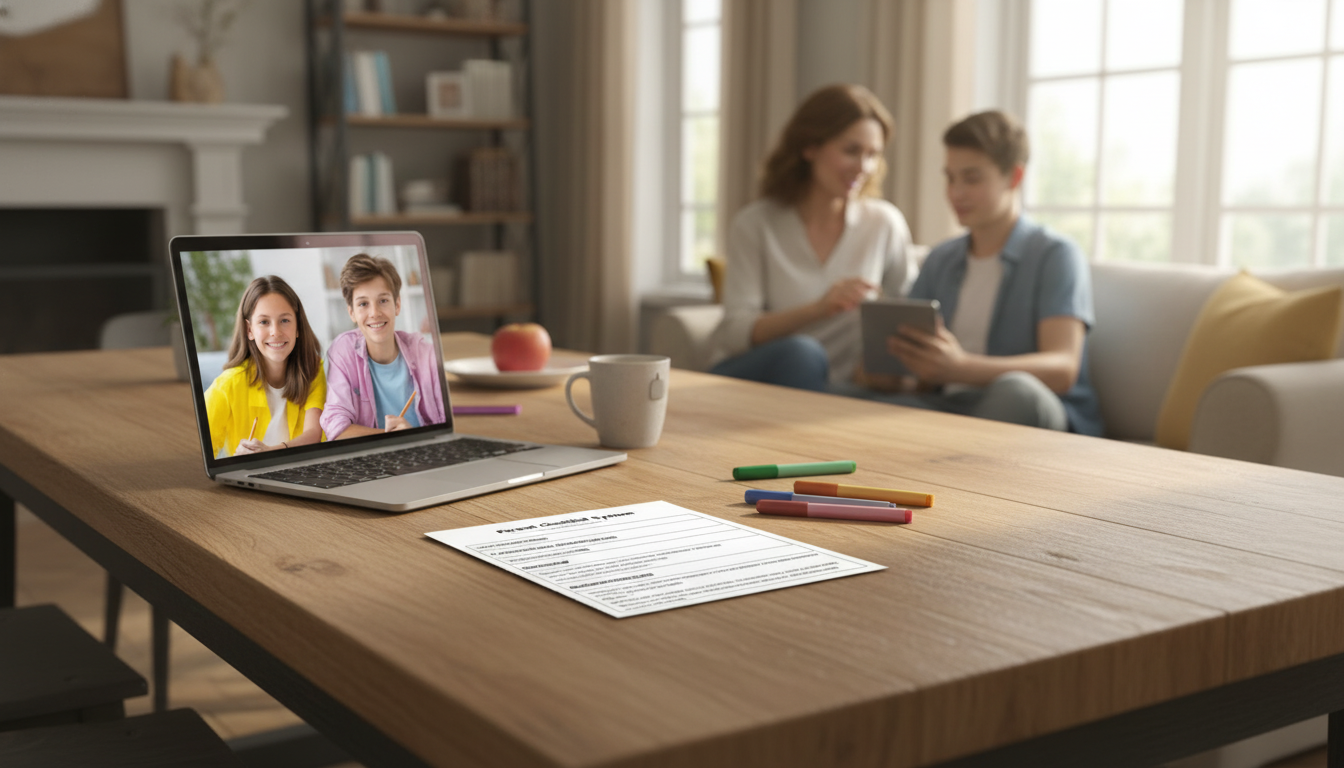
A teen’s grades and confidence usually improve fastest when home routines, school expectations, and mindset supports all work together. The most helpful approach is a simple “checklist system”: small, repeatable actions that reduce nightly friction, make progress visible, and keep parents supportive without hovering. Below is a practical structure you can use for the next few weeks—then repeat, refine, and keep moving forward.
When school starts feeling tense, the fastest win is narrowing the focus. Instead of trying to “fix everything,” choose a short window—two to four weeks—so your teen can feel momentum quickly.
| Step | Prompt | Time |
|---|---|---|
| 1 | Wins: What went well this week? | 2 min |
| 2 | Reality check: What didn’t work and why? | 3 min |
| 3 | Plan: Which assignments/tests need a plan first? | 3 min |
| 4 | Support: What help is actually wanted (not assumed)? | 2 min |
Consistency beats intensity. A smaller routine done four nights a week usually outperforms a long, stressful marathon that only happens when everyone is panicking.
If your teen needs a starting point for effective learning techniques, Harvard’s study guidance is a solid reference: Harvard College – Study Strategies.
The goal is to reduce “startup friction.” When the space is ready, the routine feels easier—and easier routines get repeated.
Motivation is often a byproduct of progress. When teens see wins stack up—checkmarks, streaks, fewer missing assignments—confidence follows.
When stress is running high, practical coping tools can help the whole household stay calmer. The American Psychological Association has parent- and teen-relevant resources here: APA – Stress resources.
Mindset support isn’t about “positive thinking.” It’s about giving teens repeatable scripts and routines when pressure spikes.
Sleep is a major performance multiplier for memory, attention, and mood. If your teen is consistently short on rest, use the CDC’s guidance as a baseline for what’s age-appropriate: CDC – Sleep information.
If you want a ready-made system you can reuse all semester, consider Printable checklist to boost your teen’s academic success. For teens who carry a lot of test pressure, pairing an academic routine with relaxation skills can also help—some families keep a short wind-down option handy, like Yoga Techniques for Full Relaxation and Recovery: 4-in-1 Digital Download Bundle.
Focus on structure over control: set a short weekly check-in, help plan the week, and agree on one or two non-negotiable routines (like a start time and phone parking). Then let your teen choose task order and study methods within that structure.
Active recall (self-quizzing) and practice testing work well, especially in short timed blocks with breaks. Add spaced review across the week and an assignment pipeline that includes scheduling and submission confirmation.
Most teens need about 8–10 hours per night. Protecting sleep supports memory, attention, mood, and stress tolerance, and it usually outperforms late-night cramming.







Leave a comment