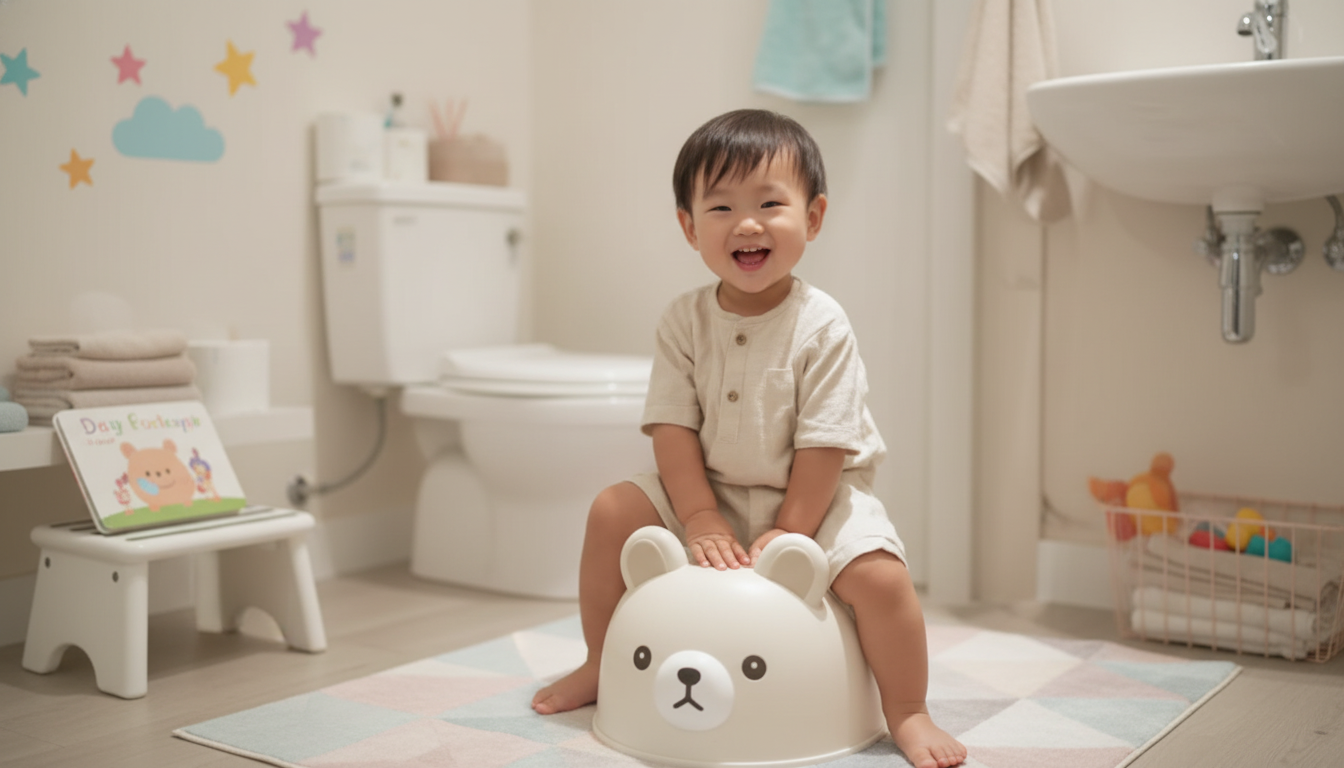
Potty training tends to go more smoothly when it starts at the right time—when a toddler’s body, routines, and communication skills can support the change. Readiness looks different for every child, but there are clear signals that help parents decide whether to begin now, wait a bit, or prepare with low-pressure practice. Use the sections below to spot the most reliable signs, avoid common false starts, and follow a simple plan that keeps confidence high for both parent and child.
Potty training readiness is a blend of three things: physical control (your child can stay dry longer), developmental skills (your child can follow simple steps), and emotional comfort (your child is willing to try). Age alone isn’t a reliable trigger—many toddlers show readiness sometime between 18 months and 3+ years, but the signs matter more than the birthday.
It also helps to separate daytime readiness from nighttime readiness. Staying dry overnight is largely developmental and often comes later; it may take months (or longer) after daytime training begins. For most families, a practical starting point is “more ready than not”: several strong signals showing up consistently for at least 1–2 weeks.
When multiple signs show up together, the process usually feels less like a battle and more like a new routine.
If you’d like an easy way to track these patterns across days, a structured checklist can reduce second-guessing. The Potty training readiness printable guide and toddler checklist is designed for quick daily check-ins and caregiver consistency.
Instead of making a one-time “start date” decision, use a short daily check-in. Patterns are more useful than one great day. Aim for a balanced picture: at least one sign each from (1) physical control, (2) communication/understanding, and (3) cooperation with steps. If two or more pause signs show up repeatedly, consider waiting and revisiting in a few weeks.
| Readiness signal | What it can mean | How to test gently |
|---|---|---|
| Dry for 2+ hours | Bladder capacity is increasing | Offer the potty at natural transitions (wake-up, before bath) and note success without pressure |
| Predictable poop schedule | Easier timing for sit attempts | Try a brief sit around the usual time with a book or song |
| Tells you before/after peeing or pooping | Growing body awareness | Use simple phrases (“Pee goes in the potty”) and see if your child can repeat or point |
| Pulls pants up/down with help | More independence with clothing | Practice “push/pull” with loose pants during playtime |
| Curious about toilet/underwear | Motivation is building | Let your child choose a potty seat or look at underwear together |
| Cooperates with routines | Can tolerate the steps | Practice: walk to bathroom → sit 10–20 seconds → wipe (pretend) → wash hands |
| Fearful, resistant, major life change happening | Possible “pause sign” | Focus on comfort and routine stability first; revisit readiness after things settle |
This approach keeps the tone calm and routine-based, so the potty becomes “normal” rather than a test your child can fail.
If you want to keep morale up with simple, low-effort distractions during bathroom routines (especially for siblings who are waiting), a small set of family-friendly activities can help. Some parents rotate quick games from Creative Games and Challenges for Thanksgiving as “bathroom-time boredom busters” (the format works beyond the holiday).
For parents feeling stretched, even short recovery routines can make it easier to stay calm and consistent. If relaxation support is helpful, Yoga Techniques for Full Relaxation and Recovery: 4-in-1 Digital Download Bundle can fit into nap time or after bedtime.
For medical and developmental guidance, consult reputable references like American Academy of Pediatrics (HealthyChildren.org) and the Mayo Clinic.
Readiness signs matter more than age. Many children show readiness between about 18 months and 3+ years, and daytime readiness often comes earlier than nighttime dryness.
Keep practice sits brief—about 10–30 seconds at first, building up to a couple of minutes if your child stays comfortable. Avoid forcing or extended sitting, which can create resistance.
Pull-ups can be useful for sleep, travel, or childcare transitions, but consistency helps. Set clear rules for when underwear is worn versus when pull-ups are used so your child understands the difference.






Leave a comment