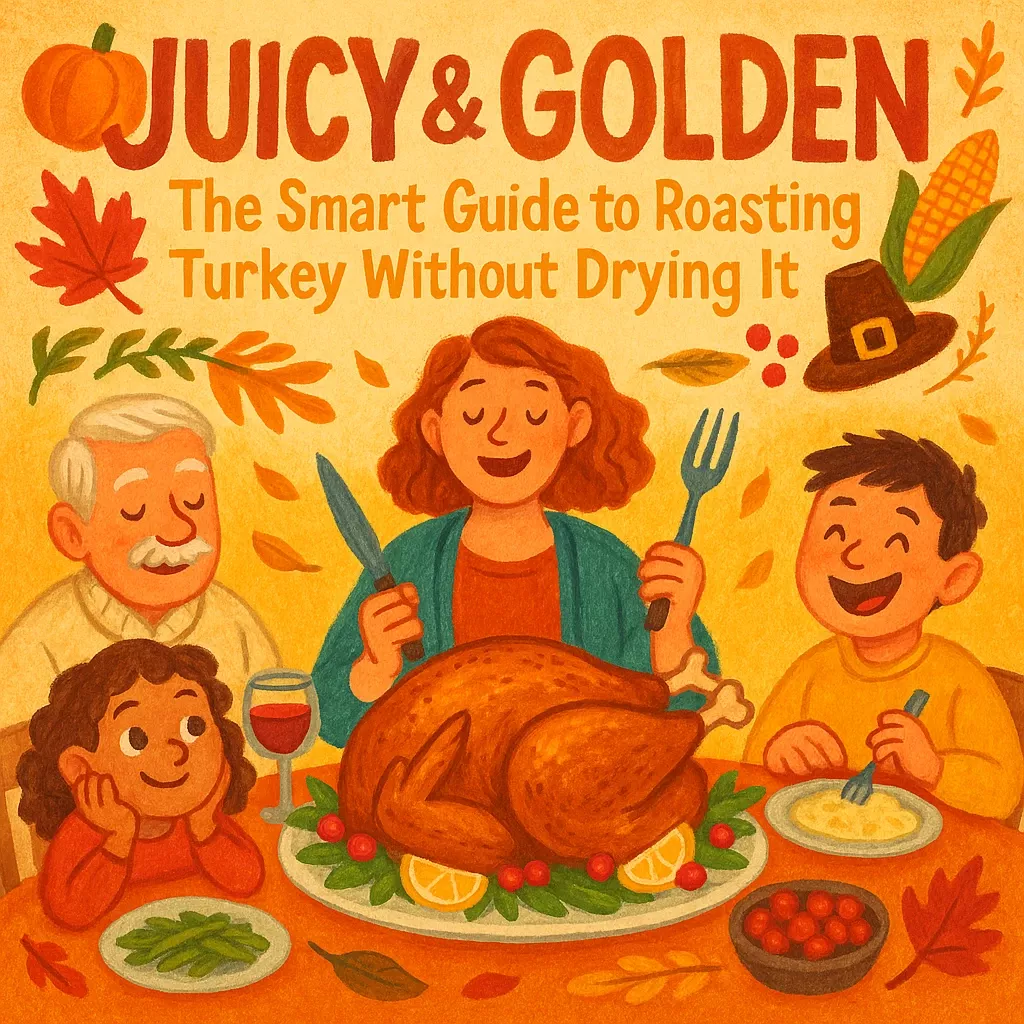
A turkey can be deeply flavorful and still stay moist—without complicated equipment or last-minute panic. The key is managing temperature, timing, and moisture so the breast doesn’t overcook while the dark meat finishes properly. With a few calm steps (and a thermometer), you can get crisp skin, juicy slices, and dependable results for Thanksgiving or any roast dinner.
Dry turkey usually isn’t about “bad luck”—it’s physics and timing. The breast (white meat) reaches its ideal temperature sooner than thighs and drumsticks, so cooking the whole bird “until the legs are done” often pushes the breast past juicy and into chalky. High, constant oven heat can also tighten muscle fibers fast and squeeze out moisture, especially in the breast.
Another common culprit is skipping the rest. If you carve immediately, hot juices rush out onto the cutting board and the slices seem drier than they actually are. Finally, salt timing matters: salting ahead (a dry brine) helps the meat hold onto moisture and seasons it all the way through instead of only on the surface.
Start with a fully thawed turkey. A partially frozen center cooks unevenly and forces longer oven time, which increases the odds of drying out the breast. For food-safety guidance on thawing and storage, refer to the FDA’s refrigerator and freezer storage recommendations (FDA: Refrigerator and Freezer Storage).
Dry brine 24–48 hours for the best payoff. Salt the turkey all over (and a little inside the cavity), then refrigerate uncovered. That uncovered chill helps the skin dry out for better browning while the salt works into the meat for juicier texture.
Keep the cavity loose. Aromatics are fine, but don’t pack them in tightly—blocking airflow slows heat flow and can extend cook time. Use a rack in a sturdy roasting pan so hot air can circulate and the bottom doesn’t steam. For add-ons, keep it simple: a thin layer of butter or oil on the skin plus herbs is plenty. Temperature control matters more than constant basting.
A reliable approach is a two-stage roast: start hotter to set the skin and encourage browning, then reduce the oven temperature to finish gently. This helps you get golden skin without racing the breast past its sweet spot.
Watch the color: if the breast browns faster than the legs, tent the breast with foil while leaving the legs exposed. Most ovens have hot spots, so rotate the pan once if needed—just avoid repeated turning that tears skin and slows roasting.
Most importantly, aim for doneness by temperature, not time. Oven behavior, turkey size, and starting temperature vary. If you have them, use two thermometers: a leave-in probe in the breast and an instant-read to confirm the thigh and drumstick.
| Part of turkey | Pull-from-oven temperature | After-rest temperature | Texture goal |
|---|---|---|---|
| Breast (thickest part, not touching bone) | 160–162°F (71–72°C) | 165°F (74°C) | Juicy slices, not chalky |
| Thigh (deepest part) | 170–175°F (77–79°C) | 175–180°F (79–82°C) | Tender, fully rendered |
| Drumstick | 175°F (79°C) | 175–180°F (79–82°C) | Meat releases from bone easily |
For additional whole-poultry cooking guidance, see the USDA’s recommendations (USDA FSIS: Cooking Whole Poultry).
Dry brining is the foundation. It improves seasoning and helps the meat retain water during roasting. For the skin, apply a thin, even coat of butter or oil so browning happens more uniformly. Slipping butter under the skin can help the breast, but it’s not required if your temperatures are on target.
Skip frequent basting. Every time the oven door opens, heat drops and roasting slows—meaning the breast stays in the “overcooking zone” longer. Instead, create stable conditions and use your thermometer to guide decisions.
If you want a repeatable, step-by-step flow you can keep open while you cook, Juicy & Golden: The Smart Guide to Roasting Turkey Without Drying It (Digital eBook) lays out a structured approach for moisture, browning, timing, and temperature checks—built for the pace of a real holiday kitchen.
And once the bird is resting (or after dinner), keep the gathering lively with Creative Games and Challenges for Thanksgiving, a simple way to add fun for families, friends, or virtual get-togethers.
For additional turkey handling and safety basics, the USDA’s overview is a helpful reference (USDA FSIS: Turkey—From Farm to Table).
Pull the breast at about 160–162°F in the thickest part (not touching bone) so it rises to 165°F during the rest. Pull thighs around 170–175°F so they finish closer to 175–180°F after resting.
No—frequent basting usually isn’t needed and it can slow roasting by dropping the oven temperature. Dry brining, controlled heat, and a proper rest do more for moisture than repeatedly opening the oven door.
Rest 20–40 minutes, loosely tented with foil; larger birds benefit from the longer end of that range. Resting lets carryover heat finish cooking gently and helps juices redistribute for juicier slices.





Leave a comment