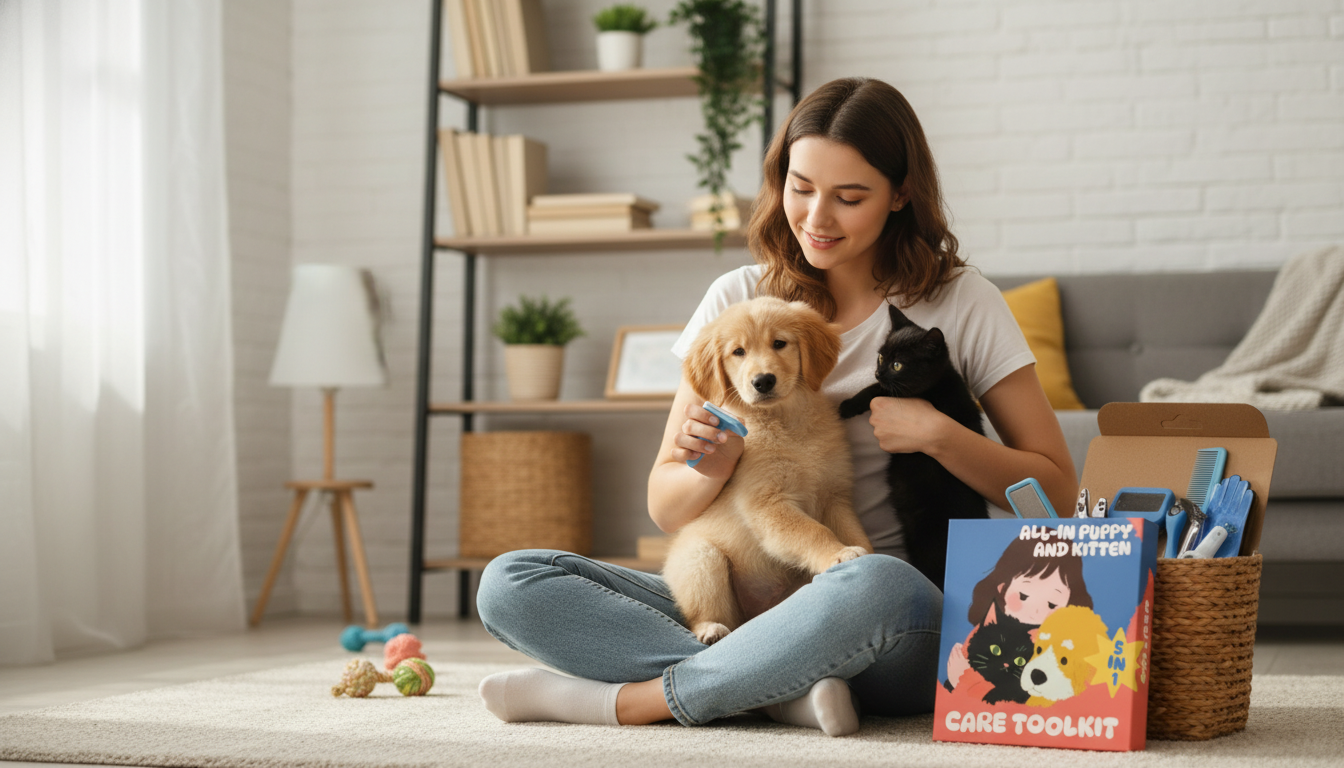
Early pet parenthood moves fast: feeding schedules, grooming, training basics, and health check routines often overlap in the first weeks. A bundled toolkit can reduce guesswork by grouping core care activities into one organized system, helping new puppies and kittens settle in with consistent, low-stress routines.
The All-In Puppy and Kitten Care Toolkit – 5-in-1 Bundle for Pet Parents is built around that idea: fewer scattered supplies, more repeatable habits. Instead of trying to remember what to do next (and where you put everything), the goal is to make daily care feel automatic—especially during those first 30 days.
It’s also helpful for households where multiple people share responsibilities. When everyone follows the same checklist-style rhythm, pets get fewer mixed signals—and care tasks are less likely to get skipped on hectic mornings.
Consistency matters because puppies and kittens learn patterns quickly—both good and bad. A steady routine can support calmer settling, smoother crate/quiet-time training, and easier transitions between play and rest. For general pet care guidance and baseline wellness tips, reputable resources like the American Veterinary Medical Association (AVMA) and ASPCA Pet Care are useful references to pair with your veterinarian’s advice.
| Routine | How often | What to watch for |
|---|---|---|
| Feeding + water refresh | 2–4× daily (age-dependent) | Steady appetite, comfortable belly, normal stools |
| Short play + calm-down | 2–3× daily | Appropriate bite/zoomie control, ability to settle after play |
| Gentle handling + mini-groom | 3–5× weekly | No yelping/pulling away, improving tolerance over time |
| Home hygiene reset | Daily | Clean litter/puppy area, reduced odors, fewer accidents |
| Body check (eyes/ears/paws/coat) | Weekly | Redness, discharge, parasites, unusual lumps, sore spots |
This kind of schedule isn’t about being strict; it’s about being predictable. Predictability lowers stress for many pets, which can make everything else—handling, training, and hygiene—much easier to maintain.
A simple way to pace it: pick one “daily non-negotiable” (feeding and water refresh), one “daily reset” (hygiene/cleanup), and one “practice skill” (gentle handling). When those three feel normal, add the next layer—like short training games or longer brushing sessions.
For additional “new puppy” and “new kitten” onboarding basics (vaccination planning, safe socialization, and early health priorities), the American Animal Hospital Association (AAHA) pet owner education library is a helpful companion to your vet’s guidance.
If you’re setting up a “new pet routine corner,” some pet parents also like having a parallel household self-care routine to stay consistent during the adjustment period. For example, the Yoga Techniques for Full Relaxation and Recovery: 4-in-1 Digital Download Bundle can be a simple add-on for decompressing after training sessions, while Creative Games and Challenges for Thanksgiving is a handy pick for family gatherings when you want structured activities and fewer chaotic moments around a new puppy or kitten.
Yes—this bundle is designed to support new dog and cat owners with a routine-based approach. Adjust the pace and steps based on age, temperament, and your veterinarian’s guidance.
Start gently from day one with very short sessions (about 1–3 minutes). Focus on positive associations—calm touch, brief tool introduction, and rewards—then build tolerance gradually.
Contact a veterinarian promptly for persistent vomiting or diarrhea, marked lethargy, refusal to eat, signs of dehydration, breathing difficulty, or visible parasites. When in doubt—especially with very young pets—getting professional guidance early is safer than waiting.







Leave a comment