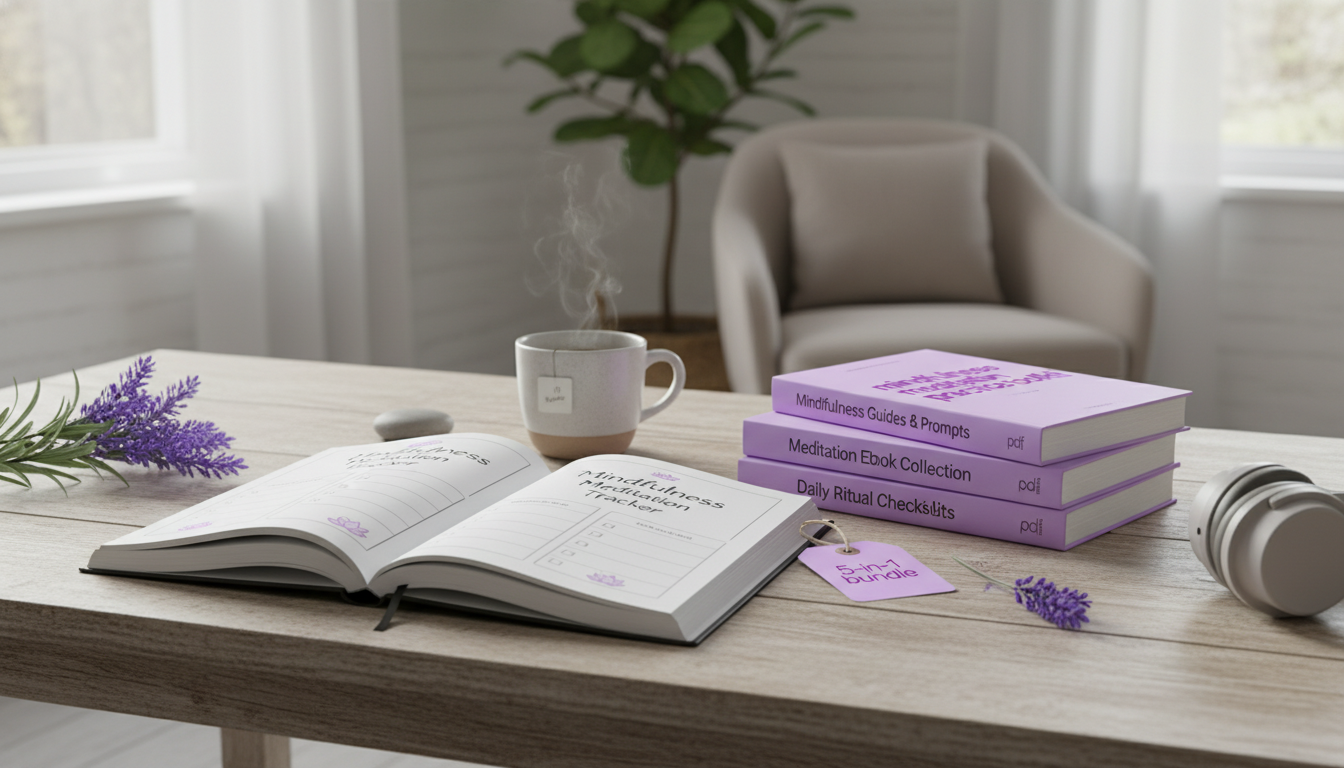
A consistent mindfulness routine is easier to build when the steps are clear, the sessions are simple to follow, and progress is easy to track. This digital toolkit bundles practical guides, eBooks, and checklists designed to help structure daily practice—whether starting from scratch or returning after a break. Instead of relying on motivation alone, the materials focus on repeatable sessions, quick reference prompts, and simple tracking that helps practice become part of everyday life.
Mindfulness is widely studied as a complementary approach for stress and well-being. For background on how meditation is described in clinical and educational settings, see the National Center for Complementary and Integrative Health (NCCIH) overview and the American Psychological Association (APA) summary of mindfulness meditation.
The bundle is built around a “stackable” approach: start small, repeat the same simple session long enough to feel familiar, then layer in new techniques and longer sit times as it feels natural. Files can be used digitally on a phone or tablet for low-friction daily practice, or selectively printed for a dedicated corner of your home or office.
| Component | Best for | How to use it |
|---|---|---|
| Quick-start guide | Starting immediately | Pick a session length, follow the steps once per day for a week |
| Technique guide | Building core skills | Rotate breath, body, sound, and open awareness practices |
| Practice plan (eBook) | Creating a routine | Choose a 7–28 day plan and schedule sessions on a calendar |
| Checklists & trackers | Staying consistent | Check off sessions, note distractions, and record what helped |
| Reflection pages | Learning from practice | After sessions, write 1–3 lines on what was noticed without judging it |
If you want the full set in one place, the Mindfulness Meditation Practice Toolkit – Digital Bundle of Guides, eBooks & Checklists keeps the most-used pieces (a simple guide plus a tracker) easy to return to each day.
This two-week flow keeps decisions minimal while still introducing enough variety to stay engaged. The key idea is to measure success by showing up, not by having a “perfectly quiet” mind.
Tracking helps keep the focus practical: what time of day leads to fewer interruptions, which cues make it easier to begin, and what “returning to the breath” actually feels like in your own body. Over time, those small notes turn into a personalized playbook.
For a movement-based companion to seated practice, consider the Yoga Techniques for Full Relaxation and Recovery: 4-in-1 Digital Download Bundle and rotate it in on days when the body feels restless or you need a longer wind-down.
Starting with 3–10 minutes per day is enough to build momentum, especially when sessions are consistent. Use a checklist or habit tracker to make “showing up” the win, then gradually add time once the routine feels automatic.
Yes—its quick-start materials are built for beginners who want clear steps without designing their own routine. Begin with short sessions and follow a simple 7–14 day plan before adding more techniques or longer sits.
The bundle is designed for digital-first use on a phone or tablet, and it also works well if you prefer printing a few key pages. Many people keep one guide and one tracker readily accessible to reduce friction and stay consistent.






Leave a comment