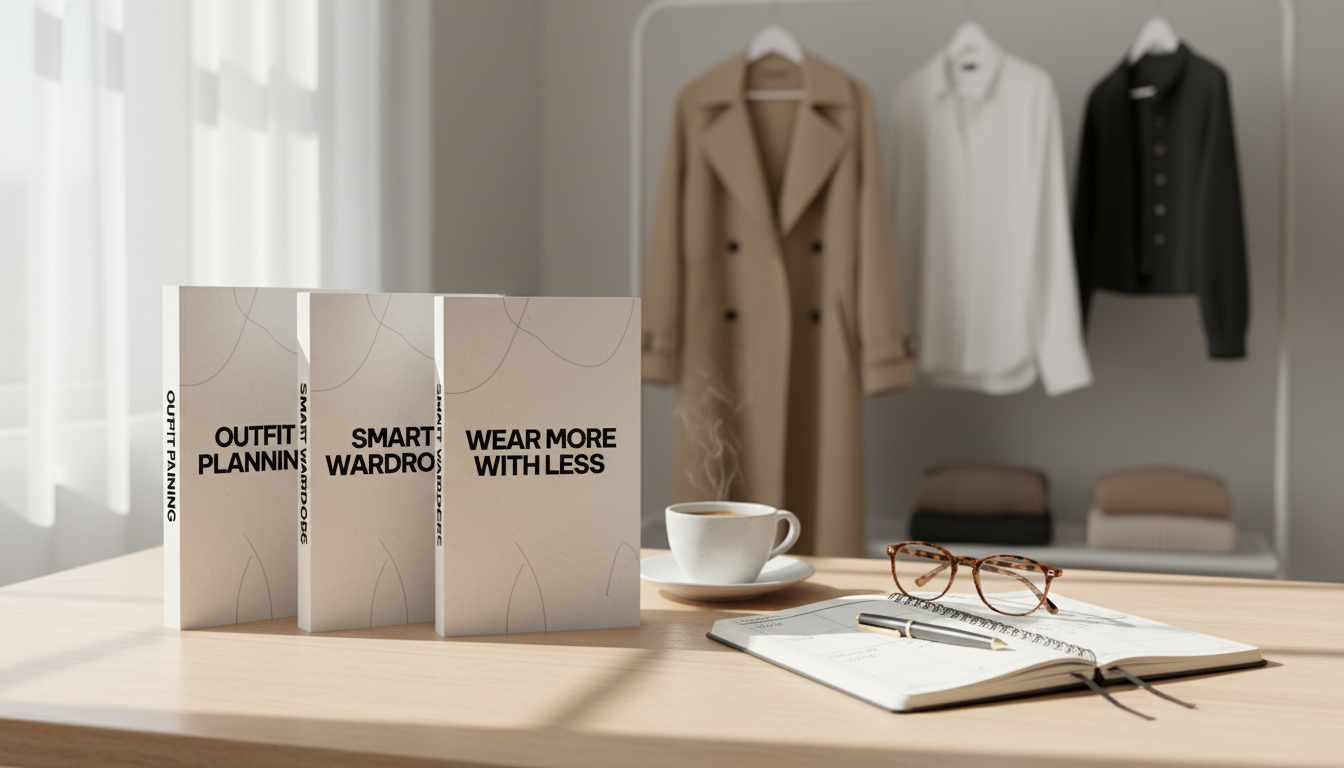
A smarter wardrobe starts before the checkout button. Mindful outfit planning helps reduce impulse buys, stretches the life of what’s already owned, and makes getting dressed faster. The Mindful Guides to Buying New Garments: Outfit Planning, Smart Wardrobe, Wear More with Less Bundle centers on practical routines—evaluating gaps, building outfits from a smaller set of pieces, and choosing new garments that fit real life—so each purchase earns its place through repeated wear.
Mindful buying isn’t about never shopping—it’s about buying with receipts you can “cash” later through real outfits and real wear. A quick way to ground a purchase is to define its job before you look at colors or trends.
For a broader view of why extending clothing use matters, see the Ellen MacArthur Foundation’s work on textiles and the circular economy.
Closet clutter isn’t only about quantity—it’s about a lack of workable combinations. Outfit planning turns “random pieces” into a system that highlights what you truly wear.
Smart wardrobes aren’t rigid uniforms. They’re built around reliable anchors that support personality pieces without requiring constant new purchases.
When you shop with a “wear-more-with-less” lens, every item must earn its keep through comfort, outfit flexibility, and durability. A simple filter keeps the decision clean.
| Check | What to look for | Pass threshold |
|---|---|---|
| Outfit count | Pairs with existing tops, bottoms, shoes, layers | Works in 3+ outfits immediately |
| Comfort & fit | Sitting, walking, reaching; no tugging or pinching | Comfortable for 4+ hours |
| Care compatibility | Laundry method matches routine and time | No special care barriers |
| Durability signs | Strong seams, good fabric weight, minimal pilling risk | Built for repeated wear |
| Cost per wear | Price divided by planned wears | Feels reasonable vs. alternatives |
For practical guidance on keeping clothing in use longer (care, repair, and smarter consumption), explore WRAP’s textiles and clothing resources.
If you want a companion routine that supports calmer decision-making in general, the Yoga Techniques for Full Relaxation and Recovery: 4-in-1 Digital Download Bundle fits well alongside weekly outfit planning.
The Mindful Guides to Buying New Garments: Outfit Planning, Smart Wardrobe, Wear More with Less Bundle is designed for anyone who wants a calmer closet: fewer purchases, better outfits, and clearer criteria for what to add next. It’s especially useful during transitions—new job dress codes, climate changes after a move, body changes, or simplifying after years of accumulation.
A practical minimum is 3 outfits you can wear immediately with what you already own. For most everyday pieces, plan for 10+ wears in the coming season; true replacements (like a worn-out work pant) can be exceptions if they fill a proven need.
Do a quick closet scan, then choose 5–7 reliable outfits you can repeat confidently. Identify only the functional gaps that stop those outfits from working, and shop solely to complete those combinations.
Divide the item’s price by the number of planned wears you expect to get in the next season, then adjust if there are extra care costs like dry cleaning. Compare that number to alternatives you already own or could buy, and only purchase when the planned wear count is credible.






Leave a comment