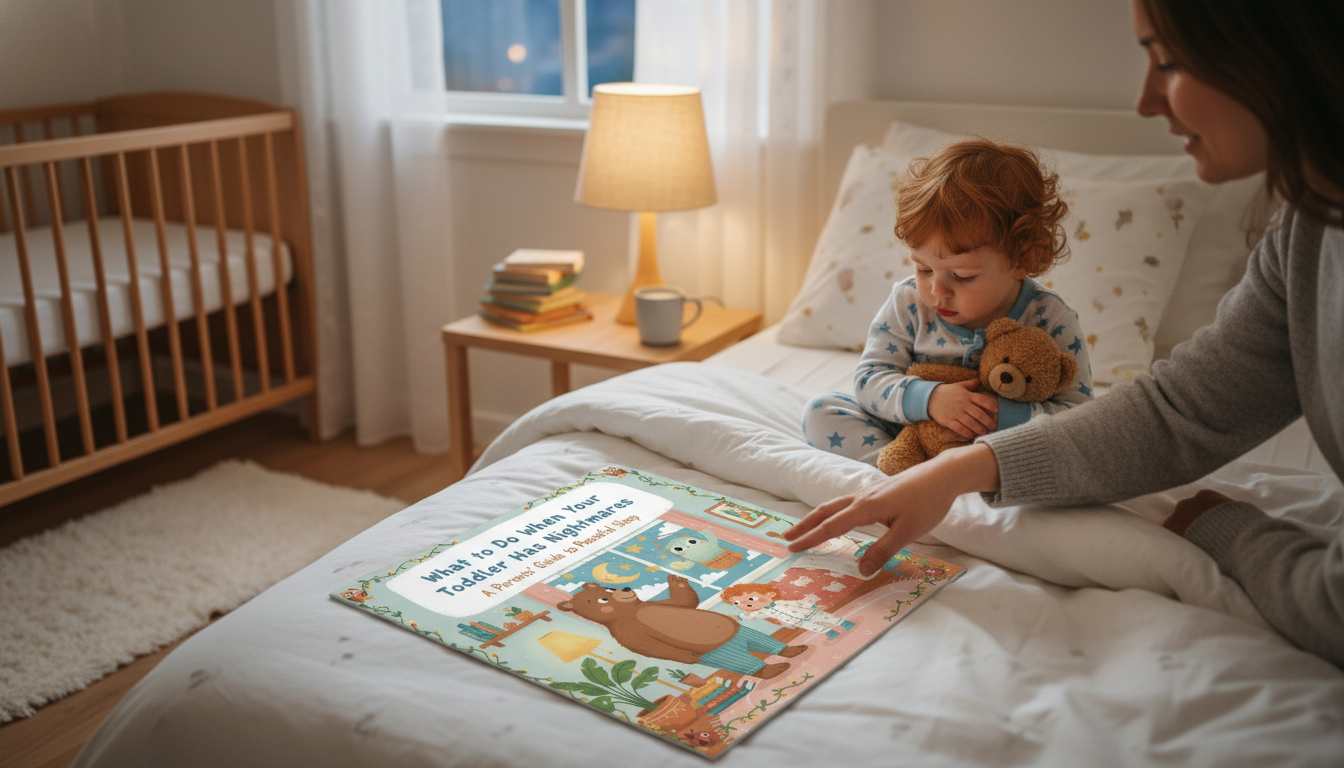
Nightmares can feel intense for toddlers and exhausting for parents—especially when they repeat night after night. The goal is to help a child feel safe quickly, reduce how often nightmares happen, and rebuild calm bedtime expectations. The plan below gives you a simple middle-of-the-night approach plus daytime and bedtime habits that support better sleep over time.
Not every overnight scare is the same, and the response that works best depends on what’s happening in your child’s sleep cycle.
| Clue | More like a nightmare | More like a night terror |
|---|---|---|
| Timing | Later night/early morning | First few hours after bedtime |
| Awareness | Wakes and seeks a parent | Looks awake but not responsive |
| Comforting | Calms with reassurance | Often hard to soothe in the moment |
| Memory | May recall scary dream | Usually no memory next day |
For more on common childhood sleep disruptions, see guidance from American Academy of Pediatrics (HealthyChildren.org) and the Sleep Foundation.
When a toddler wakes frightened, the fastest path back to sleep is calm, consistent, and boring—in the best way.
If your child wants to talk, keep it brief and future-focused: “Bad dreams end. Your body can rest now.” Then repeat the same closing phrase each night so your toddler learns what comes next.
Most nightmare prevention is simple consistency. Toddlers feel safer when they can predict what happens next.
Nightmares often reflect a toddler’s expanding imagination plus stress they can’t fully explain. Daytime practice helps your child feel more in control.
| Day | Bedtime | Nap | Nightmare time | Evening screen/story | Notes (stress, illness, changes) |
|---|---|---|---|---|---|
| Mon | |||||
| Tue | |||||
| Wed | |||||
| Thu | |||||
| Fri | |||||
| Sat | |||||
| Sun |
If a structured plan helps, Ebook: What to Do When Your Toddler Has Nightmares organizes comforting scripts, bedtime routines, and practical troubleshooting in one place. It’s designed as a quick reference for what to say at 2 a.m., how to reset bedtime the next night, and how to reduce common triggers without escalating fear.
If you’re also trying to build more calm in the household (especially during sleep regressions), Yoga Techniques for Full Relaxation and Recovery: 4-in-1 Digital Download Bundle can support a steadier wind-down for parents—often the missing piece when nights are unpredictable.
Many nightmares are brief (just a few minutes), and they often come and go as your toddler’s imagination and language develop. Clusters can last days to a few weeks, especially during big changes or when your child is overtired; get help if they’re frequent, severe, or dragging on with major sleep loss.
It’s fine to prioritize calming first, but returning your child to their own sleep space helps prevent a new sleep association that can increase wake-ups. Exceptions (illness, travel, extreme distress) happen—just transition back by comforting briefly, then resettling in their bed the next night.
A night light can reduce fear of the dark and help your toddler reorient quickly after waking, which may lower panic. Keep it dim and warm (not bright or blue); it won’t stop dreams, but it can make nighttime feel safer.





Leave a comment