
Utility costs can feel unpredictable, especially for busy households juggling schedules and seasonal spikes. A simple checklist-and-planner system makes savings easier to spot, easier to repeat, and more motivating to stick with—turning small habits into steady monthly reductions across electricity, water, heating, and everyday usage.
A good utility-savings plan isn’t complicated—it’s consistent. A checklist format keeps the “little things” visible, so they actually happen on Tuesday night when everyone’s tired, not just on the day you pay the bill.
For additional ideas and best practices, authoritative resources like ENERGY STAR, the U.S. Department of Energy, and the EPA’s WaterSense program offer practical, home-friendly tips you can fold into your weekly routine.
This routine is designed for real life: set it up once, then keep it moving with a short weekly check-in. The goal is progress without burnout.
| Timeframe | Focus | Examples to check off | What to record |
|---|---|---|---|
| Day 1 | Baseline | Locate last bills; note rates and usage if available | Starting cost and any high-usage notes |
| Week 1 | No-cost wins | Turn off unused lights; unplug idle chargers; cold-water laundry | Which habits were easy vs. hard |
| Week 2 | Heating/cooling habits | Adjust thermostat schedule; close blinds/curtains strategically | Comfort level and temperature settings |
| Week 3 | Water use | Shorter showers; run full loads; fix obvious drips | Any leak observations and load counts |
| Week 4 | Kitchen + appliances | Air-dry some dishes; reduce oven preheat/usage; clean fridge coils if accessible | Notes on routines and meal prep changes |
If you want the biggest “why did our bill drop?” moments, start with the areas that most commonly drive home energy and water costs. Then use the checklist to lock in those wins.
A helpful mindset shift: aim for fewer “hero moments” and more “default settings.” When the whole household knows the default (thermostat schedule, lights-off habit, full loads only), savings become automatic.
Consistency is easier when the plan feels like a game, not a lecture. Families and shared homes often do best when the checklist includes roles, streaks, and small rewards tied to participation.
If energy-saving is becoming a recurring family theme (especially around holidays or gatherings), a structured activity book can help keep momentum upbeat. For example, Creative Games and Challenges for Thanksgiving can be a fun add-on when you want screen-free rewards and easy “we did it” celebrations.
If you’re trying to make the routine feel calmer (and less like another chore), pairing the weekly check-in with a short wind-down can help. A relaxation-focused resource like Yoga Techniques for Full Relaxation and Recovery: 4-in-1 Digital Download Bundle can turn “Sunday reset” into something the household looks forward to.
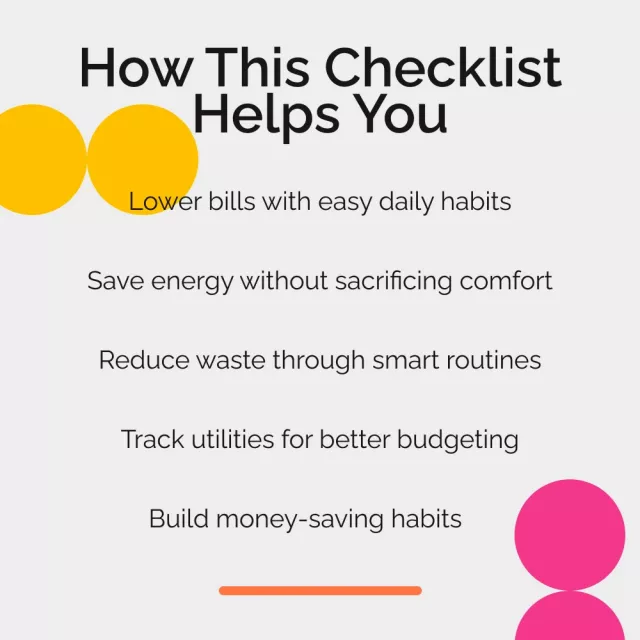
For a ready-to-use system, the Fun & Frugal Utility Savings Checklist is built for repeatable routines—so savings don’t depend on motivation alone.
Some changes can affect the very next billing cycle (like thermostat schedules and hot-water habits), while others show up gradually as you stay consistent. Seasonal weather swings can also mask progress, so tracking usage notes helps you see what’s working even when rates or temperatures change.
Yes—checklists are especially useful for no-cost and low-cost behavior changes like lights-off routines, shorter showers, full loads, and shutting down standby power. Portable tools (like power strips or temporary draft blockers) can also help without permanent modifications.
Assign simple roles, keep the tracker visible, and hold a 5-minute weekly check-in focused on what was easy to repeat. Small rewards tied to streaks (not perfection) usually keep participation high without turning it into a conflict.






Leave a comment