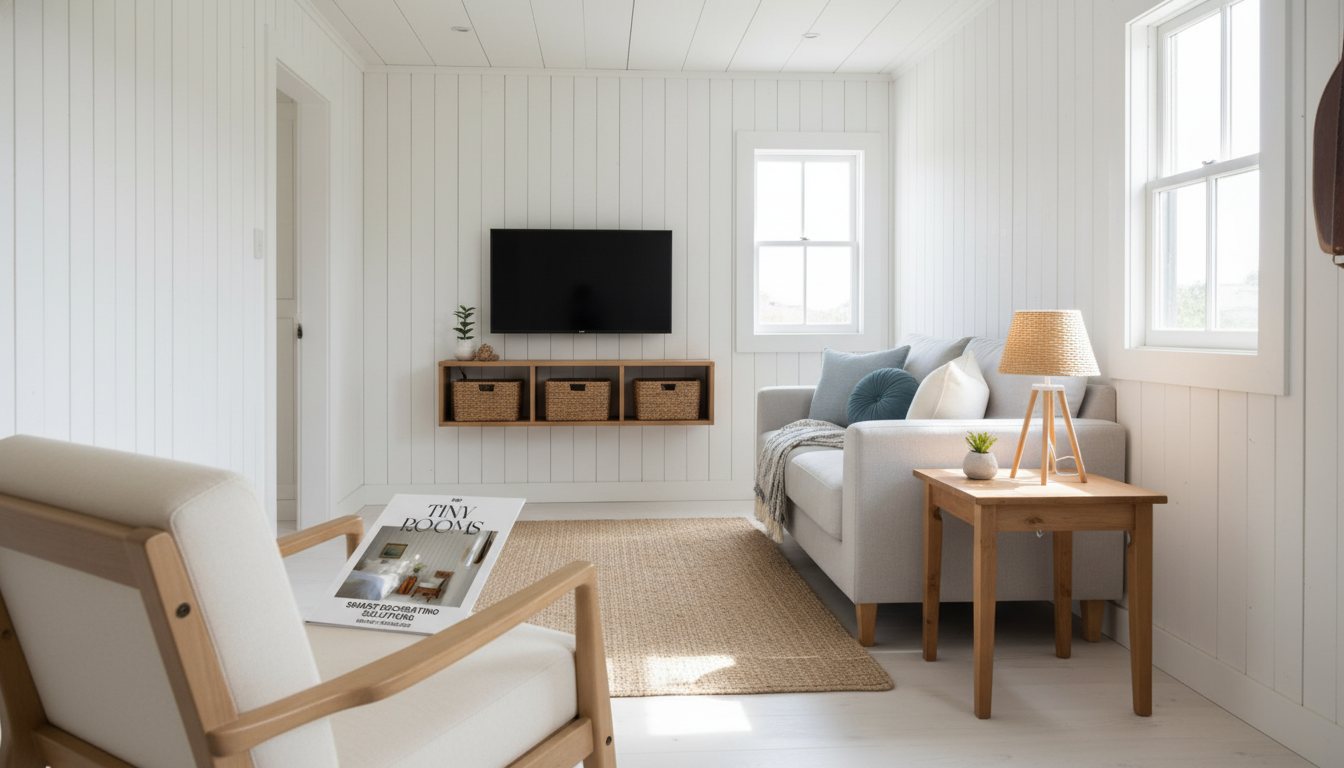
Small rooms can feel calm and stylish when every choice earns its place. With a few layout rules, light-control tricks, and storage-first styling, even a studio can look larger, function better, and stay easy to maintain. The goal isn’t to cram more in—it’s to make the space do more with less visual noise and fewer daily friction points.
Before buying storage bins or swapping furniture, get clear on what the room needs to handle on an average weekday. Tiny rooms feel tight when they’re designed for “someday” instead of real routines.
If a piece doesn’t support one of those daily uses, it should earn its keep through storage, folding away, or replacing two items at once.
Great small-space layout is about sightlines and circulation. A room can be technically “organized” and still feel stressful if you’re constantly stepping around obstacles.
| Problem | Try This | Why It Helps |
|---|---|---|
| No space for a nightstand | Wall-mounted shelf + sconce | Frees floor space and adds light where needed |
| Studio feels like one big pile | Two zones with a rug and a slim divider (open shelving or curtain) | Creates structure without closing the room in |
| Room looks crowded | Swap 3 small decor items for 1 statement piece | Reduces visual noise and feels more intentional |
| Not enough seating | Storage ottoman or nesting stools | Adds seating only when needed, stores away easily |
| Desk overwhelms the room | Wall desk or narrow writing desk (18–20 in. deep) | Keeps workspace usable without stealing circulation space |
When floor space is limited, walls become your “extra room.” The key is putting items where they make sense—easy reach for daily gear, higher placement for seasonal or occasional use.
One practical rule: group vertical storage into a few “storage towers” rather than sprinkling small shelves everywhere—this keeps the room looking calmer.
Bright doesn’t have to mean sterile. A small room feels most comfortable when light is layered and the palette is consistent, with texture doing the heavy lifting.
For more small-space inspiration from established design publishers, browse ideas at Architectural Digest, HGTV, and The Spruce.
In a tiny apartment or studio, the most valuable pieces are the ones that reduce decisions: where things live, how quickly the room converts, and how easy it is to reset.
Create clear zones using a rug and lighting, reduce visual clutter with closed storage, and choose fewer larger pieces with legs to keep sightlines open. Add a mirror that reflects a window or bright wall to bounce light and visually expand the space.
Light-to-mid neutrals work well for walls, then use controlled contrast through textiles, art, and a few darker accents. Keep the palette tight across zones and lean on texture—linen, warm wood, and cozy upholstery—to prevent the room from feeling flat.
Look for pieces that replace two items, such as storage beds, nesting tables, slim desks, wall shelves, and ottomans with hidden storage. Extendable or folding dining solutions also help you keep everyday footprints small while staying ready for guests.






Leave a comment