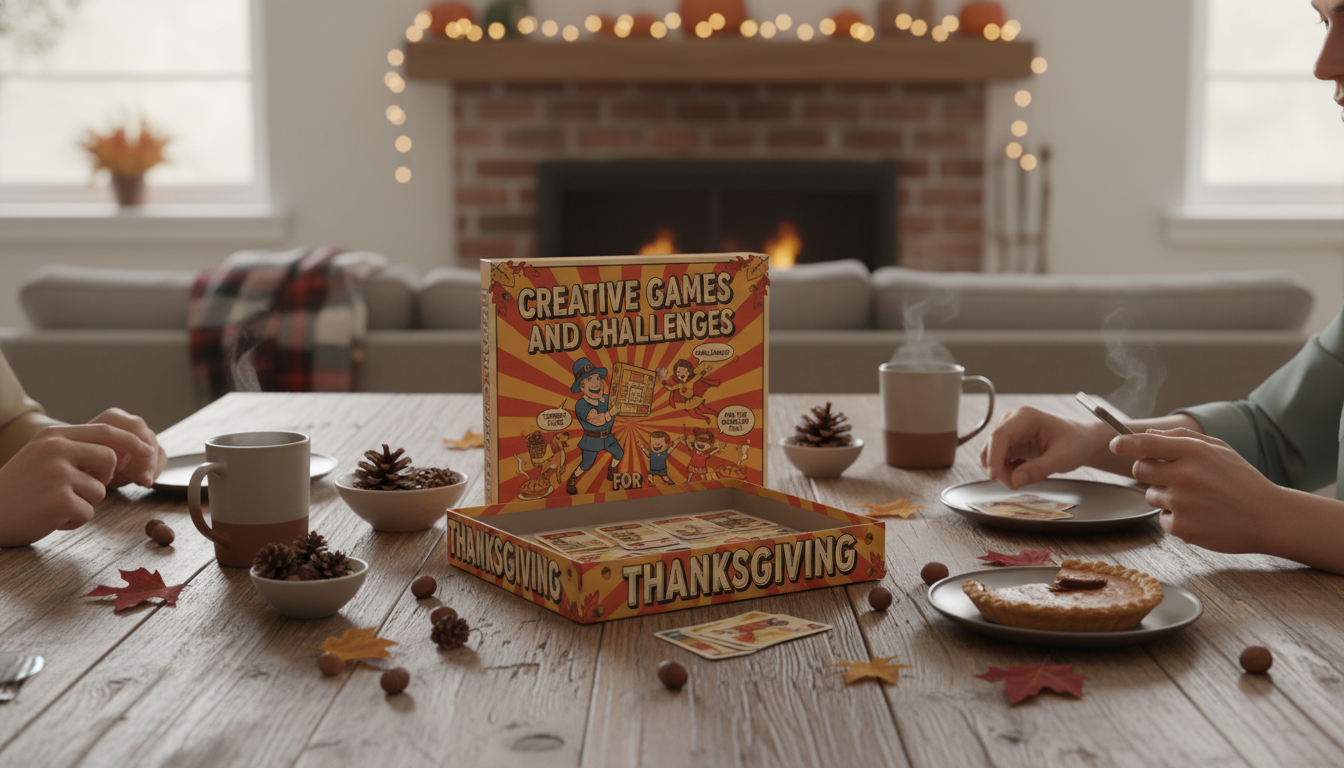
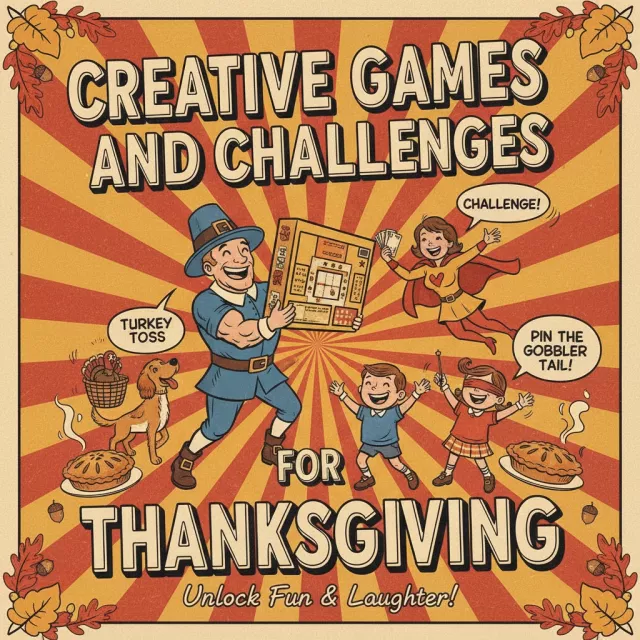
Thanksgiving is easier to enjoy when everyone has something to do beyond the meal. A ready-to-use set of games and challenges helps spark conversation, include all ages, and keep energy upbeat whether the celebration is in-person, hybrid, or fully virtual. With the right mix—some quick table prompts, a little movement, and a few low-pressure laughs—you can turn downtime into connection without turning the host into an event manager.
The best Thanksgiving games feel effortless. They don’t require a long explanation, they don’t single people out in uncomfortable ways, and they adapt to whoever shows up (including last-minute guests or relatives joining on a video call).
| Setting | Best for | Game style | Typical time | Supplies |
|---|---|---|---|---|
| Dinner table | All ages | Conversation prompts & mini-challenges | 10–20 min | None or printable cards |
| Living room | Families & friend groups | Team trivia, charades-style, relay prompts | 15–30 min | Paper + timer |
| Kids corner | Younger kids | Scavenger hunt, “find & bring,” drawing prompts | 10–25 min | Crayons + list |
| Virtual call | Remote relatives | Bingo, show-and-tell challenges, polls | 15–30 min | Shared screen or printable |
| Hybrid gathering | Mixed in-person/remote | Teams with a remote “captain,” photo challenges | 20–35 min | Phone camera + chat |
A well-rounded lineup keeps everyone engaged without dragging on. Aim for variety—something to warm people up, something to make them laugh, and something that creates a memory.
Try “Two Truths and a Turkey” (two true statements and one silly Thanksgiving-themed fib) or quick “Would you rather?” cards. Keep answers short so late arrivals can jump in without missing the “rules.”
Instead of repeating “I’m thankful for…” around the table, use story-based prompts like: “Name a small kindness you noticed this year,” or “What’s a moment you wish you could replay?” These feel more personal and less performative.
Run themed trivia with three difficulty tiers: kids (food and colors), teens (music/movies from the year), adults (family history or travel). Keep it light—no one wants a pop quiz after pie.
Short challenges work especially well post-meal: stack cups, “cranberry roll” races, or a timed “name five” game (five Thanksgiving foods, five things you’d bring on a road trip, etc.). Rotate fast so nobody gets stuck in the spotlight.
Use gentle prompts like “recreate an old family photo pose,” “best plate presentation,” or “funniest candid laugh.” The goal is a keepsake, not perfection.
Planning just a few well-timed moments can prevent the day from stalling out between cooking, eating, and cleanup.
If anyone is feeling under the weather, it’s also smart to keep a flexible plan for spacing out activities or shifting some participation to a call. The CDC’s guidance on holiday gatherings and respiratory viruses can help you make simple, practical decisions for your group.
Remote relatives can feel truly included with games that use chat, simple visuals, and predictable pacing. If kids are joining on screens, it may also help to keep rounds short and schedule quick breaks, aligning with practical family guidance on digital media from the American Academy of Pediatrics.
Choose games with simple rules, short turns, and optional difficulty tiers, such as team trivia, cooperative challenges, and table-friendly prompt cards. Role-based teams also let shy guests contribute without being put on the spot.
Use formats that work well with chat and simple visuals, like bingo, show-and-tell prompts, polls, and photo missions with chat-based voting. Assign a timekeeper and keep scoring to one point per round so everyone can follow along.
Plan 2–4 core games plus one easy backup. A practical rhythm is one icebreaker during arrivals, one pre-meal activity, one post-meal game, and a short wind-down reflection if the group is up for it.




Leave a comment