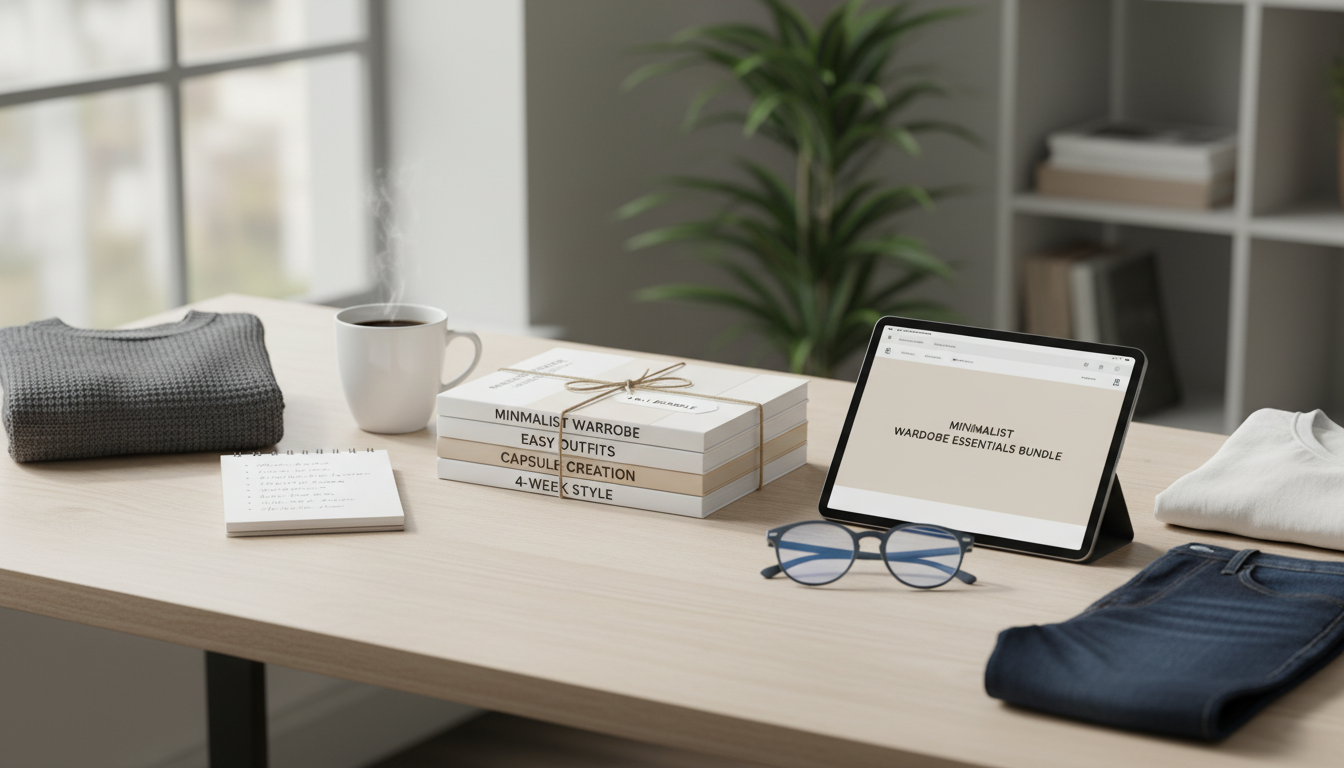
A minimalist wardrobe isn’t about having the smallest closet possible—it’s about building a tighter set of pieces that work harder. When colors coordinate, silhouettes repeat, and outfits can be rebuilt on autopilot, getting dressed becomes faster and shopping becomes more intentional. The Minimalist Wardrobe Essentials Bundle: 4-in-1 Guide for Simplified Fashion is designed to guide a practical reset: edit what you own, define staples that actually match your life, build repeatable outfit formulas, and keep the system running without “closet rebound.” For more guidance, see Thrift Your Way to a Capsule Wardrobe: Tips and Tricks – Goodwill.
Minimalism works best when it’s functional. Instead of chasing endless variety, it leans on repeatable combinations that still look intentional. For further reading, see Colorgrid – Ghost.
If you like structured challenges, the minimalist approach popularized by Project 333 can be motivating, but a flexible framework often feels more sustainable for real-life wardrobes.
The easiest way to simplify is to follow a sequence. This bundle is built to move you from closet clarity to daily outfit ease without skipping steps.
| Week | Focus | Outcome |
|---|---|---|
| 1 | Closet audit + edit | A clear view of what fits, what repeats, and what’s missing |
| 2 | Palette + silhouettes | Fewer mismatches; easier mixing across categories |
| 3 | Outfit formulas | Reliable outfits for common situations without overbuying |
| 4 | Maintenance rules | Less clutter rebound; smarter replacements |
“Essentials” aren’t universal—they should reflect your dress code, climate, and laundry cadence. Still, a small core tends to cover the widest range of outfits with the least effort:
The goal is to reduce “orphan items” (pieces that only work with one outfit) and prioritize staples that connect multiple categories.
Color is the shortcut to outfits that mix without effort. A simple system helps you buy less and wear more.
Fabric and dye choices matter too. If you’re trying to align your closet with better material decisions, Good On You’s material guides offer helpful overviews of common fibers and impacts.
Outfit formulas are “plug-and-play.” Once you know the structure, you only swap one element at a time to keep looks fresh without reinventing the wheel.
Minimalism looks best when basics look elevated. That’s less about owning “perfect” items and more about making your core pieces consistently wearable.
There’s no universal number. Start with a tight core that covers your lifestyle needs, climate, laundry cadence, and work dress code, then add only when you identify a real gap you can’t solve with layering or outfit formulas.
Use texture, layering, and small silhouette shifts while keeping most items in a controlled palette. Let one “hero” item shine at a time (a jacket, shoe, or statement top) and keep everything else neutral and repeatable.
Replace the pieces that block outfits the most: comfortable everyday shoes, a reliable layer/jacket, and well-fitting bottoms. If something is close but not quite right, tailoring often solves the problem before repurchasing.





Leave a comment