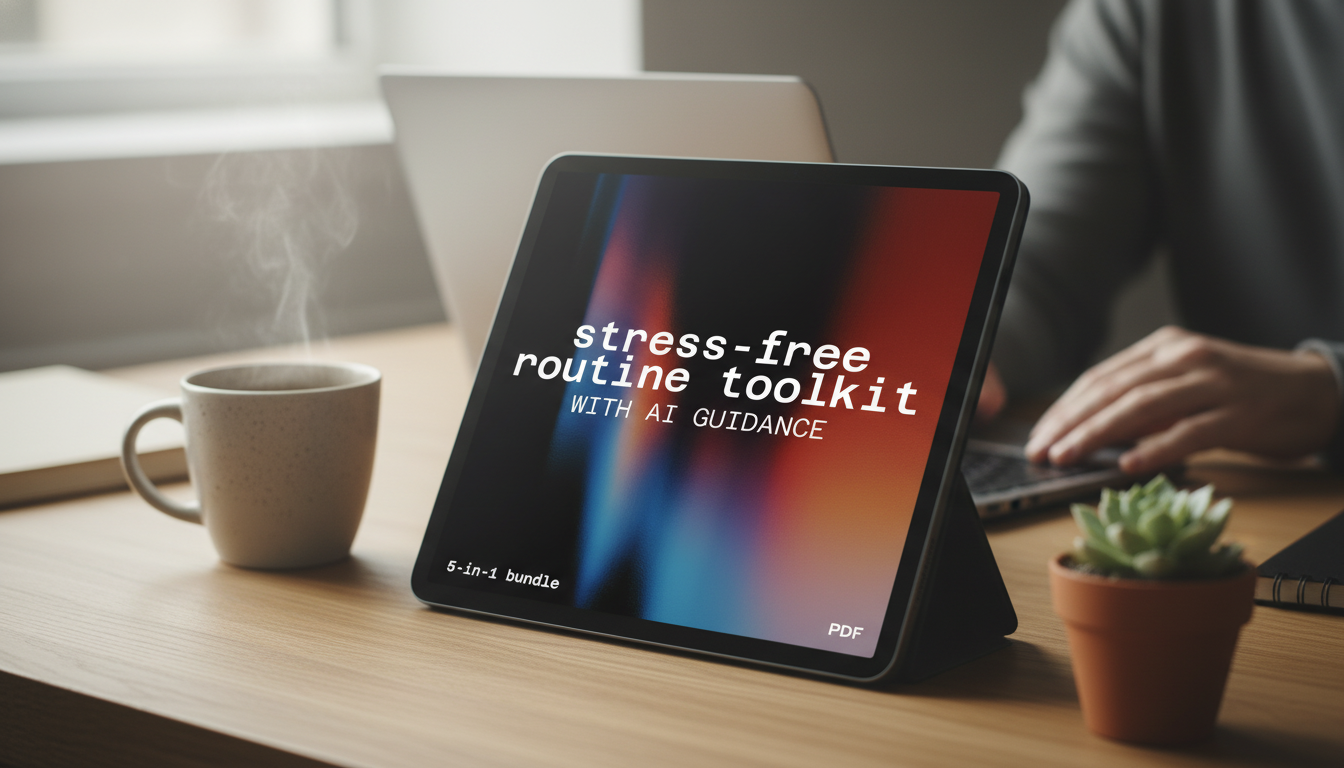
Busy days can feel like a constant switch between tasks, notifications, and unfinished to-dos. A routine that reduces friction—without demanding perfection—often makes the biggest difference. The Stress-Free Routine Toolkit with AI Guidance | 5-in-1 Digital Wellness Bundle pairs practical routine-building assets with AI guidance so daily planning, habit tracking, and mental resets feel simpler and more consistent.
Stress doesn’t just “stay in your head”—it affects the body and energy levels, too. If you want a science-backed reminder of why small routine improvements matter, the American Psychological Association’s overview of how stress affects the body is a helpful reference point.
This toolkit is built for real-life calendars—where plans change, tasks multiply, and attention gets pulled in a dozen directions. Instead of pushing an unrealistic “perfect day,” it focuses on pre-decisions and repeatable defaults that lower mental load.
When daily stress feels chronic, simple coping skills and structure can help. The National Institute of Mental Health’s guidance on caring for your mental health offers practical, non-judgmental strategies that pair well with routine design.
Think of this bundle as a “routine operating system” you can reuse across different seasons of life—busy weeks, travel weeks, and weeks when motivation is low.
| Routine component | Typical challenge | How AI guidance supports adjustments |
|---|---|---|
| Morning start | Rushing and skipping basics | Suggests a shorter sequence and anchors it to a consistent cue |
| Focus blocks | Multitasking and constant interruptions | Builds time blocks with boundaries and a realistic task limit |
| Breaks | Forgetting to pause until burnout hits | Creates reminder-friendly break patterns and quick reset options |
| Evening shutdown | Work or scrolling bleeds into bedtime | Recommends a shutdown ritual and a gentle cutoff plan |
| Weekly review | No time to reflect; repeating the same problems | Summarizes patterns and proposes one change for the next week |
Many planners assume time is stable and energy is predictable. AI-guided routine support is most useful when it helps you stay steady even when the day isn’t. Instead of “failing” a plan, you scale it—then learn from what happened.
The fastest path to calmer days is starting smaller than you think you need. A routine you can repeat at 60% effort usually beats a routine you only do when conditions are perfect.
If sleep is one of the first things stress disrupts, pairing a day-structure toolkit with a night routine can create a smoother 24-hour cycle. The CDC’s sleep resources highlight how foundational sleep is for overall well-being.
If you want to extend the same “calm-by-default” approach into sleep, consider the Guided Imagery Toolkit for Sleep and Relaxation – 4-in-1 Bundle for Restful Nights. For households where pets also react to stressful schedules or noisy environments, the Pet Stress Relief Toolkit for Happier, Relaxed Pets – 5-in-1 Bundle of Guide, eBooks, and Checklist can complement a calmer home rhythm.
Start with one routine (morning or evening) and make it a “minimum version” that’s easy to repeat. Many people notice less friction within a week, especially after one quick adjustment based on what actually happened.
Yes—flexible blocks and priority-based planning are a strong fit for unpredictable days. The guidance is most helpful when it reshapes time blocks, reorders tasks, and suggests smaller versions of habits when your day gets crowded.
No. It supports planning, stress-management habits, and digital wellness routines, but it doesn’t diagnose or treat health conditions. For persistent or severe anxiety, depression, or sleep issues, seek qualified professional care.






Leave a comment