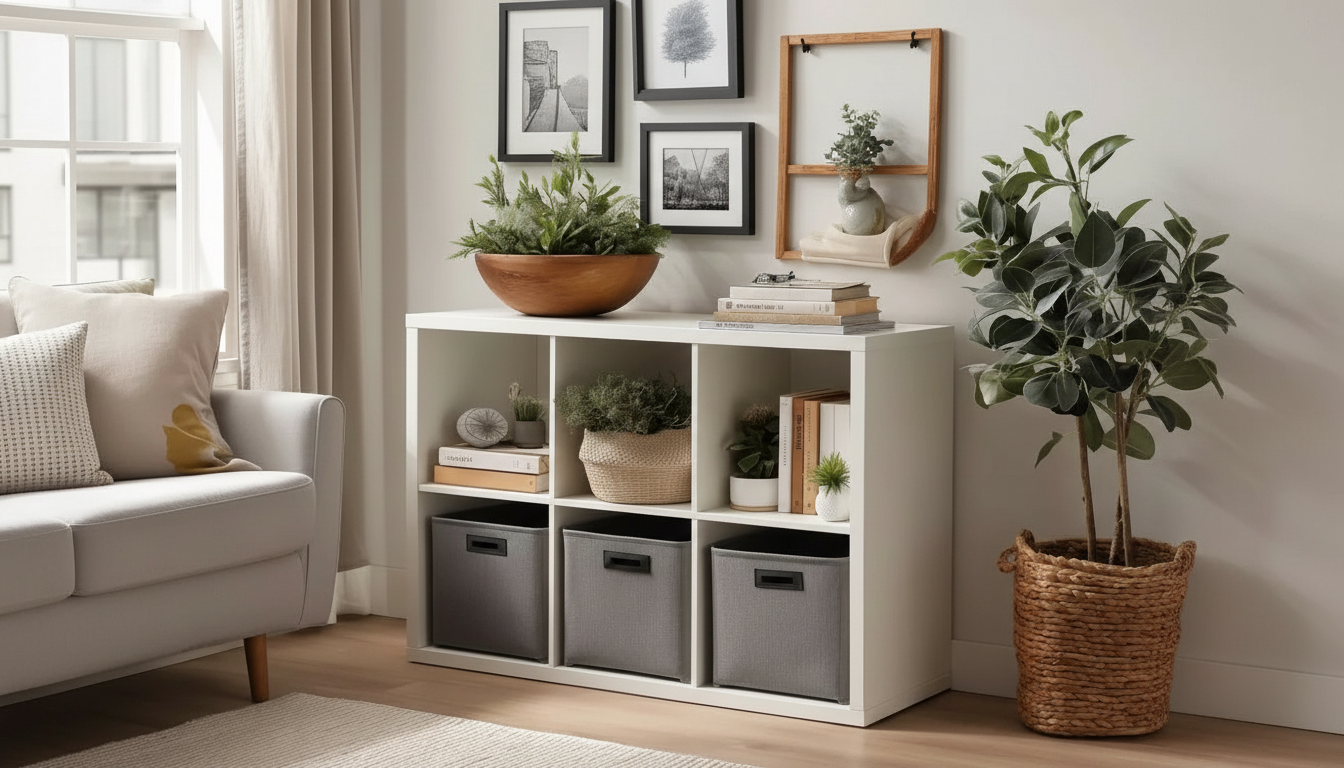
Small apartments feel bigger when every item has a home and every “hot spot” has a plan. The Square-Foot Saver Bundle for Better Storage – Organize Small Apartments with Guides & Checklists supports a simple, repeatable approach: declutter in minutes, assign storage zones, and keep daily clutter from returning. Instead of chasing perfect Pinterest pantries, the goal is a calm setup that’s easy to maintain—especially in studios, tight one-bedrooms, and shared apartments. For more guidance, see Small Space Living – Apartment Organization Ideas and Storage ….
Clutter can also add to stress and mental load, making a small space feel even smaller. If you’re curious about the well-being angle, Cleveland Clinic discusses how clutter can affect your health and mood (Cleveland Clinic: Clutter and Mental Health).
For many households, the biggest win isn’t buying more organizers—it’s having a repeatable sequence. When the steps are clear, it’s easier to start on a Tuesday night, stop after 30 minutes, and still feel like you completed something.
Micro-zones are small, contained areas that impact daily mess: the “keys and mail” shelf, the kitchen’s problem drawer, or the bedside table that turns into a catch-all. When you organize micro-zones first, you create visible progress fast—and that momentum makes larger zones easier.
| Room/Zone | First target | Goal | Time estimate |
|---|---|---|---|
| Entryway | Keys/mail/shoes | Clear the drop zone | 20–30 min |
| Kitchen | One drawer + one cabinet | Store by workflow | 30–45 min |
| Bedroom | Bedside + laundry area | Remove pile-up points | 20–40 min |
| Bathroom | Under-sink + medicine area | Prevent overflow and expired items | 25–40 min |
| Living area | Cords/charging + one shelf | Reduce visible clutter | 20–35 min |
Keeping a small apartment tidy is less about willpower and more about friction. If putting something away takes two steps and you’re exhausted, it won’t happen. Design storage so the “right” choice is the easiest choice.
Once surfaces clear, cleaning is also easier. For practical guidance on cleaning basics, the CDC offers straightforward recommendations (CDC: Cleaning and Disinfecting Your Facility).
If you want the home to feel calmer overall, pair organizing with better rest habits. The Guided Imagery Toolkit for Sleep and Relaxation – 4-in-1 Bundle for Restful Nights is an easy add-on for winding down after a reset session—especially helpful when clutter has been contributing to stress.
| Item | Price | Availability |
|---|---|---|
| Square-Foot Saver Bundle for Better Storage – Organize Small Apartments with Guides & Checklists | 219.36 USD | In stock |
Most people see noticeable improvement after a few short sessions (15–45 minutes each). A more complete setup—working through micro-zones across every room—often takes a couple of weeks of consistent, bite-sized resets rather than one exhausting marathon.
Bins help after you sort and declutter because they keep categories contained and easy to put away. They usually make things worse when purchased first, because they hide clutter and take up valuable space if you haven’t measured and defined categories yet.
Start with the entry drop zone (keys, shoes, mail), then tackle one kitchen workflow area (a drawer and cabinet near prep/cooking), and finish with the biggest pile-up points like bedside items and laundry. Those quick wins reduce daily clutter immediately.






Leave a comment