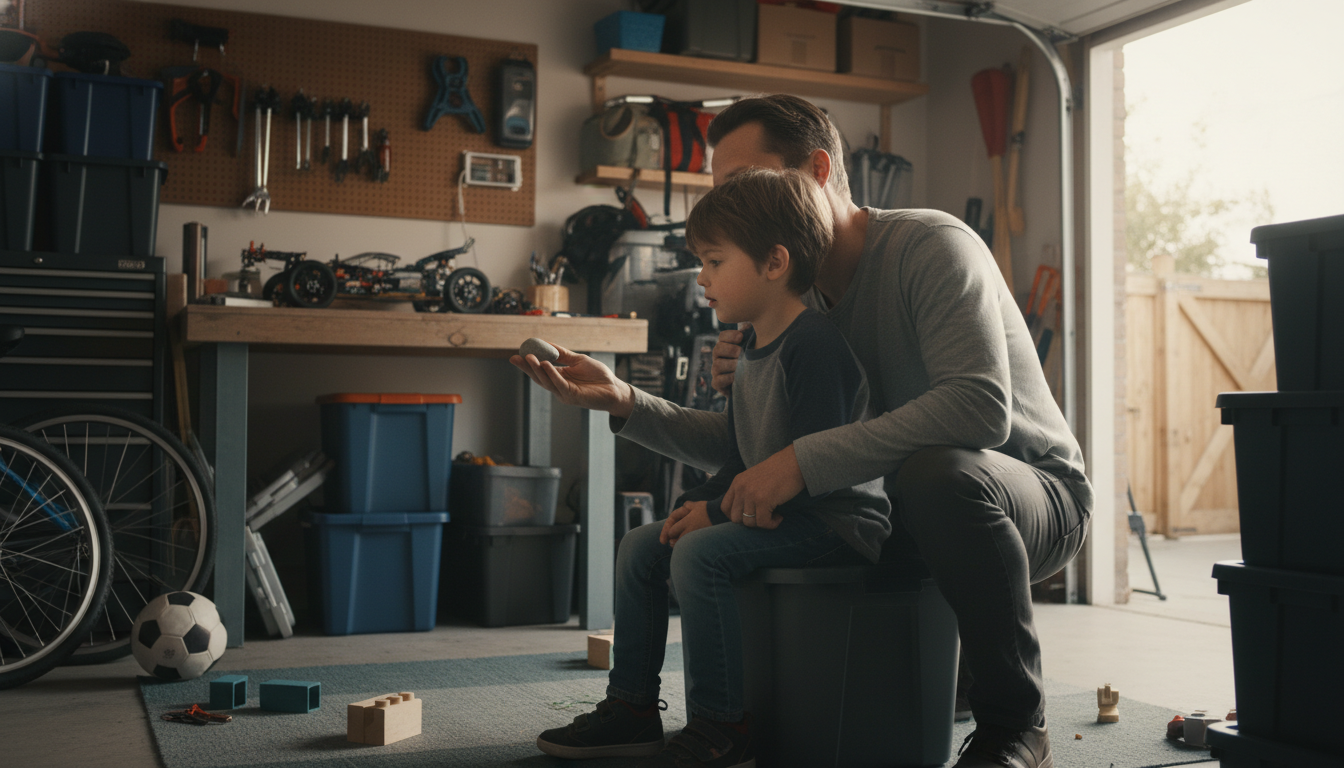
Start by getting your own body calm first. Slow your breathing, soften your face, and lower your voice. A child in panic is scanning for safety cues, and an urgent tone or rapid questions can accidentally signal danger.
Next, validate without amplifying. Use short, steady phrases like: “You’re safe. I’m here. That felt really scary.” Avoid debating whether the fear is “real,” and skip long explanations while the anxiety is peaking—reasoning usually lands better after the nervous system settles.
Keep your language and choices simple. Offer one small, concrete option at a time: “Do you want to sit on the couch or the floor?” “Would you like a sip of water?” Choices restore a sense of control without overwhelming them.
Co-regulate with rhythm and grounding. Try breathing together (in for 4, out for 6), a slow count, or a sensory anchor: “Can you feel your feet on the ground? Press your toes down.” If your child likes touch, ask permission: “Would a hand on your back help?” Respect “no”—forcing contact can escalate panic.
Set gentle limits while staying warm. If the moment includes yelling, hitting, or unsafe behavior, name the boundary calmly: “I won’t let you hit. I’m going to move back, and I’m staying with you.” This protects everyone without turning it into a power struggle.
When the wave passes, keep the debrief brief and kind. Ask what helped, what didn’t, and plan a simple next step for future moments. For more tools and a structured approach, see the parent-focused guide here: Calm Parent System 3-in-1 Bundle for Childhood Anxiety.
Common early signs include irritability, repetitive reassurance-seeking, stomachaches or headaches, restlessness, and sudden avoidance of a normal activity. Catching these cues early makes it easier to use calming supports before panic peaks.







Leave a comment