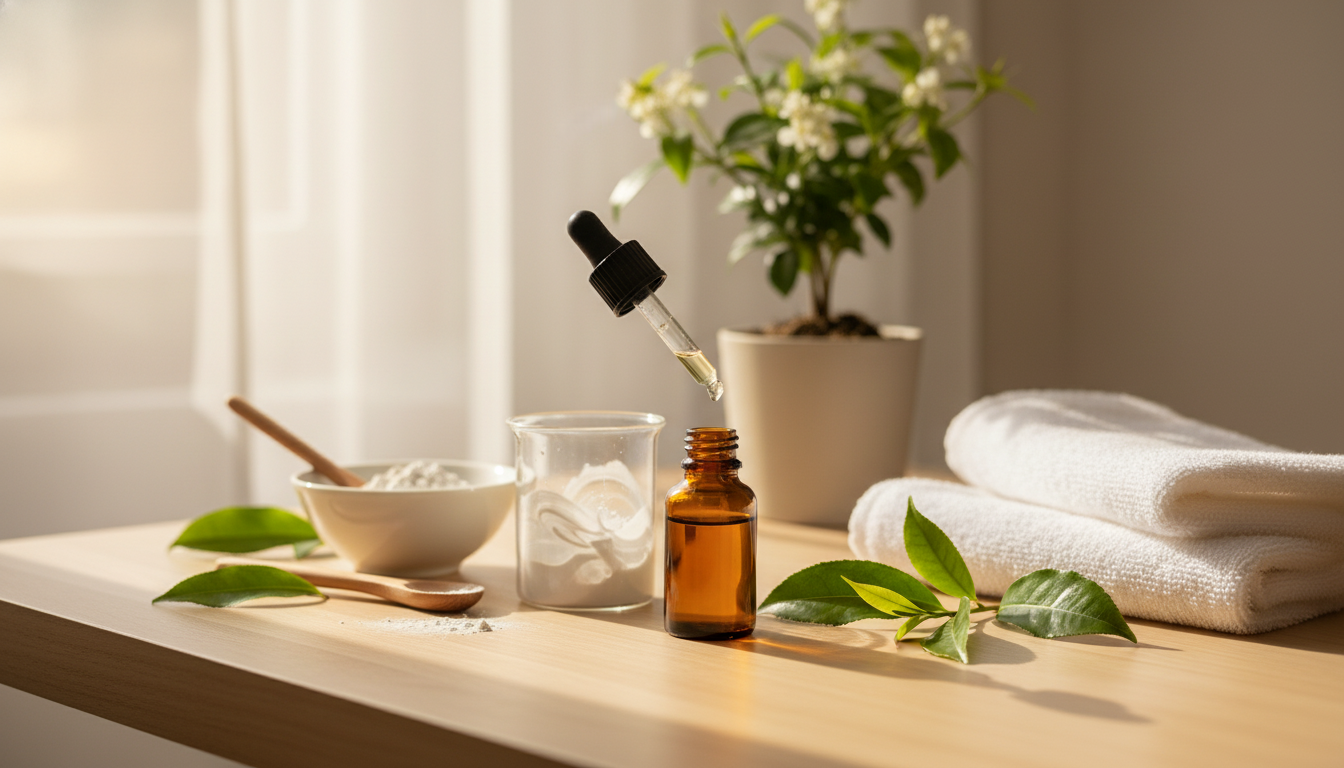
Tea tree oil is known for its purifying, deodorizing, and scalp-soothing qualities, which makes it a staple in many beauty routines. Used the right way—properly diluted, patch-tested, and paired with supportive skincare—tea tree oil can help refine the look of blemish-prone skin, freshen body care, and improve the feel of an itchy or flaky scalp. This guide breaks down safe, realistic ways to use tea tree oil in everyday beauty, plus what to avoid and how a structured digital bundle can simplify your routine.
Tea tree oil (an aromatic essential oil) is a common “support ingredient” in cleansers, scalp products, and spot-focused care because it leaves skin and hair-feeling areas with a cleaner, fresher finish. Many people reach for it on oily or congested zones, and for its crisp scent profile in body care and deodorizing routines.
What matters most is how it’s formulated and used. A tiny amount in a well-designed product—or a carefully diluted DIY mix—can be plenty. More is not better: overdoing tea tree oil often backfires as dryness, irritation, or a compromised skin barrier.
When used conservatively, tea tree oil can help skin feel cleaner and may reduce the look of surface congestion—especially as a spot-style step rather than an all-over face treatment. It tends to work best alongside gentle cleansing, non-stripping moisturizers, and steady habits (like consistent sunscreen use).
Tea tree oil is frequently used in shampoos and scalp tonics to freshen the scalp and support a more comfortable feel when itchiness or flaking is a concern. Rinse-off use is typically easier to tolerate than leaving an essential oil on the scalp.
From foot care to body washes, tea tree oil is popular for a clean, deodorized feel—particularly on areas that get sweaty. Think “freshness support,” not a replacement for hygiene basics.
Some routines use properly diluted tea tree oil around nails and cuticles for a fresher feel. The key is precision: avoid flooding the skin, and stop if dryness develops.
Tea tree oil can be added in very small amounts to warm soapy water for cleaning brushes and sponges, followed by thorough rinsing and complete drying.
Essential oils are concentrated. Applying tea tree oil undiluted can cause irritation or trigger allergic contact dermatitis in some people. If tea tree oil is part of a routine, dilution and patch testing are non-negotiable.
| Use case | Suggested dilution | How to mix | Notes |
|---|---|---|---|
| Face spot-style application | 0.5%–1% | 1–2 drops per 1 tsp (5 mL) carrier oil/gel | Avoid large areas; discontinue if dryness develops |
| Body/feet freshness | 1%–2% | 3–6 drops per 1 tbsp (15 mL) carrier | Great for targeted areas like feet; don’t occlude irritated skin |
| Scalp add-in (rinse-off) | ~1% | Add a few drops to a single-use shampoo portion | Prefer rinse-off; avoid leaving undiluted oil on scalp |
| Brush/tool cleaning (non-skin) | Varies | A few drops in warm soapy water | Rinse well and let tools fully dry |
For more safety context, see the American Academy of Dermatology guidance on essential oils and the NCCIH overview of tea tree oil.
If you prefer a structured plan over guesswork, Tea Tree Oil Magic Revealed | 4-in-1 beauty benefits of tea tree oil Digital Bundle is designed for step-by-step learning and routine building. It’s a good fit for oily or combination skin types, people who want scalp-freshness routines, and anyone who likes checklists that prevent overuse.
If you suspect an allergy, it may help to review the basics of allergic contact dermatitis (MedlinePlus) and seek care if symptoms persist.
1) A clear routine you’ll actually follow: Structured guidance reduces the temptation to over-apply. If you want an organized plan, Tea Tree Oil Magic Revealed | 4-in-1 beauty benefits of tea tree oil Digital Bundle is built around practical use cases and common pitfalls.
2) Better wind-down habits: Sleep and stress don’t cause every blemish, but they can influence how your skin looks and feels day to day. A calming nighttime routine can support consistency with your skincare, too. Guided Imagery Toolkit for Sleep and Relaxation – 4-in-1 Bundle for Restful Nights is an easy, screen-friendly way to build a steadier reset into your evenings.
Generally no—undiluted essential oils can irritate skin or trigger allergic reactions. Dilute tea tree oil in a carrier (oil/gel/lotion) and patch test for 24 hours before using it more broadly.
Start a few times per week and adjust based on dryness or irritation. Gentle cleansing and barrier support matter more than frequent, intense application.
Use caution: tea tree oil can be harmful to pets if ingested or if they’re exposed to high amounts. Store it securely and avoid using it on animals unless a veterinarian specifically directs you.







Leave a comment