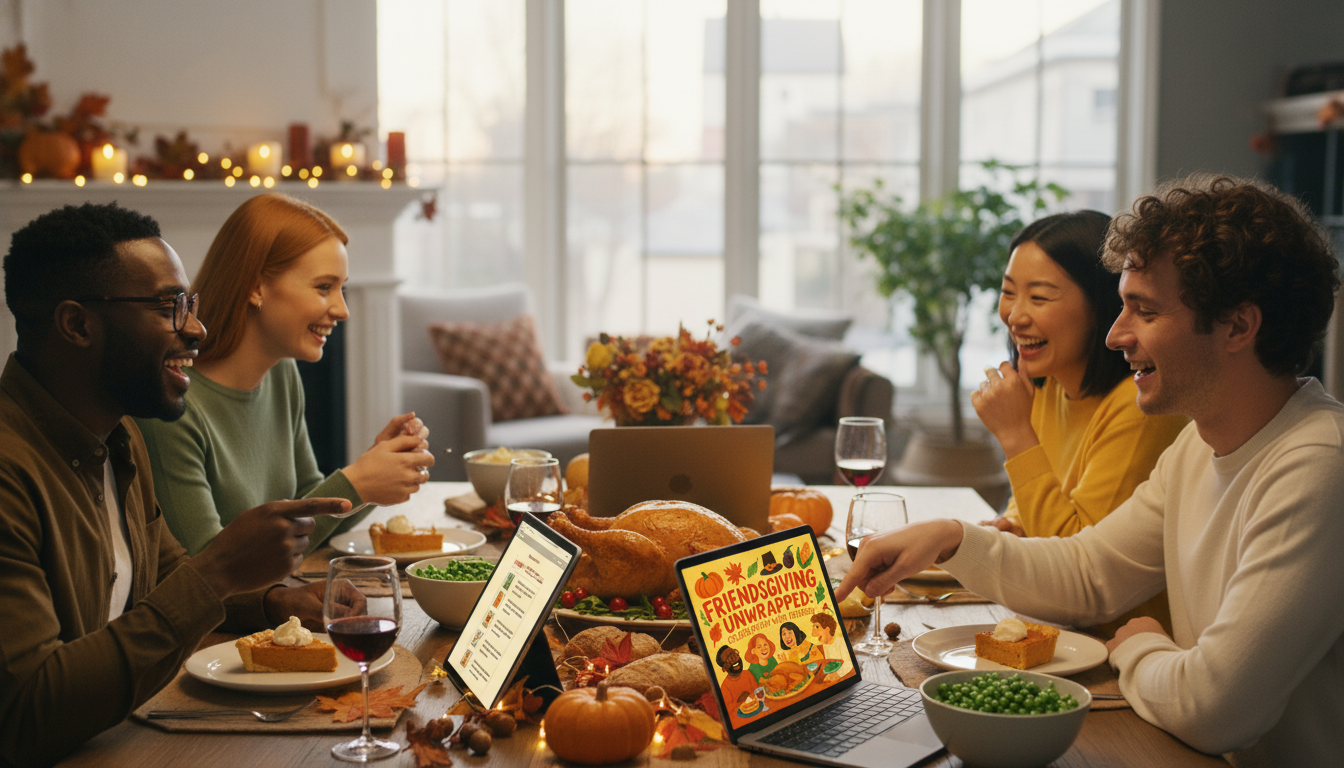
Friendsgiving works best when it feels warm, simple, and a little bit personal—without the last-minute scramble. A calm plan comes down to a few clear choices: pick a format that matches your space, set a timeline you can actually follow, build a flexible menu (especially for potlucks), and keep the day-of flow easy enough that you’re present for the good parts.
Friendsgiving isn’t a “mini Thanksgiving.” It’s a choose-your-own-adventure version that prioritizes connection and ease.
The easiest Friendsgiving is the one that matches your real life—your fridge space, your oven capacity, and how much you want to host versus “coordinate.”
Start with three anchors: the guest list, your menu approach (hosted vs. potluck), and the start time. Then work backward from there, leaving buffer room for cleaning, setup, and the inevitable “where did I put the serving spoon?” moment.
| When | What to decide | Quick checklist |
|---|---|---|
| 2–3 weeks before | Theme + guest list + format | Choose potluck vs hosted; set budget; draft invite message; decide seating plan (table, mixed, floor/couch). |
| 10–14 days before | Menu outline + assignments | Create sign-up list; confirm dietary needs; pick 1–2 signature items; plan drinks and ice. |
| 7 days before | Shopping and prep plan | Finalize grocery list; order disposables if needed; plan make-ahead dishes; confirm arrival times. |
| 2–3 days before | Make-ahead cooking + staging | Prep sauces/dressings; bake desserts; tidy fridge; set out servingware and labels. |
| Day of | Cook, set the vibe, and host | Start oven items early; set a welcome station; cue playlist; take 10 minutes to reset before guests arrive. |
| Next day | Cleanup + leftovers | Pack leftovers safely; share photos; send thank-you text; store/debrief what worked for next year. |
A potluck doesn’t need to be chaotic. The trick is a simple “menu map” so you don’t end up with five mashed potatoes and zero vegetables.
For leftovers, follow food-safety basics—cool and refrigerate promptly and reheat properly. Helpful references include the USDA FSIS leftovers guidance and the CDC food safety overview.
Friendsgiving ambiance isn’t about perfection—it’s about comfort and an easy flow through the space.
For gentle etiquette guidance that still feels modern, the Emily Post Institute’s Thanksgiving etiquette is a solid reference.
If you want a single place to track invites, food assignments, supplies, and a day-of run sheet, Friendsgiving Unwrapped: Celebrating with Friends (digital download guide, eBook & checklist) is designed to keep planning simple and flexible—whether you’re hosting a potluck, a small-space gathering, or a low-key celebration with modern traditions.
For hosts who also want a quick, upbeat way to set a thankful tone in the days leading up to the gathering, the Positive Attitude Starter Pack (3-in-1 Digital Bundle) can pair nicely with gratitude notes and intentional check-ins—without turning Friendsgiving into a “project.”
Plan 2–3 weeks ahead for invitations and potluck coordination, then lock the final menu and shopping plan about 7–10 days out. Save make-ahead cooking for the day before or two days before to reduce day-of stress.
The host should cover the essentials: an anchor dish (often the main), drinks and ice, plates/napkins/utensils, and basic serving tools. Guests can bring assigned categories (veggie side, dessert, bread) to keep the menu balanced.
Collect dietary needs in the invite, label dishes clearly, and plan at least one vegetarian option and one gluten-free-friendly option. Keeping ingredient lists visible (even a quick note card) helps guests serve themselves confidently.




Leave a comment