
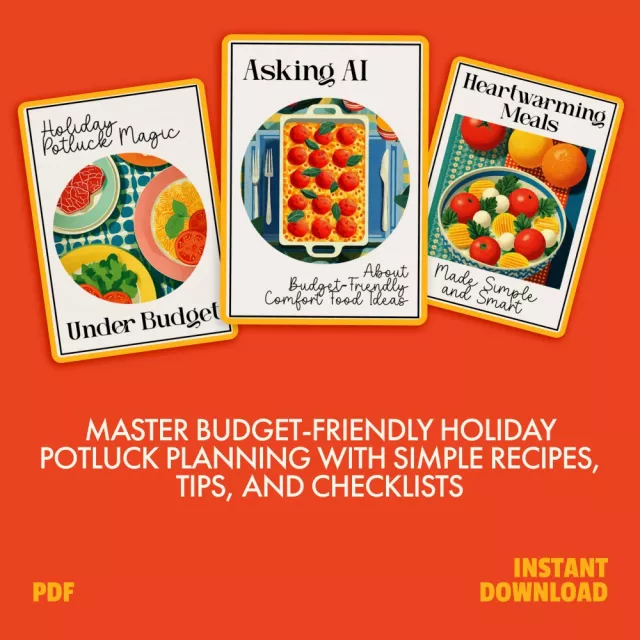
Holiday nights at home are supposed to feel warm and easy—yet they can get expensive fast, especially when everyone’s hungry at the same time. A potluck flips the pressure: instead of one host managing the entire menu (and the entire grocery bill), everyone contributes in a coordinated way. The Budget Potluck Bundle for Holiday Nights: 3-in-1 Bundle of eBooks, Guides, and Checklists is built for practical hosts who want a clear plan for what to serve, how to organize the sign-up, and how to keep costs and last-minute chaos under control—without needing fancy ingredients or hours in the kitchen.
Potluck nights fit holiday schedules because they’re structured, flexible, and naturally budget-friendly. Instead of one big shopping trip where the cart keeps filling up, food costs become more predictable by spreading dishes across guests. The host also gets time back—especially when dishes are assigned by category (main, side, dessert, drinks) rather than letting everyone bring “whatever” and ending up with five bags of chips and no dinner.
Potlucks help guests feel included, too. Bringing a dish becomes part of the fun—like contributing to the vibe—rather than a silent expectation. And once the framework is in place, it scales smoothly: the same planning system can support a small group of 4–6 or a bigger gathering of 10–16. Add a theme (movie night, ugly sweater night, board games), and the format still works without changing the core plan.
This bundle is designed to be reused across multiple holiday nights—so you’re not reinventing your approach every time someone suggests “one more get-together.” Each piece supports a different part of hosting:
It works whether cooking feels minimal (store-bought + assembly) or you enjoy cooking but want better organization. For families juggling different preferences, pairing a hosting plan with kid-friendly support can also help—like the Peaceful Plates System for Picky Phases – A Digital Bundle for Parents of Picky Eaters when your guest list includes selective eaters.
A potluck goes smoothly when the timeline is light but specific. Here’s a simple rhythm that reduces last-minute scrambling:
For food safety basics—especially with reheating, chilling, and leftover storage—use trusted guidance like the CDC food safety fundamentals and the USDA guidance on leftovers and food safety.
| Role | What they bring | Helpful notes to include |
|---|---|---|
| Main dish guest | Hearty main (8–12 servings) | List allergens; note if it needs warming on arrival |
| Side dish guest | Starch or vegetable side | Bring serving spoon/tongs if possible |
| Snack/appetizer guest | Finger foods or a shareable dip | Specify if it needs refrigeration |
| Dessert guest | Sliceable or pre-portioned dessert | Include “nut-free” option if possible |
| Drink guest | Non-alcoholic drinks + ice | Bring cups if disposable is preferred |
| Host | Plates, utensils, napkins, serving setup | Have a backup salad/rolls and take-home containers |
If your gatherings include kids + adults, dietary needs, and a mix of cooking skill levels, having structure makes the night feel calmer for everyone. And because holiday hosting can be emotionally draining as well as logistical, some hosts like to pair a practical plan with a mindset reset between events, such as the Positive Attitude Starter Pack | 3-in-1 Digital Bundle – Bright Side Living.
If you want the full workflow and ready-to-use templates, start with the Budget Potluck Bundle for Holiday Nights: 3-in-1 Bundle of eBooks, Guides, and Checklists and reuse it for every gathering you host this season.
It works well for both. The main value is the structure—menu planning, coordination, and checklists—so beginners feel guided and experienced hosts spend less energy managing details.
It scales down easily for 4–6 people by using fewer categories and smaller portions. The same signup and setup approach still prevents duplicates and reduces last-minute stress.
Yes—using dish labels, collecting allergen notes from guests, and planning at least one flexible option makes the table more comfortable. Coordination details like reheating and refrigeration needs also help keep food handling safer and smoother.





Leave a comment