The Habit-Forming Cleaning Toolkit: 10 Digital Downloads to Make Cleaning a Daily Routine
Cleaning gets easier when the plan is visible, repeatable, and small enough to do on busy days. A set of simple digital downloads can turn “what should be done?” into a short sequence of daily wins—so the home stays reset without marathon sessions. Instead of relying on motivation, the right pages act like a gentle autopilot: you see the next step, do it, and move on.
Why cleaning routines fall apart (and what makes them stick)
Most routines don’t fail because of laziness—they fail because the plan is too fuzzy, too big, or too hidden.
- Vague goals create decision fatigue. “Clean the house” forces dozens of tiny decisions. Pre-decided actions (like a short checklist) cut friction and make starting easier.
- Overly ambitious schedules trigger all-or-nothing thinking. When the plan requires a big block of time, one missed day can snowball into a weekend “catch-up.” Short daily resets prevent backlog.
- No visual cue makes routines invisible. If the plan lives only in your head, it disappears during a hectic day. A printed page on the fridge or a digital tracker on a tablet keeps tasks front-of-mind.
- Consistency comes from a trigger, not willpower. A reliable cue (after coffee, after dinner) plus a quick checklist builds automaticity over time—similar to the cue-routine-reward loop described by the American Psychological Association.
What’s inside the Habit-Forming Cleaning Toolkit
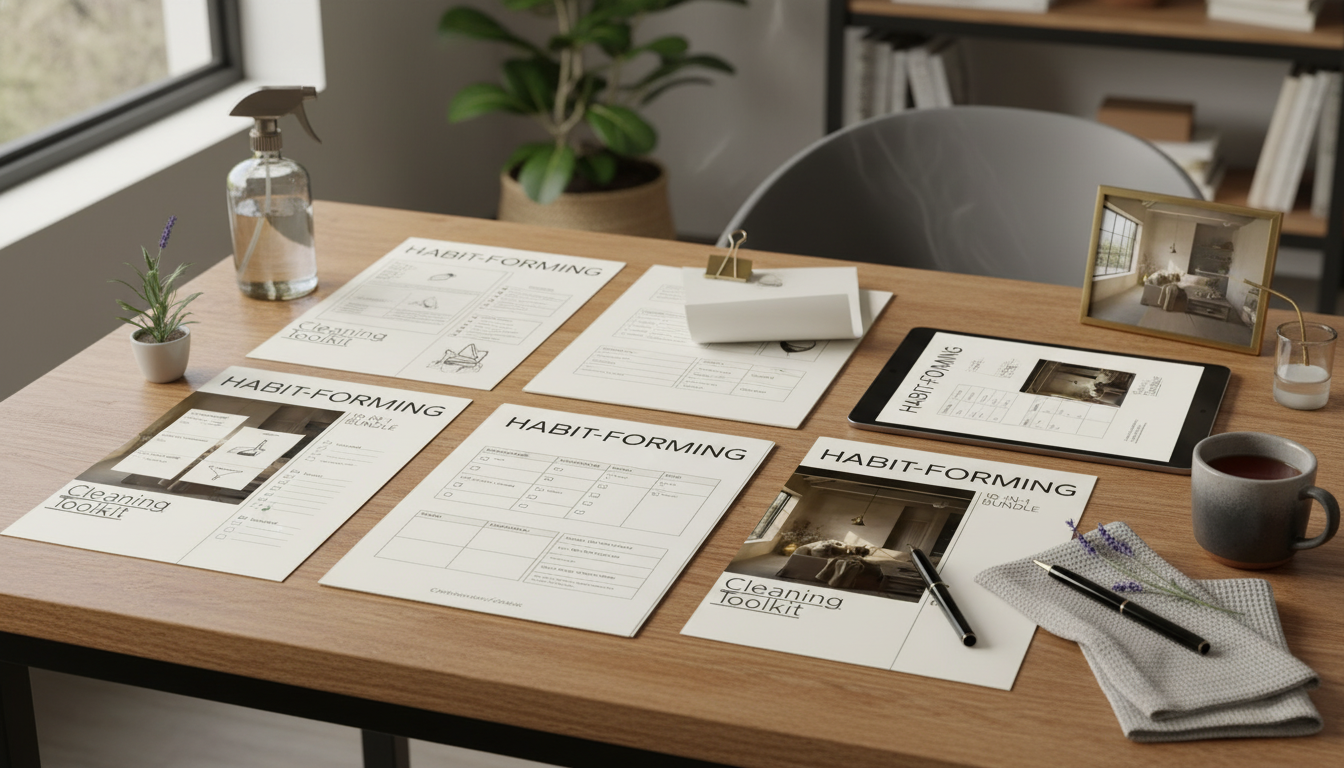
The The Habit-Forming Cleaning Toolkit: 10 Digital Downloads to Make Cleaning Part of Your Daily Routine is built around one goal: make cleaning feel like a repeatable daily rhythm instead of a once-a-week event.
- 10 coordinated digital downloads designed to turn cleaning into a sequence you can repeat without rethinking it.
- Works as printables (fridge/binder) or as digital pages (tablet/phone) for easy reuse.
- Focuses on routines: daily reset, weekly zones, and simple tracking so progress stays visible.
- Flexible for apartments, family homes, pet households, and shared spaces.
Toolkit pieces and how they fit into a routine
| Download type |
Best time to use it |
What it solves |
| Daily reset checklist |
Morning or evening |
Eliminates “where do I start?” |
| Weekly plan / zone schedule |
Weekend planning or Monday |
Prevents everything piling up |
| Habit tracker |
End of day |
Builds consistency with quick wins |
| Room-by-room checklists |
As needed |
Keeps standards consistent across rooms |
| Deep-clean list |
Monthly/seasonal |
Captures tasks that are easy to forget |
| Supplies inventory / shopping list |
Before restock day |
Avoids running out mid-task |
A simple 15-minute daily routine using the downloads
The goal isn’t “perfect.” It’s “reset enough that tomorrow starts easier.” Keep it short, repeat it often, and let the tracker do the encouraging.
- Choose one fixed trigger. Pick either after breakfast (AM reset) or after dinner (PM reset). Same time, same place.
- Run the daily checklist as a timed sweep. Do a quick pass: trash, dishes, counters, a fast floor pass, and a 2-minute clutter basket.
- Mark the tracker immediately after finishing. That tiny “done” moment reinforces the loop and makes progress visible.
- Add one micro-zone task (5 minutes). Pull one small item from the weekly zone schedule (wipe bathroom sink, swap towels, vacuum one room). This prevents weekend blowups.
- Keep a short “later list.” If you notice something bigger (organize pantry, clean baseboards), park it on the list instead of expanding the routine.
If you’re cleaning around health concerns or shared facilities, pair your routine with official guidance for disinfecting specifics, like the CDC’s cleaning and disinfecting recommendations.
Setting up the toolkit so it actually gets used
Making it work for different households
- Small spaces: Rely on the daily reset plus one weekly zone. Skip deep-clean pages until the habit is steady.
- Families: Assign 1–2 checklist items per person and use one shared tracker. Visibility reduces nagging and makes progress feel like a team win.
- Pets: Add a repeating quick task for hair/litter/paw prints and keep pet wipes or a lint roller inside the supply bin. If your household is tense or your pet reacts to changes in routine, a calming companion resource like the Pet Stress Relief Toolkit for Happier, Relaxed Pets – 5-in-1 Bundle can support a smoother environment.
- Shared housing: Rotate a weekly zone schedule and keep common-area expectations on one clearly posted page.
- Low-energy days: Do the minimum reset only (dishes + trash + 2-minute pickup) to keep the streak alive.
Common snags and quick fixes
For extra follow-through on days when your mindset is the main obstacle, pairing a routine with a simple optimism-and-consistency tool can help. The Positive Attitude Starter Pack | 3-in-1 Digital Bundle fits well alongside habit tracking when you want less self-criticism and more “next step” energy.
When the toolkit is a good fit (and when it isn’t)
FAQ
Are these downloads better used digitally or printed?
Both work well: digital is easy to reuse and update, while printed pages are more visible. Many people get the best results by printing the daily reset checklist for the fridge and keeping the rest as digital copies for quick reference.
How long does it take to see the routine feel automatic?
It varies by person, but it typically takes repeated cycles with the same trigger and a small routine. Keep the daily reset short and consistent so repetition can do the heavy lifting.
What if a day gets missed?
Restart at the next trigger and do the minimum reset to protect momentum. Avoid “punishment cleaning” by doubling tasks—just return to the routine and let the tracker guide the next small win.
Recommended for you






Leave a comment