Daily Routines for Lasting Mental Wellness: Morning & Evening Rituals That Actually Stick
Mental wellness is built less by one big breakthrough and more by small, repeatable choices that calm the nervous system, improve sleep, and create a steadier mood. A simple routine framework makes it easier to follow through—especially on busy days—by turning supportive habits into cues, mini-actions, and quick reflections you can repeat every day.
What “lasting” mental wellness routines look like
The routines that stick tend to be simple, repeatable, and forgiving. Rather than aiming for “perfect days,” focus on building a reliable baseline you can return to.
- Consistency over intensity: 5–15 minute rituals done most days often outperform occasional long sessions.
- Anchors: attach habits to existing moments (waking up, first drink, commute, dinner cleanup, bedtime).
- Three pillars: body regulation (sleep, movement, nutrition), mind training (mindfulness, reframing), and connection (support, boundaries).
- A flexible mindset: routines can scale up on good days and scale down on hard days without “breaking the streak.”
For reliable, evidence-informed basics on caring for mental health, the National Institute of Mental Health (NIMH) offers a helpful overview of daily actions that support wellbeing.
Build a morning routine that steadies mood and focus
Morning is less about “winning the day” and more about stabilizing your internal state before the day starts pulling on it. A steady morning doesn’t require a 5 a.m. overhaul—just a gentler launch and a few repeatable cues.
- Start with a gentle launch: reduce immediate stress input for the first 10 minutes (no news, no email, no social scroll).
- Nervous system reset: try 60–120 seconds of slow breathing with a longer exhale, or a quick body scan before standing up.
- Light + movement: get daylight near a window or outside and add 2–5 minutes of easy mobility to support alertness.
- One priority plan: choose one meaningful task and one small self-care action (walk, hydration, message a friend).
- Micro-mindfulness: pair a grounding cue with a daily activity (mindful sip, shower, or toothbrushing).
10-minute morning ritual menu (choose 3–5)
| Step |
Time |
Examples |
| Regulate |
1–2 min |
4-6 breathing, longer exhales, brief body scan |
| Activate |
2–3 min |
Gentle stretches, short walk, shoulder rolls |
| Orient |
1–2 min |
Open curtains, step outside, notice 5 things you see |
| Clarify |
2–3 min |
Write today’s one priority + one supportive habit |
| Encourage |
1 min |
Short affirmation, gratitude note, compassionate self-talk |
Evening rituals that protect sleep and emotional recovery
Evening routines work best when they create a clear transition out of “demand mode.” Instead of trying to force sleep, build cues that tell your brain and body that the day is ending.
- Create a soft-landing buffer: reserve 20–60 minutes to shift from doing to resting.
- Low-stimulation sequence: dim lights, lower volume, reduce multitasking; choose calming activities like reading, stretching, or a shower.
- A two-line mental unload: write what’s on your mind and the next tiny step for tomorrow to reduce rumination.
- Close loops gently: do one quick reset (tidy one surface, prep a water bottle, set out clothing) to lower morning friction.
- Sleep-friendly boundaries: keep a consistent bedtime window, set a caffeine cut-off, and use a simple screen plan (timer, night mode, device out of bed).
For practical sleep guidance and why consistency matters, the CDC’s sleep resources are a solid starting point.
Mindfulness habits that fit real life
Mindfulness doesn’t have to be a long session on a cushion. The most effective version is often the one you’ll do repeatedly—especially in moments that usually trigger stress.
- Keep it practical: mindfulness can be 30 seconds of noticing breath, posture, or sound—no special setup required.
- Use if-then cues: if waiting in line, then feel your feet on the floor; if opening a laptop, then take one slow breath.
- Name the experience: labeling emotions (for example, “anxiety is here”) can reduce overwhelm and support self-compassion.
- Single-task training: pick one daily activity to do without multitasking to rebuild attention and reduce mental clutter.
When stress spikes, small regulation skills can make a noticeable difference. The American Psychological Association (APA) has additional stress-management resources worth bookmarking.
Self-care planning that doesn’t collapse after a stressful week
The goal is not to add more tasks; it’s to reduce friction and make the supportive choice the easy choice. Planning helps most when it accounts for real-life energy swings.
A printable-style weekly reset to make routines easier to follow
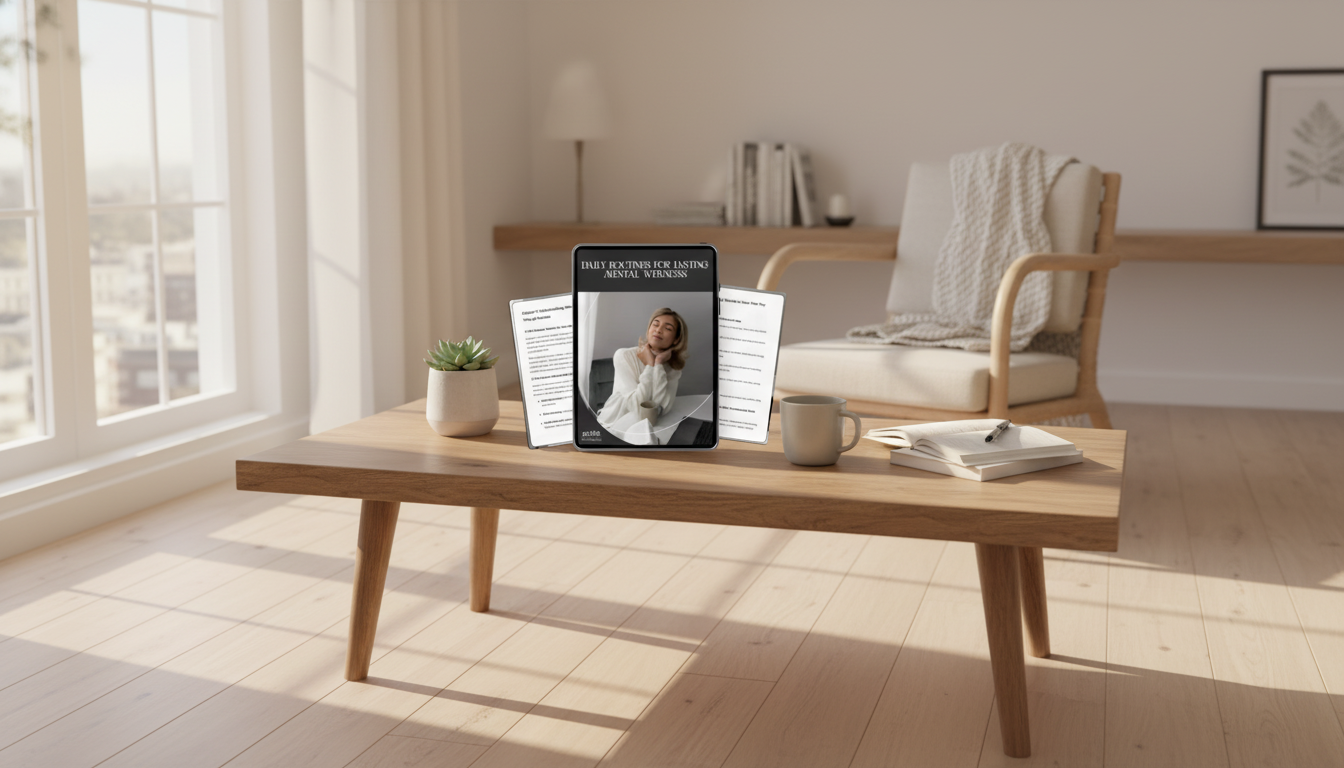
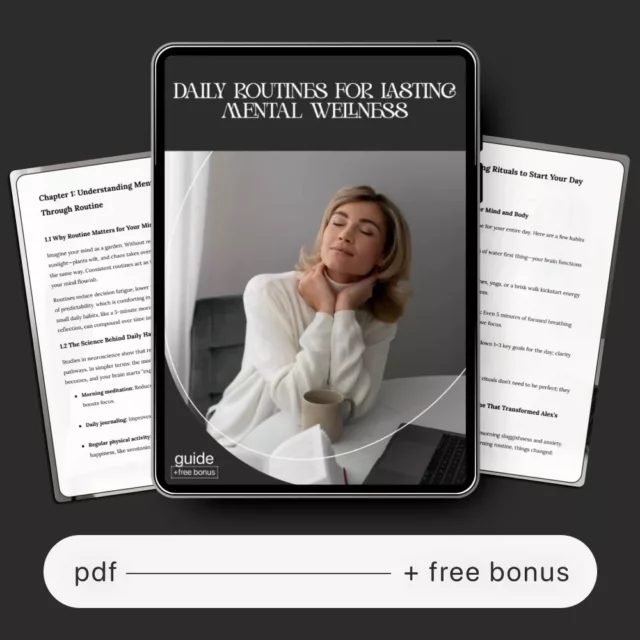
Digital guides to help your routines actually stick
FAQ
How long does it take for a new routine to feel natural?
It varies by person and by habit, but routines usually feel easier once the cue is stable and the action is small enough to repeat. Start with 2–5 minute actions for 2–4 weeks and track consistency rather than perfection.
What’s the simplest morning routine for mental wellness on busy days?
Try a minimum routine: 1 minute of slow breathing, 1 minute of light exposure (window or outdoors), then write one priority and one supportive action. On easier days, expand with mobility, a short walk, or a longer planning check-in.
Can an evening routine reduce racing thoughts at night?
Yes—an evening brain-dump plus a tiny “next step” plan, reduced stimulation, and consistent wind-down cues can lower rumination and help your mind disengage. If racing thoughts or insomnia are persistent or severe, professional support can be an important next step.
Recommended for you






Leave a comment