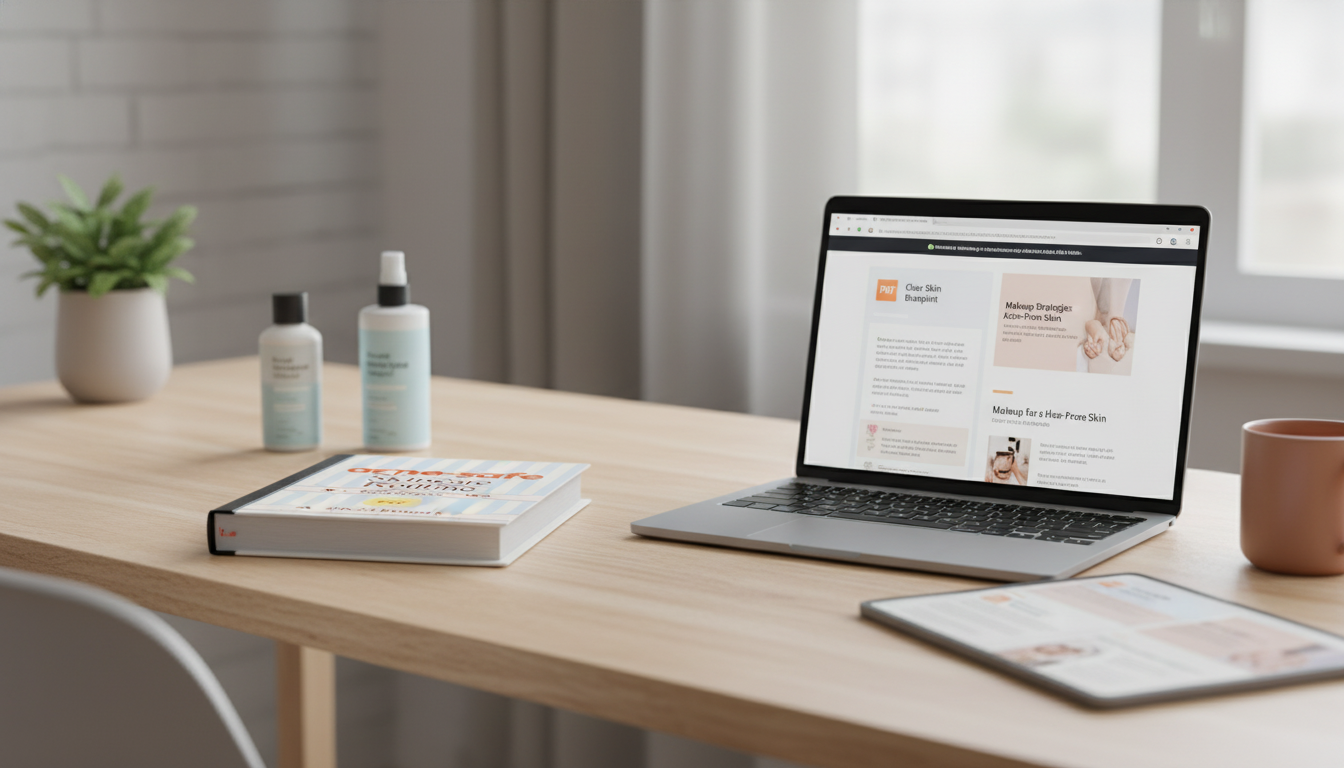
Acne-prone skin tends to respond best to routines that are consistent, gentle on the barrier, and strategically targeted—without turning every breakout into a full product overhaul. The goal isn’t “perfect” skin overnight; it’s a repeatable structure that reduces clogged pores and irritation while giving treatments enough time to work. Below is a practical routine blueprint (including makeup habits that can quietly derail progress) and an easy way to keep your steps organized with a digital routine pack.
“Acne-safe” usually means your routine is designed to minimize common breakout triggers—like congestion, friction, and irritation—while protecting your skin barrier so it can tolerate treatment over time. It’s less about chasing a single miracle product and more about staying steady.
It doesn’t mean every product labeled “non-comedogenic” will work for every person, or that you’ll never break out again. It means you’re reducing the odds of routine-caused flare-ups while creating conditions for treatments to perform.
Choose a gentle, non-stripping cleanser that leaves skin comfortable—not tight. Many people do best cleansing once at night, and then only cleansing in the morning if they’re very oily, sweaty, or wear heavy occlusives overnight.
A lightweight moisturizer helps buffer dryness from acne treatments and can reduce the “rebound” cycle where irritated skin feels oilier and more reactive. Look for comfortable hydration rather than a heavy, greasy finish.
Daily broad-spectrum SPF is a major part of an acne-safe routine because it helps post-acne marks fade more predictably and supports tolerability when you’re using actives like retinoids or acids. Even when you’re mostly indoors, consistent sunscreen use can keep progress from stalling due to lingering discoloration.
Consistency beats intensity: get these three steps stable for a couple of weeks before adding (or increasing) multiple treatment products.
Common acne actives include benzoyl peroxide, salicylic acid (BHA), adapalene/retinoids, and azelaic acid. The acne-safe approach is to start low, go slow, and let your skin adapt.
| Step | Gentle default | If clogged pores are the main issue | If inflamed pimples are the main issue | Common mistake to avoid |
|---|---|---|---|---|
| Cleanse | Non-stripping cleanser at night | Avoid over-washing; consider a BHA cleanser a few nights/week | Keep cleanser gentle; let treatments do the work | Scrubbing or using hot water |
| Treat | One active at a time | Salicylic acid 2–3x/week to start | Benzoyl peroxide or a retinoid on a schedule | Stacking multiple actives nightly |
| Moisturize | Light moisturizer daily | Barrier support reduces rebound oiliness | Barrier support improves tolerance | Skipping moisturizer because skin is oily |
| Protect | Broad-spectrum SPF daily | Helps reduce post-acne discoloration | Helps reduce marks and irritation | Skipping SPF when indoors or on cloudy days |
If you want an organized routine reference you can return to daily, see the Acne-Safe Skincare Routine Pack (4-in-1 digital bundle).
For general acne guidance, these references are helpful: American Academy of Dermatology Association: acne tips and Mayo Clinic: acne overview.
The right moisturizer usually helps acne-prone skin by supporting the barrier and reducing irritation from treatments. Lightweight, non-greasy textures tend to work well; very heavy or highly occlusive products may not suit everyone, so introduce changes slowly.
Start most leave-on acne actives at 2–3 nights per week and increase only as your skin tolerates it. Introduce one active at a time and watch for stinging, peeling, or tightness before adding frequency.
Apply makeup after skincare has fully set, keep layering minimal, clean tools frequently, and remove makeup thoroughly at night (often with a gentle double cleanse). Introduce new complexion products one at a time so you can identify triggers if breakouts flare.







Leave a comment