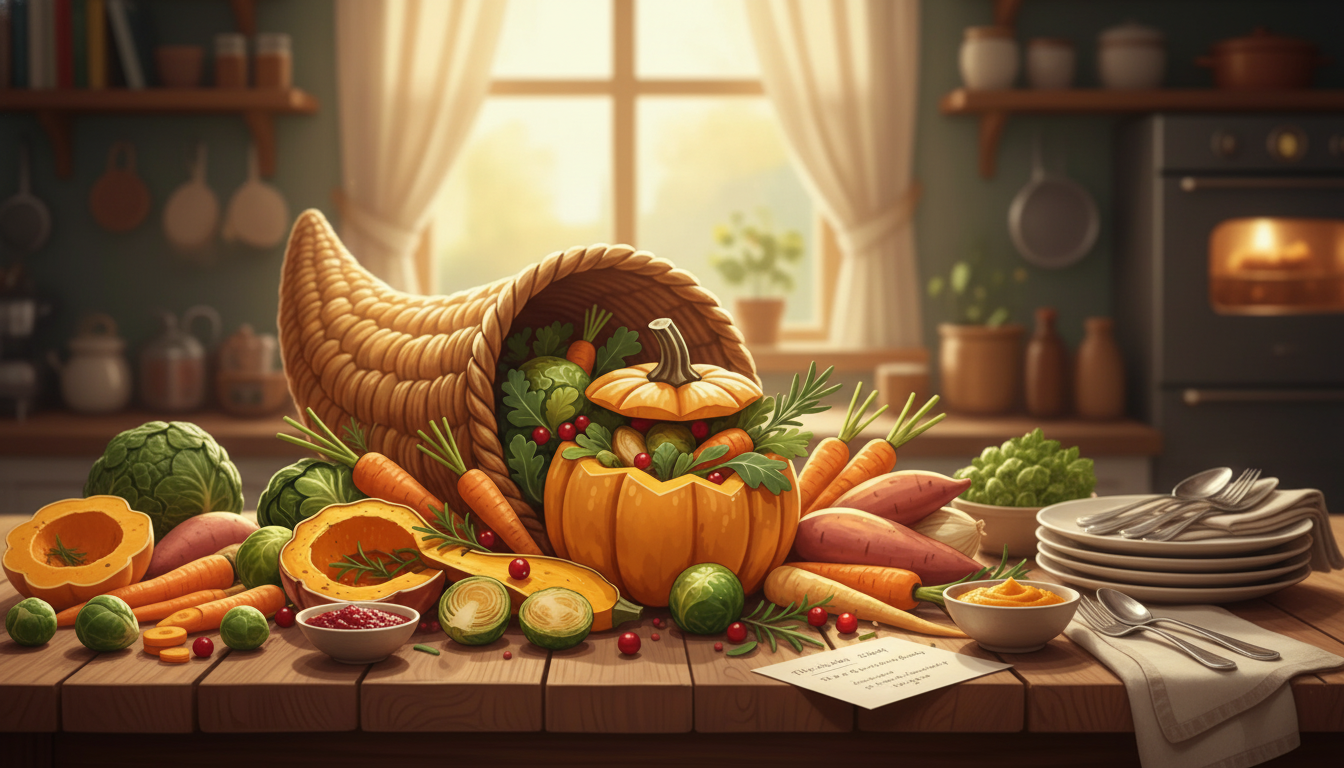
A Thanksgiving spread can feel complete, comforting, and festive without relying on meat-centered mains. With the right mix of hearty centerpieces, classic sides, bright salads, and make-ahead sauces, a vegetarian or plant-based menu can satisfy everyone at the table while keeping prep manageable. Think in layers—creamy, crunchy, tangy, and rich—and the meal starts to build itself.
The most memorable vegetarian Thanksgiving menus don’t try to “replace” a traditional table dish-for-dish—they create balance. Start by building around contrast: something creamy, something crunchy, something tangy, and something rich. That variety keeps the plate exciting from the first bite of stuffing to the last swipe of gravy.
Include at least one centerpiece that slices or scoops well to anchor the plate, such as stuffed squash, a lentil loaf, or a savory pie. Then round it out with starchy favorites (potatoes, rolls, dressing) plus vegetables that bring color and freshness—greens, roasted carrots, or a citrusy salad. Repeating flavor themes across dishes helps everything feel cohesive: sage/thyme/rosemary for savory depth, cranberry/citrus for brightness, and toasted nuts or seeds for crunch. For mixed dietary needs, simple swaps go a long way: olive oil + plant milk for mash, gluten-free bread for stuffing, and pepitas for nut-free crunch.
For general plate balance inspiration, the Harvard T.H. Chan School of Public Health’s Healthy Eating Plate is a helpful reference when planning a meal with plenty of produce.
A full holiday table is easier when each course has a clear job. Choose one showpiece, two or three classic sides, one bright salad, and at least two sauces. From there, you can mix and match based on the crowd.
If you want a lighter ending, spiced roasted pears are a win: bake until tender, then serve with a dollop of non-dairy whipped topping. Pumpkin-forward treats and apple bakes also pair naturally with warm spices like cinnamon, ginger, and cloves.
For more on well-planned vegetarian eating patterns, the Academy of Nutrition and Dietetics overview of vegetarian diets offers a solid, practical perspective.
The day before, cook cranberry sauce, build a gravy base, prep dessert components, and cook any grains or lentils needed for a centerpiece filling. For safety, cool food quickly in shallow containers, refrigerate promptly, and reheat to steaming hot before serving. The USDA’s guidance on leftovers and food safety is a useful checklist for holiday cooking.
| When | Prep tasks | Dishes that benefit most |
|---|---|---|
| 2–3 days before | Shop, wash greens, toast nuts/seeds, prep spice blends, chop onions/celery (store airtight) | Stuffing, salads, roasted veg, sauces |
| 1 day before | Cook cranberry sauce, make gravy base, cook grains/legumes, assemble casseroles (unbaked if preferred) | Cranberry sauce, lentil loaf filling, gratins |
| Morning of | Roast vegetables, bake centerpiece, set up salad components, warm sauces | Stuffed squash, Brussels sprouts, green beans |
| 30–60 minutes before | Reheat casseroles, finish crisp toppings, toss salads, warm rolls | Stuffing, potatoes, salads, bread |
Choose a hearty centerpiece that slices or scoops well, like stuffed squash, lentil loaf, vegetable pot pie, or a whole roasted cauliflower. Serve it with a rich gravy to deliver that classic Thanksgiving comfort.
Many sauces and fillings can be made 1–3 days ahead, while casseroles can often be assembled the day before and baked on Thanksgiving. Prep salads as components (washed greens, chopped toppings, dressing separate), then toss right before serving and reheat hot dishes until steaming.
Use olive oil, plant milk, cashew cream, roasted garlic, and umami boosters like miso or mushrooms to add depth and body. Finish with a little lemon juice or vinegar to keep creamy dishes—like dairy-free mashed potatoes or gratins—tasting balanced and vibrant.





Leave a comment