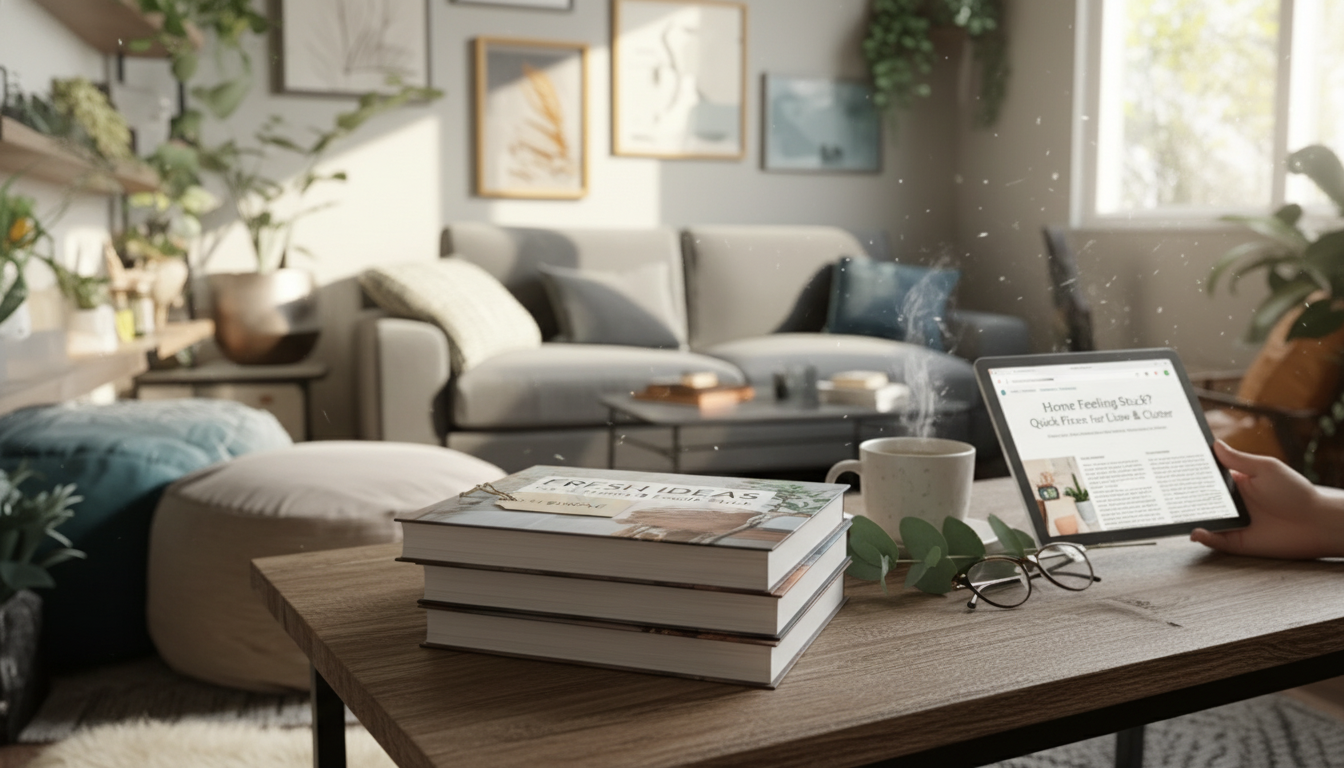
Fresh Ideas for a Home That Feels Stuck: Small Changes That Make a Big Difference
When a home starts to feel “stuck,” the problem is rarely a lack of style—it’s usually a mix of visual clutter, tired routines, and spaces that don’t support the way life runs day to day. The fastest path forward is a set of small, low-risk upgrades that improve flow, light, comfort, and organization without committing to a full renovation. Use the ideas below to get quick wins first, then build momentum room by room.
Spot the patterns that keep a home feeling stuck
Most “blah” homes share a few repeat offenders. Once you can name them, you can fix them quickly—often without buying anything.
- A few “drop zones” that attract everything: entry tables, kitchen counters, bedroom chairs, and the top of the dryer become default storage.
- Lighting that’s dim, harsh, or inconsistent: mismatched bulb color temperatures can make a room feel off even when it’s clean.
- Furniture that blocks natural walking paths: tight corners around sofas, beds, and dining chairs create daily friction.
- Storage that exists but isn’t usable: shelves that are too high, bins without labels, and closets filled with rarely used items.
- One dominant visual noise source: exposed cords, crowded countertops, or too many small décor pieces competing at once.
A simple rule: if something regularly lands in the wrong place, it’s not a “discipline” issue—it’s a system issue.
Start with quick wins: the 15-minute reset method
Big home refreshes stall when they require big decisions. A 15-minute reset is small enough to start on low energy days, but noticeable enough to build momentum.
- Set a timer for 15 minutes and pick one surface (coffee table, kitchen island, nightstand). Clear it to “nearly empty,” then add back only daily essentials.
- Create one landing zone per person near the entry: hooks for bags, a tray for keys, and a small bin for mail to prevent counter creep.
- Hide cords and chargers in a single charging station (basket, drawer, or cable box) to remove visual clutter fast.
- Swap one “problem” item for a better-fit solution: a lidded hamper, a slim shoe rack, or a tray that contains loose items.
- End each reset by wiping one high-touch surface so the space looks fresh, not just “picked up.”
15-minute resets by area
| Area |
Focus |
What to prep once |
Result |
| Entryway |
Drop zone control |
Hooks + tray + small bin |
Less pile-up, faster exits |
| Kitchen |
Counter clarity |
One container for mail/tools, one for snacks |
More working space, calmer feel |
| Living room |
Visual quiet |
Basket for remotes/chargers, cable tidy |
Room feels larger and more intentional |
| Bedroom |
Better mornings |
Nightstand tray + hamper + donation bag |
Less stress, easier sleep routine |
Refresh the feel without redecorating: light, color, and texture
- Unify bulbs within a room: pick a consistent color temperature (warm vs. cool) so the space doesn’t look patchy. The U.S. Department of Energy has practical guidance on efficient lighting choices and why they matter for comfort and cost (U.S. Department of Energy — Lighting).
- Add one layered light source: a floor lamp in a dark corner or an under-cabinet strip in the kitchen can instantly make the room feel more “finished.”
- Use the “one new texture” rule: add a throw, pillow cover, rug, or curtains in a new texture (linen, boucle, jute) for an update that doesn’t clash with what you already own.
- Edit wall décor down: fewer, larger pieces (or a cohesive gallery) reads calmer than many small items scattered across walls.
- Bring in one living element: a plant, fresh stems, or herbs near natural light adds movement and softness.
For an extra boost, pair lighting upgrades with a quick air refresh—ventilating, changing filters on schedule, and keeping moisture under control supports a “cleaner” feeling home (U.S. Environmental Protection Agency (EPA) — Indoor Air Quality).
Rework flow: simple layout adjustments that open up a room
Tackle the three clutter types: visible, hidden, and recurring
- Built for practical direction: Fresh Ideas for a Home That Feels Stuck – 3 in 1 Digital Bundle offers a clear way to choose what to change first and how to keep it manageable.
- Helpful when motivation is low: it turns vague refresh energy into defined next steps so you can act without overthinking.
- Works alongside quick-win resets: plan with the bundle, then execute with the 15-minute method so progress stays steady.
- Easy to use while you work: the digital format is simple to reference on a phone or tablet as you move room to room.
If the “stuck” feeling also shows up as a mental rut, pairing a home reset with a mindset reset can help routines stick longer. The Positive Attitude Starter Pack | 3-in-1 Digital Bundle is a simple companion for building steadier habits and a more encouraging day-to-day baseline.
FAQ
What’s the fastest way to make a home feel less cluttered?
Clear one visible surface per room, add a single catch-all container, and set a return-home routine for keys, bags, and mail. Quick wins matter most when they’re repeatable—10 minutes daily can outperform a once-a-month deep clean.
How can a home feel new without buying lots of décor?
Unify lighting temperature and brightness, add one new texture (like linen or boucle), and edit down small items so the space reads calmer. Low-cost swaps like bulbs, pillow covers, and a couple of baskets can change the feel without changing your style.
Where should improvements start if everything feels overwhelming?
Start with the entryway and kitchen because they affect every day: arrivals, departures, meals, and cleanup. Then move to the living room and bedroom for comfort; using a checklist-style guide can reduce decision fatigue and keep progress moving.
Recommended for you






Leave a comment