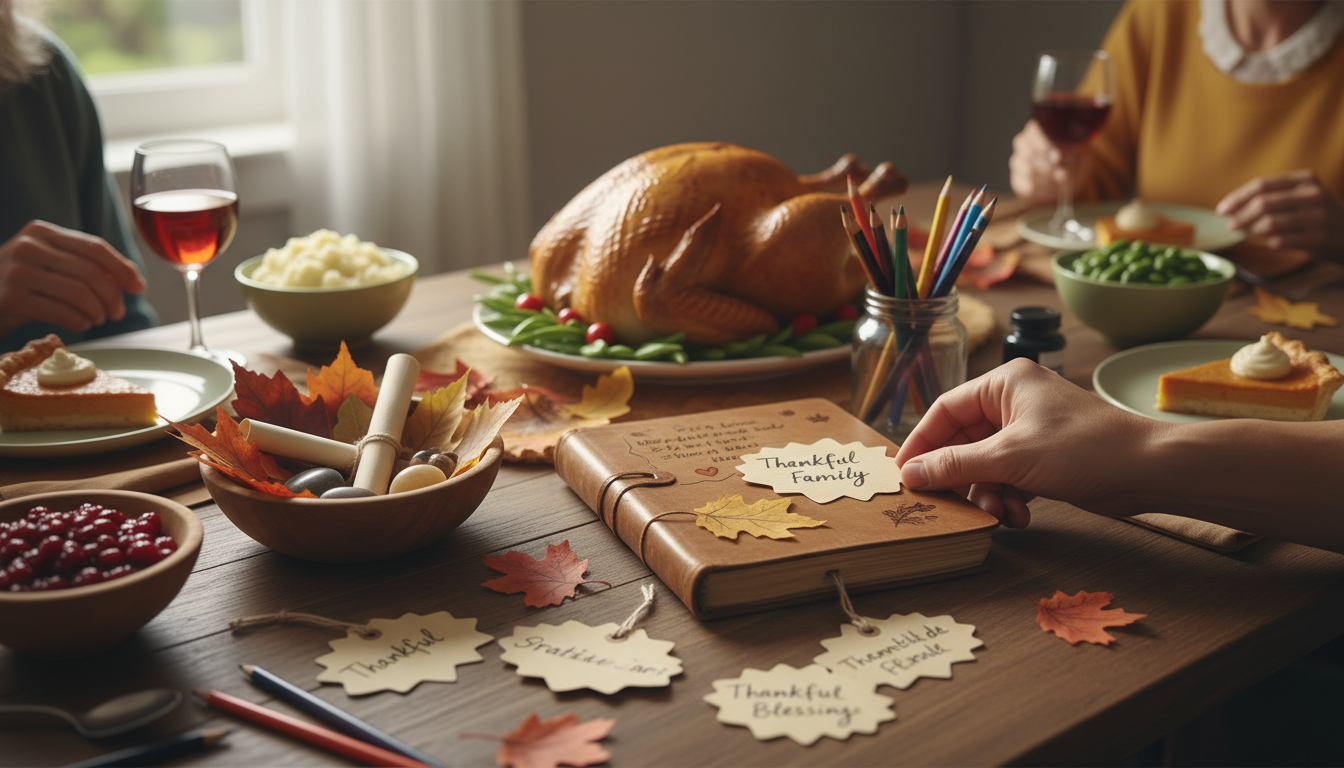
Thanksgiving can feel rushed when the spotlight stays only on the meal. A simple plan for gratitude, conversation, and low-key creativity helps everyone slow down, connect across ages, and create keepsakes worth revisiting year after year. The goal isn’t perfection—it’s presence, shared attention, and a few repeatable rituals that make the day feel like it means something.
Research also suggests gratitude supports well-being and social connection, making it a fitting centerpiece for the holiday when it’s practiced with intention and specificity (see Harvard Health Publishing and the American Psychological Association).
The most memorable Thanksgivings usually aren’t the most elaborate—they’re the ones where people feel seen. Meaning tends to grow from small rituals repeated with intention: a welcome prompt at the door, a quick “one-word intention” before eating, or a tradition that gives quieter guests a comfortable way to participate.
Gratitude also lands best when it’s specific. Instead of “I’m thankful for family,” try naming the person and the moment: “I’m thankful for Aunt Denise calling me after my interview,” or “I’m thankful for Dad fixing my car without making it a big deal.” Specificity turns gratitude into recognition.
A balanced celebration often includes three ingredients:
Finally, meaning grows when everyone participates—including kids, teens, and the guests who prefer listening to talking. Offering multiple ways to join (speaking, writing, drawing, or even passing) makes the table feel welcoming rather than demanding.
A structured-but-flexible rhythm can make Thanksgiving feel calmer. The point isn’t to schedule every minute; it’s to create a few “anchors” that keep the day from flying by without connection.
| Moment | 5–10 Minute Idea | Keepsake |
|---|---|---|
| Morning | Write 3 specific gratitudes (people, help received, small joys) | Journal page |
| Arrival | Welcome prompt: share one favorite memory with someone here | Memory list |
| Before eating | One-word intention round (peaceful, playful, thankful) | Table card |
| During meal | Story prompt: “A challenge I’m proud of…” | Conversation notes |
| After meal | Gratitude tree: add leaves with names + why | Gratitude tree |
| Evening | Thank-you message to someone not present | Text/email or note |
Journaling doesn’t need to be long or serious. Sentence starters reduce pressure, and reluctant writers can respond with bullet points, drawings, stickers, or one-word answers. The aim is to capture real details that future-you will love reading.
To turn pages into a tradition, create a “gratitude time capsule”: each person chooses one page (or one paragraph) to save and reread next Thanksgiving. Over time, it becomes an annual snapshot of what mattered most.
Some of the best traditions take five minutes and require nothing fancy—just intention and follow-through.
If planning the “what do we do besides eat?” part feels like extra work, a printable set of prompts can provide structure without rigidity. The Grateful Hearts, Joyful Tables digital download is designed for families who want flexible pages they can print as needed—conversation starters, journaling prompts, and creative keepsake activities.
Print only the pages you want for your gathering, then use them as table prompts, quick journaling before or after the meal, or a post-dinner activity. Save the completed pages in a folder or binder so they become a yearly keepsake you can reread next Thanksgiving.
Keep it lightweight: offer one-sentence starters, drawing options, or a quick spoken round where “pass” is allowed. Gratitude place cards and a short “one-word intention” round work well for people who prefer not to write.
Yes—these ideas scale down easily. Choose just one activity (like a gratitude tree or place cards) plus a short reflection prompt at the end to keep it meaningful without turning it into a big production.







Leave a comment