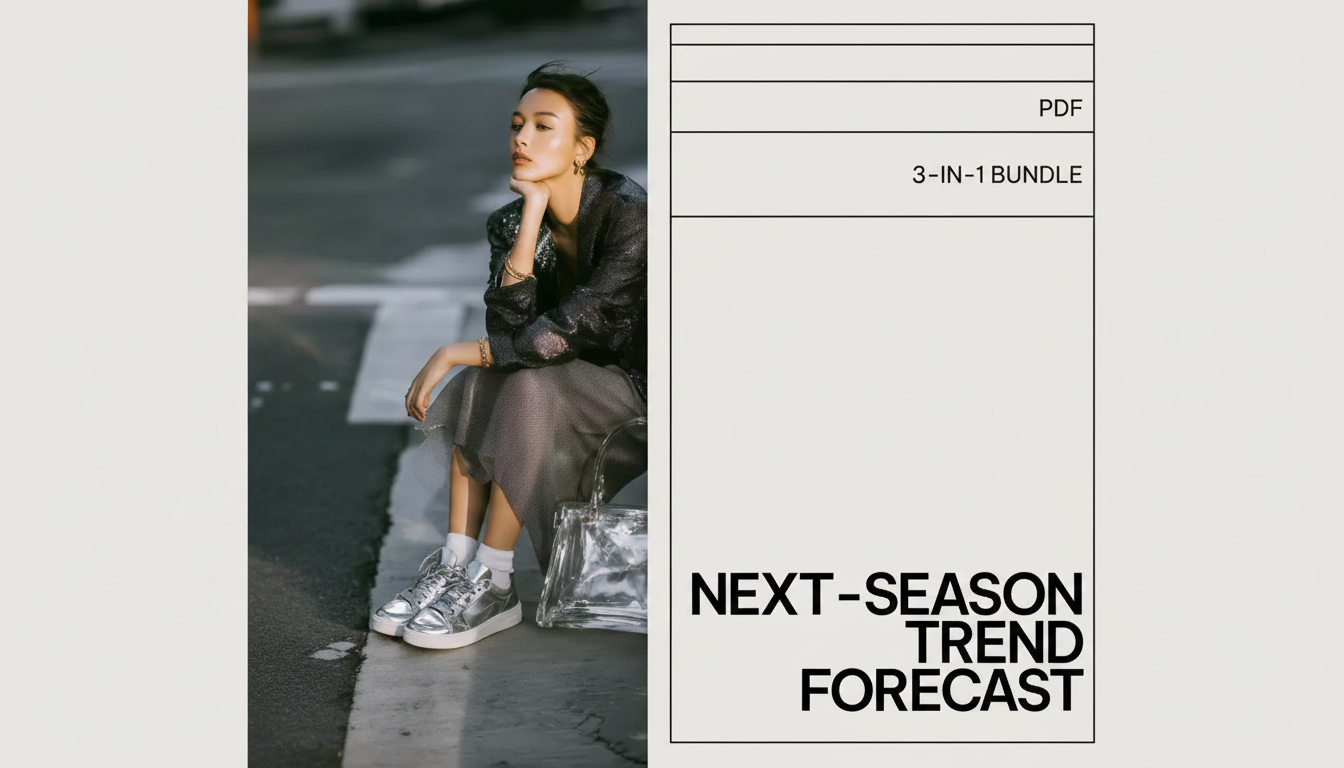
Seasonal shifts move fast—colors, silhouettes, and styling cues can change between runway moments and what customers actually wear. A forecast pack turns scattered inspiration into a usable plan: what’s rising, what’s fading, and how to translate trends into product, content, and styling decisions without overbuying or losing brand clarity. For more guidance, see [PDF] Computer Vision in Fashion Trend Analysis and Applications.
Instead of reacting to every micro-trend, a next-season forecast helps build a steady point of view. You can reference runway signals (like those tracked on Vogue Runway), connect them to commercial reality, and make choices that stay consistent with your customer and price point. For further reading, see WGSN | Trend Forecasting & Analytics 2025-2032.
| Forecast element | What to decide | Fast way to apply it |
|---|---|---|
| Color direction | Palette for buys and campaigns | Choose 2 core neutrals + 2 accents + 1 pop tone for capsules |
| Silhouette shifts | Best-selling shapes to update | Adjust one proportion per category (rise, length, volume, neckline) |
| Materials & textures | Fabric and trim choices | Add 1 “newness” texture to hero items while keeping core fabrics stable |
| Print & pattern | Motifs and scale | Limit to 1–2 print stories per drop to keep merchandising clean |
| Details & styling cues | Finishing points | Standardize 3 repeatable details across products (hardware, stitching, ties, seams) |
The strongest assortments treat these as “levers,” not costumes: introduce one new proportion, one new surface, or one new accent in a way that still works with existing staples. For broader market context—what’s shifting in fashion business cycles, consumer behavior, and buying strategies—ongoing coverage from The Business of Fashion can help validate timing and risk.
If you want a discipline check, set a simple ratio for each drop (for example: 60% base neutrals, 30% accents, 10% pop). Then tie that ratio to your visual merchandising rules—what colors can share a product grid, what shades get a dedicated landing story, and what tones are reserved for email “moment” pieces. Color forecasting resources like the Pantone Color Institute can help with naming, harmonies, and storytelling language that stays consistent across creative.
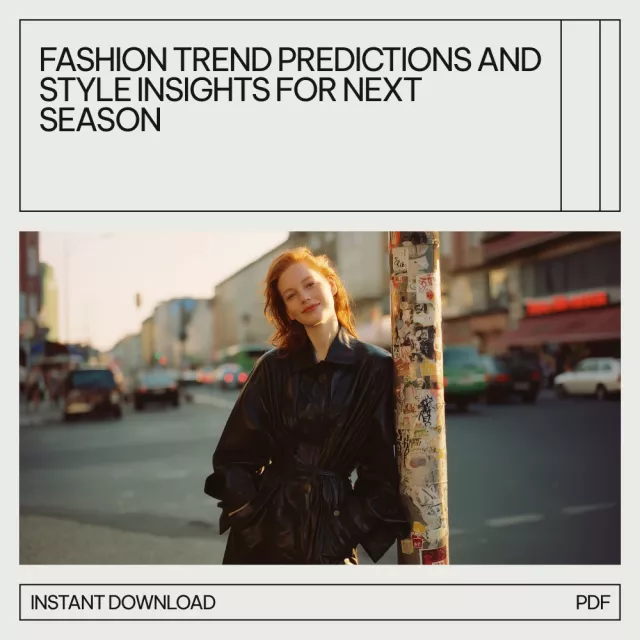
If you want a ready-to-use planning tool, explore the Next-Season Trend Forecast Pack: Fashion Trends Forecast for Next Season. For creators balancing busy planning cycles, a structured reset can also help keep production consistent—resources like the Positive Attitude Starter Pack can support focus when you’re building and launching multiple drops. And if your audience includes lifestyle content beyond fashion, a bundle like the Peaceful Plates System for Picky Phases can help round out seasonal editorial planning with family-oriented content themes.
Plan 6–16 weeks ahead depending on your buying model. A simple timeline is research (week 1–2) → palette and stories (week 2–3) → buys and SKU guardrails (week 3–6) → content planning and shoot lists (week 4 onward), with earlier lead times if you produce product.
Yes—especially when inventory and time are limited. It speeds decisions, keeps shopping lists focused, and helps build cohesive outfits and content themes so your drops feel intentional instead of random.
Translate signals into wearable choices: one updated proportion, one modern texture, and one accent color is often enough. Use brand fit and customer comfort as the filter so the trend reads current while still feeling like “you.”




Leave a comment