The Empowered Budgeting Toolkit: A 4-in-1 Bundle for Monthly Clarity, Savings, and Wealth Habits
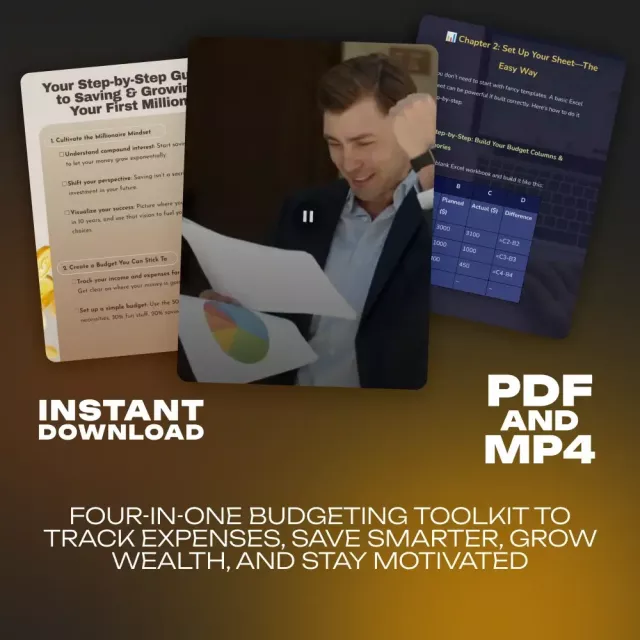
A workable budget gets easier when planning, tracking, and mindset support live in one place. The Empowered Budgeting Toolkit combines a structured budget planner, an Excel guide, monthly expense and savings organization, practical wealth strategies, and guided affirmations designed to reinforce consistent money habits. Instead of rebuilding your system every month, you get a repeatable setup that helps you see where your money is going, decide where it should go next, and stay steady when real life throws surprises into the mix.
What the 4-in-1 Toolkit Helps Solve
Most budgeting problems aren’t about motivation—they’re about missing structure. This bundle is designed to tighten the loop between planning and follow-through.
- Unclear monthly cash flow: replace guessing with a repeatable monthly plan and review rhythm.
- Overspending in variable categories: add simple limits and checkpoints that catch drift early.
- Inconsistent saving: build an automatic-looking process with sinking funds and goal targets.
- Lack of confidence around money: pair numbers with supportive prompts and affirmations to stay steady.
- “Tool overload”: reduce scattered notes, apps, and spreadsheets by using one coordinated system.
What’s Included in The Empowered Budgeting Toolkit Bundle
The bundle is built around a simple idea: plan first, track lightly, review consistently, and reinforce the behavior that makes the plan stick.
- Budget planner framework to map income, fixed costs, variable spending, and savings goals.
- Excel guide structure to track spending, summarize categories, and compare planned vs. actual.
- Monthly expense and savings workflow to build consistency (setup → track → review → adjust).
- Wealth strategies section focused on habits that support long-term growth (saving rate, debt plan, priorities).
- Guided affirmations for wealth to reinforce follow-through and reduce impulsive money decisions.
Bundle components and how they’re used
| Component |
Primary use |
Best time to use it |
| Budget planner |
Set monthly targets for bills, spending, and goals |
Before the month starts or on payday |
| Excel guide/tracker |
Record transactions and see category totals |
Weekly check-in (10–15 minutes) |
| Monthly expense + savings system |
Organize sinking funds and goal-based savings |
After payday and mid-month review |
| Wealth strategies |
Prioritize savings rate, debt payoff, and long-term plan |
Monthly review or quarterly reset |
| Guided affirmations |
Support mindset and consistency |
Daily or during budgeting sessions |
How to Set It Up in Under an Hour
The goal is a clean starting point—good enough to use right away, not perfect on day one.
- Step 1: List reliable income sources and pay dates to define the month’s starting point.
- Step 2: Add fixed expenses first (housing, utilities, insurance, subscriptions) to lock in non-negotiables.
- Step 3: Choose 5–10 variable categories to track (groceries, dining, fuel, personal, kids/pets, entertainment).
- Step 4: Create a savings map: emergency fund, short-term goals, and sinking funds (annual bills, travel, gifts).
- Step 5: Decide a weekly money check-in time and a monthly review date (calendar reminder).
- Step 6: Pick a short set of affirmations to use before purchases that tend to derail the plan.
If you want a straightforward starting place for category planning, the CFPB’s budgeting resources are a helpful reference for building a realistic picture of income and expenses: Consumer Financial Protection Bureau (CFPB) — Budgeting resources.
A Simple Monthly Routine That Builds Momentum
Consistency beats intensity. A lighter routine you actually keep will outperform a complex system that gets abandoned by week two.
- Pre-month planning (20 minutes): set category targets and savings transfers based on upcoming events.
- Weekly tracking (10–15 minutes): record key spending, check category balances, and note surprises.
- Mid-month adjustment (10 minutes): move money between categories intentionally instead of “hoping it works out.”
- Month-end review (20 minutes): compare planned vs. actual, identify 1–2 changes, and carry lessons forward.
- Mindset support (2 minutes): read or listen to affirmations during planning and before discretionary spending.
Practical Wealth Strategies to Pair With the Planner
- Increase savings rate gradually: aim for a small monthly percentage improvement rather than a drastic overhaul.
- Use sinking funds: prevent “unexpected” predictable costs (car repairs, holidays, annual renewals).
- Plan debt payoff with clarity: define minimums, pick a payoff method (avalanche or snowball), and track progress monthly. For practical debt and credit guidance, see FTC — Credit and debt guidance.
- Protect progress with guardrails: set a discretionary cap and a short “pause rule” for larger impulse purchases.
- Make reviews visible: keep one page or one dashboard view showing savings, debt, and key categories at a glance.
For the emergency fund portion of your savings map, FINRA provides a clear overview of why cash reserves matter and how to think about building them: FINRA — Emergency fund guidance.
Who This Toolkit Fits Best
Common Pitfalls and How to Avoid Them
Product Details and Purchase Information
- Product: The Empowered Budgeting Toolkit 4-in-1 Bundle
- Includes: budget planner + Excel guide + monthly expense/savings organization + wealth strategies + guided affirmations
- Availability: in stock
- Price: $111.99 USD
- Best use: consistent monthly planning paired with weekly tracking and a short review routine
For additional mindset reinforcement outside of budgeting sessions, pair it with: Positive Attitude Starter Pack.
FAQ
Does this work if income changes from month to month?
Yes. Start from a conservative baseline, cover essentials first, and use weekly check-ins to adjust variable categories as income becomes clearer. Sinking funds also help smooth irregular months by handling predictable “not monthly” costs.
How often should expenses be tracked in the Excel system?
Weekly tracking is usually the sweet spot—consistent and quick—paired with a short mid-month adjustment and a month-end review. Daily tracking can work too, but it’s optional.
Are the guided affirmations meant to replace practical budgeting steps?
No. They’re designed to support behavior and consistency while you still plan, track, and review. Use them during budgeting sessions and right before spending triggers to reduce impulsive decisions.
Recommended for you







Leave a comment