School stress doesn’t always look like “panic.” It can show up as racing thoughts at bedtime, procrastination that feels impossible to break, irritability over small things, or that overwhelmed feeling when even easy tasks suddenly seem huge. When schedules are packed with classes, sports, clubs, work shifts, and family responsibilities, most students don’t need more vague advice—they need a simple, repeatable plan.
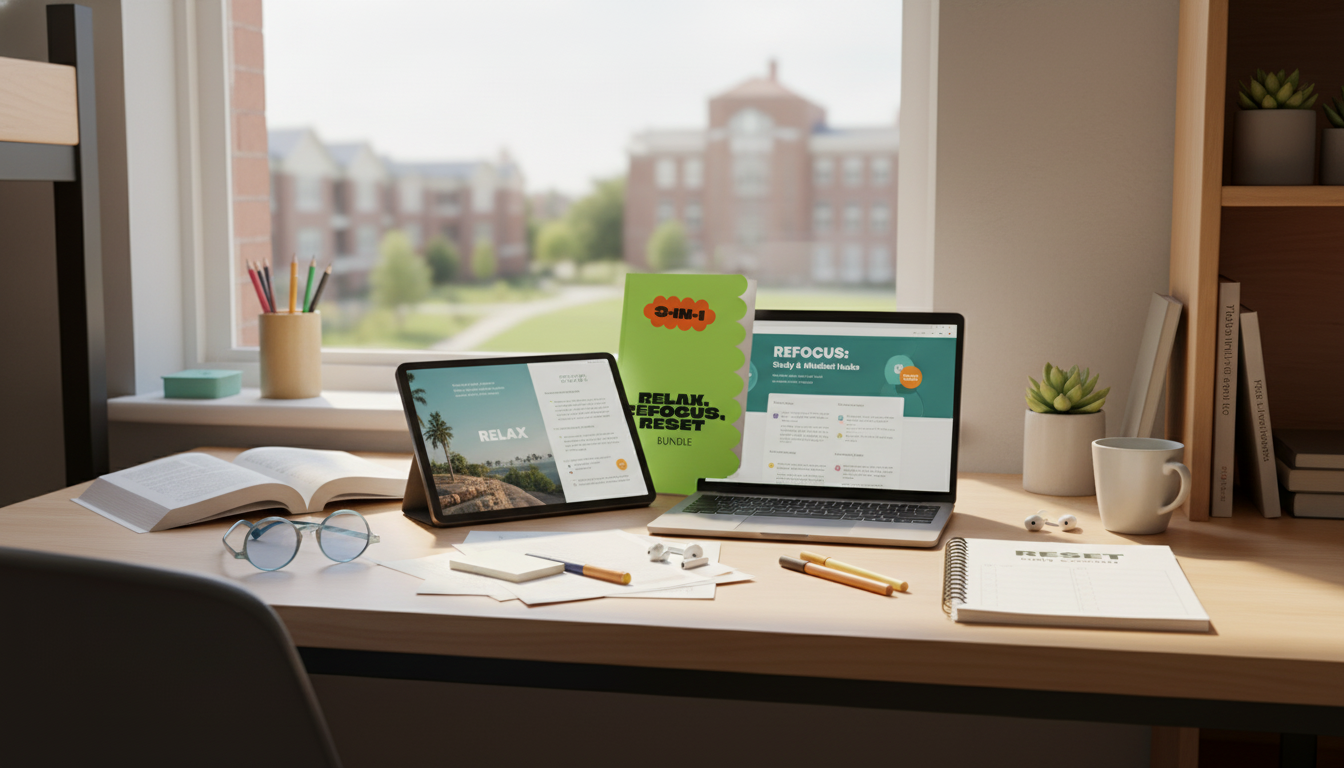
Relax, Refocus, Reset: Stress Toolkit For Students – 3-in-1 Bundle of Guides, eBooks & Checklists is a student-friendly digital toolkit designed to create structure during stressful weeks. It blends quick-read guides with actionable checklists so students can calm their bodies, organize priorities, and restart momentum—without needing a perfect day or a big block of free time.
For background on how stress affects the mind and body, the American Psychological Association and the CDC offer helpful overviews of common stress responses and coping approaches.
It’s especially useful for students who know what they “should” do (study, start earlier, get more sleep), but struggle to transition from intention to action when stress is high.
The toolkit is built around a simple flow that matches real student life: first calm the stress response, then choose the next best step, then set up a quick return-to-baseline routine.
| Component | Format | How it helps during school stress |
|---|---|---|
| Relax module | Guide/eBook | Helps reduce physical tension and emotional overload so it’s easier to think clearly |
| Refocus module | Guide/eBook | Supports attention and prioritization when tasks feel scattered or confusing |
| Reset module | Checklists | Creates a quick “back on track” routine after a stressful moment, a rough class, or a bad study session |
The easiest way to build consistency is to keep the process small and anchored to a routine that already happens most days.
A good “weekday version” is short: a few minutes to settle your body, a few minutes to decide what matters, then a quick setup so tomorrow starts smoother.
During crunch time, stress can trigger avoidance, all-or-nothing thinking, or marathon study sessions that backfire. The toolkit is most powerful when it’s used to keep effort steady instead of extreme.
When anxiety starts to feel persistent or intense, resources like the National Institute of Mental Health (NIMH) can help students and families recognize symptoms and understand when extra support may be needed.
For students who want an additional mindset boost alongside practical stress routines, pair this toolkit with Positive Attitude Starter Pack (3-in-1 Digital Bundle) to reinforce steady, realistic self-talk during challenging weeks.
It works for middle school, high school, and college students. The steps and checklists can be adapted to fit different schedules, workloads, and levels of independence.
Some students feel immediate relief after the calming steps, especially when stress is physical or fast-moving. Longer-term improvement typically comes from repeating the routine over several weeks, particularly during stressful periods.
They can be used digitally for easy access on a phone, tablet, or laptop. Printing the most-used checklists can also help by keeping the routine visible and effortless to start.






Leave a comment