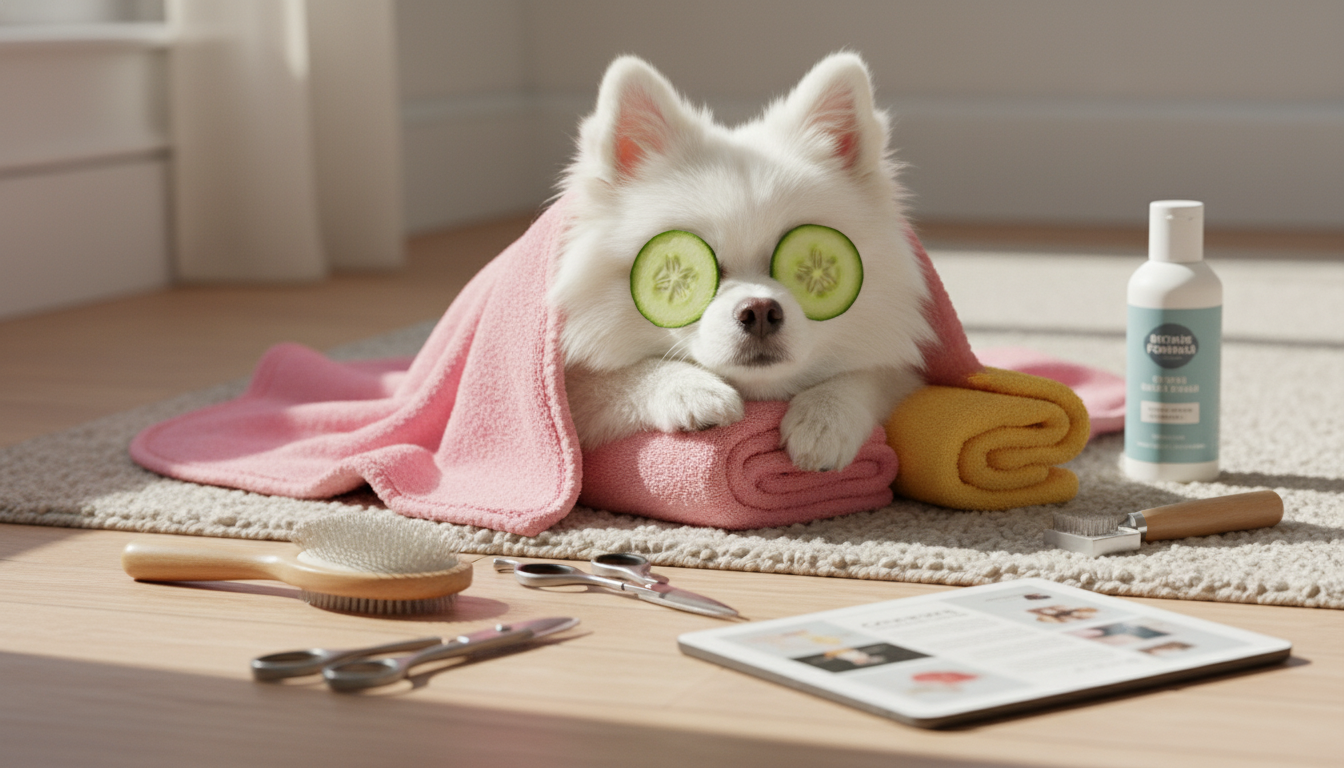
A well-built home grooming setup makes brushing, bathing, nail care, and ear/teeth hygiene calmer, faster, and safer—especially when the tools match a dog’s coat type, size, and comfort level. With a consistent routine and the right supplies within arm’s reach, grooming becomes a predictable “same steps, same order” experience that most dogs learn to tolerate (and many come to enjoy). For more guidance, see Essential Tools for Every Dog Groomer: Building Your Professional ….
If you want a ready-to-follow plan with a simple schedule you can stick to, start with The Perfect Home Grooming Toolkit for Dogs of All Breeds: Guide, eBook & Checklist. For dogs who get nervous with handling, pairing grooming with calm training support can help—see Pet Stress Relief Toolkit for Happier, Relaxed Pets – 5-in-1 Bundle. For further reading, see Top Dog Grooming Tools Every Beginner Needs (And How to Learn ….
A truly “complete” home grooming toolkit covers the full routine—not just brushing. Most households do best with tools organized into these core categories:
Comfort and handling essentials matter just as much as the grooming tools themselves: a non-slip mat, a stable surface that won’t wobble, good lighting, treats, and calm breaks. Nice-to-have upgrades include a coat conditioning spray for brushing, a grooming loop used carefully (never unattended), and a high-velocity dryer for dense coats.
A checklist is the difference between “random grooming” and a repeatable system. It reduces missed steps (like brushing before a bath, which helps prevent mats from tightening) and helps track schedules as coats change seasonally.
| Tool | Best for | How often | Quick tips |
|---|---|---|---|
| Slicker brush | Curly, wavy, medium/long coats | 2–4x/week (daily during shedding) | Use gentle line-brushing; stop if skin reddens |
| Undercoat rake | Double coats and heavy seasonal shedding | 1–2x/week (more during blowout) | Avoid repeated passes on the same spot to prevent irritation |
| Greyhound comb (metal comb) | Finishing and checking for tangles | After brushing sessions | If the comb snags, detangle before moving on |
| Nail clippers or grinder | All breeds | Every 2–4 weeks | Trim small amounts; watch for the quick |
| Dog shampoo + conditioner | All coats (choose coat/skin-appropriate formulas) | Every 3–6 weeks (varies by lifestyle) | Brush before bathing to prevent mat tightening |
| Ear cleaner (dog-safe) | Floppy ears, swimmers, allergy-prone dogs | Weekly to monthly | Never insert cotton swabs into the canal |
| Toothbrush + enzymatic toothpaste | All breeds | Daily (or 3–4x/week minimum) | Go slowly; reward calm cooperation |
| Quick styptic support (powder/gel) | All breeds (nail care backup) | As needed | Apply gentle pressure; contact a vet if bleeding won’t stop |
Two dogs can live in the same home and need totally different tools. Start with coat type, then dial in sizing so your hands can work precisely.
For more detailed step-by-step structure (including a printable checklist), The Perfect Home Grooming Toolkit for Dogs of All Breeds: Guide, eBook & Checklist is built to keep the routine simple without skipping the important safety steps.
Dogs who are uneasy with handling often improve faster when grooming is paired with calm routines and low-pressure practice. If that sounds familiar, consider adding Pet Stress Relief Toolkit for Happier, Relaxed Pets – 5-in-1 Bundle alongside your grooming plan.
Most dogs do best with brushing 1–4 times per week depending on coat type (more during seasonal shedding), baths about every 3–6 weeks based on lifestyle, and nail trims every 2–4 weeks. Puppies and seniors often benefit from shorter, more frequent sessions to keep the experience comfortable.
A slicker brush helps remove surface tangles and is especially useful for curly, wavy, and longer coats, while an undercoat rake is designed to lift shedding undercoat from double-coated breeds. Both should be used gently—too much pressure or repeated passes in one area can irritate the skin.
Human shampoo isn’t recommended because dogs have different skin pH and it can lead to dryness or irritation. Use a dog-specific shampoo (and conditioner when appropriate), and ask a veterinarian for guidance if your dog has sensitive skin or frequent itching.






Leave a comment