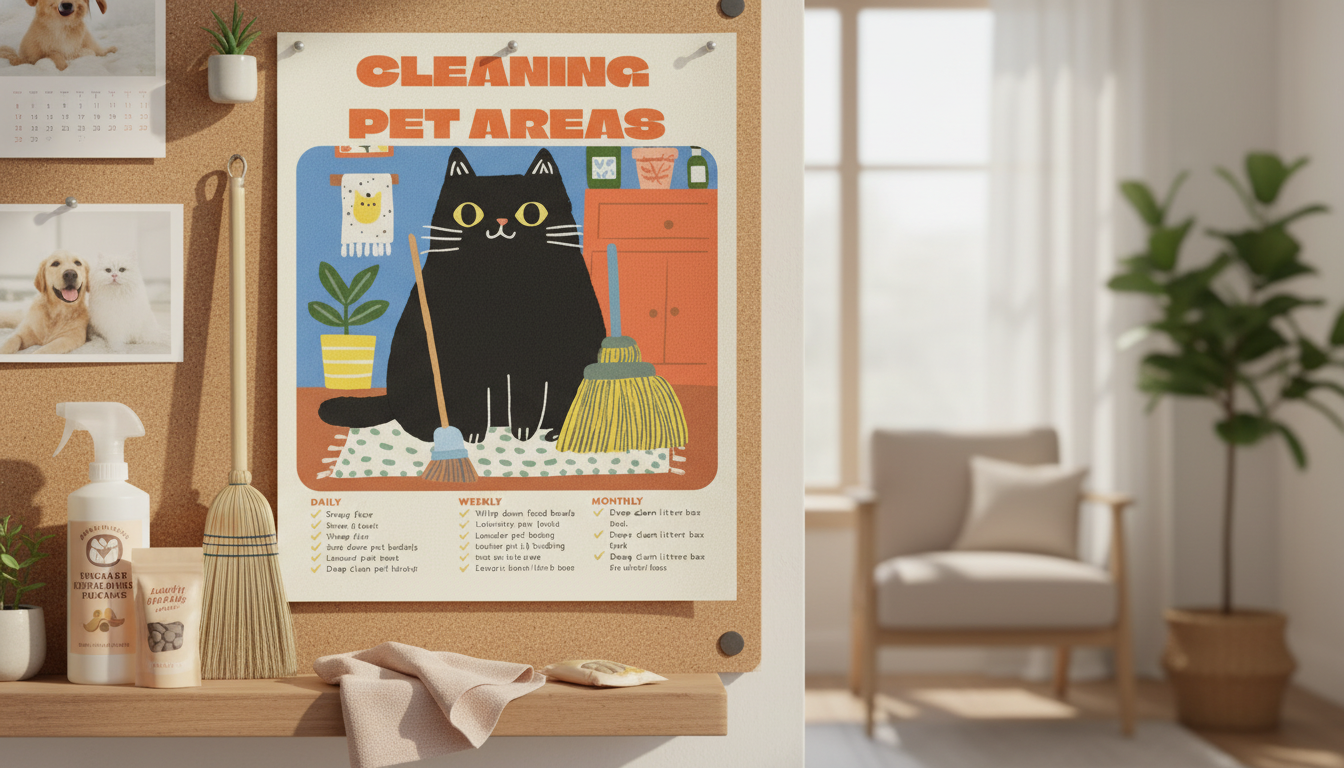
Keeping pet zones clean doesn’t have to mean constant deep-cleaning. A clear routine—daily resets, weekly refreshes, and monthly deep cleans—helps control odor at the source, protects floors and fabrics, and keeps food and water areas sanitary. Below is a practical breakdown of what to clean, how often to do it, and which supplies make the process faster.
Pet odors don’t come from one spot—they build up across the places your pet eats, sleeps, plays, and “does business.” Most homes have several pet areas, even if they don’t look like official “pet stations.”
Air fresheners can make a room smell “cleaner” for a moment, but they don’t remove what’s causing the odor. A source-first approach keeps smells from returning and helps maintain healthier indoor air.
A workable routine is less about perfection and more about consistency. Aim for a 2-minute daily reset in the highest-impact areas (feeding + bathroom + one sleep spot), one weekly focus day to prevent buildup, and a monthly deep clean to reset hidden grime and allergens.
| Area | Daily | Weekly | Monthly |
|---|---|---|---|
| Feeding station (bowls + mat) | Wash bowls; wipe mat and surrounding floor | Sanitize mat; wipe inside food bin lid | Clean food storage bin; check for expired food/treats |
| Litter box / potty zone | Scoop/replace pads; spot-clean splashes | Wash box/turf; replace litter fully as needed | Deep-clean surrounding baseboards/walls; replace worn tools |
| Pet bed + blankets | Shake out hair; spot-clean | Wash cover/blankets; vacuum under bed | Wash insert if allowed; deodorize and fully dry |
| Floors (near pet zones) | Quick vacuum/sweep high-traffic paths | Mop with pet-safe cleaner | Move furniture; clean corners, vents, and under mats |
| Toys (chew + plush) | Pick up and rotate; remove damaged items | Wash hard toys; launder plush if safe | Full toy audit; discard cracked, sticky, or frayed items |
| Grooming tools | Remove hair from brush/comb | Wash brushes/guards; wipe clippers | Sanitize and replace dull/rough tools |
If odors linger even after you “cleaned,” they’re often trapped in edges, fabrics, and low-touch surfaces at pet level.
Having the right tools in the right place reduces skipped steps (and skipped steps are where odors come back).
When disinfecting is needed (for example, after illness or contamination), choose products appropriately and follow label instructions for dwell time. The EPA’s disinfectant reference list is here: https://www.epa.gov/coronavirus/about-list-n-disinfectants-coronavirus-covid-19.
As a reminder for feeding areas: keep human foods and treats stored safely and out of reach. The ASPCA’s list of foods to avoid is a solid reference: https://www.aspca.org/pet-care/animal-poison-control/people-foods-avoid-feeding-your-pets.
Blot first to remove as much moisture as possible, then apply an enzyme cleaner and let it sit for the full dwell time on the label. Avoid steam heat until the odor is fully treated, and dry completely; if smells return, the urine may have reached the padding and may need repeat treatment.
Wash bowls daily with hot, soapy water, and sanitize periodically based on how they’re used (more often for raw diets). Replace bowls that are scratched or cracked, since worn surfaces can hold residue and odors.
It can be safe if used correctly: dilute exactly per the product label, never mix with ammonia or other cleaners, and keep pets away until surfaces are rinsed (if required) and fully dry. Always follow contact-time directions so disinfection is effective without increasing risk.





Leave a comment