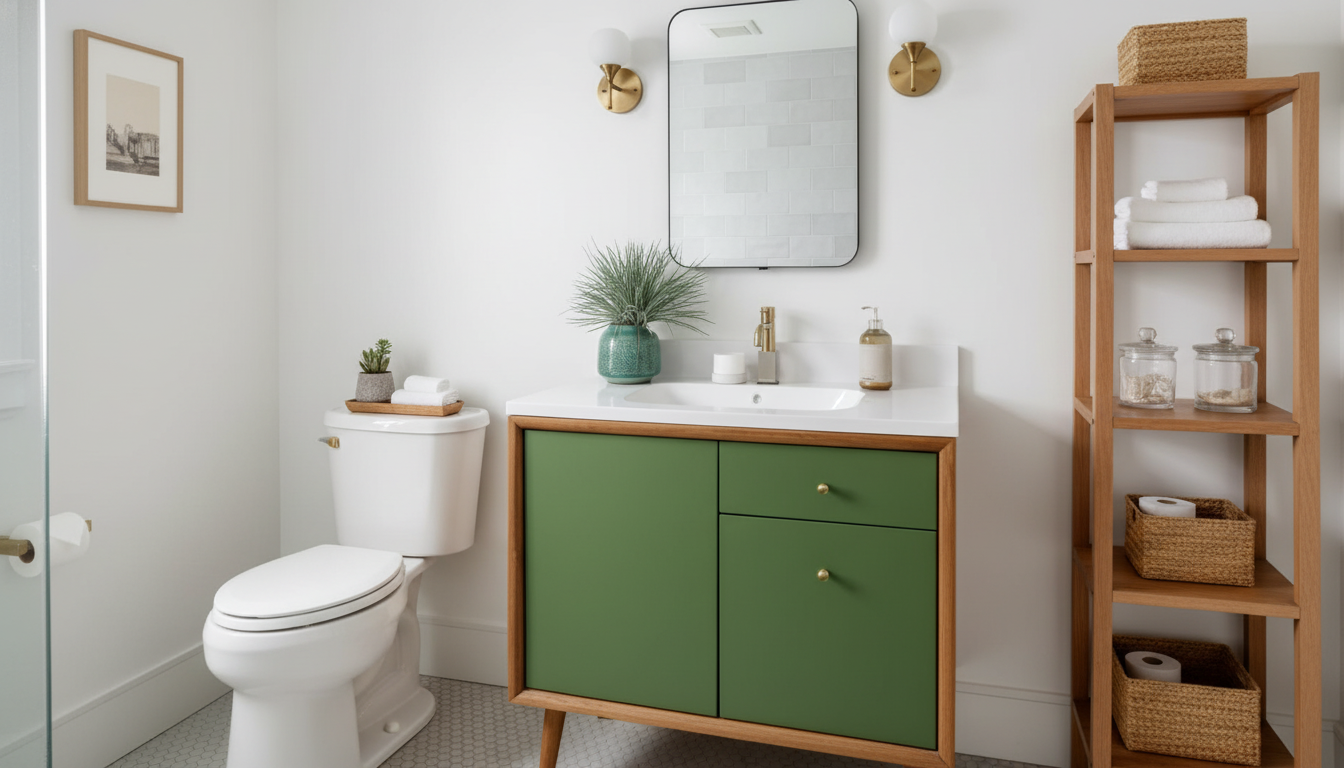
Small bathrooms can feel tricky: every inch matters, storage is limited, and the wrong finish or fixture can make the whole room feel tighter. A checklist-driven approach makes it easier to decide what to keep, what to change, and what to measure before spending money. The “Tiny Bathroom, Big Ideas” AI Design Checklist is built to spark fresh layout and style directions while keeping decisions grounded in real constraints like clearances, lighting, moisture, and daily routines.
Before choosing tile or a new vanity, get the “hard facts” down. In a tiny bathroom, one inaccurate measurement can ripple into a chain of compromises.
“Bigger” often means fewer obstacles, clearer routes, and more visible floor. Start by protecting the main circulation path from the door to the sink and shower.
In a compact bath, fixture size and placement do more than style ever will. Pick items that respect clearances, then refine the look.
| Upgrade idea | What to measure/check | Why it matters in small bathrooms |
|---|---|---|
| Floating vanity | Stud locations, plumbing height, vanity depth, drawer clearance | More visible floor area; easier cleaning; can feel less cramped |
| Larger mirror | Wall width, sconce placement, medicine cabinet depth (if recessed) | Boosts light and openness; improves function at the sink |
| Glass shower panel/door | Shower opening width, swing clearance, curb condition, waterproofing | Reduces visual barriers; improves light flow |
| Recessed niche | Wall cavity depth, plumbing/vent conflicts, waterproofing method | Adds storage without stealing elbow room |
| Pocket door | Wall cavity availability, electrical/plumbing in wall, header requirements | Eliminates door swing conflicts; improves traffic flow |
Small bathrooms punish weak lighting and reward simple palettes. Moisture adds another layer: materials must hold up to steam, splashes, and frequent cleaning.
Ventilation is a design decision, not just a mechanical one. Moisture control helps prevent mold and protects finishes; guidance from the EPA and fan efficiency recommendations from ENERGY STAR are solid references when planning upgrades.
In a tiny bath, the goal is “storage without bulk.” That usually means getting items off the counter and into walls, recesses, and tight vertical zones.
If you want a practical tool that organizes decisions in the right order, the Tiny Bathroom, Big Ideas AI Design Checklist is designed specifically for small-space planning. It’s useful for renters doing a quick refresh and homeowners mapping a more involved remodel, especially when you want to compare options without losing track of measurements, clearances, and storage priorities.
For anyone who tends to get overwhelmed mid-project, pairing it with a simple planning-and-momentum resource like the Positive Attitude Starter Pack can help keep the process moving when the details pile up.
Measure wall-to-wall dimensions, door swing and clearances, plumbing rough-ins and supply/drain heights, and the maximum vanity depth that won’t pinch the walkway. For shower doors, confirm the opening width, any out-of-plumb walls, curb condition, and whether the door swing will hit the toilet or vanity.
Use visual continuity (a larger mirror, consistent finishes, and a lighter, tighter palette) and reduce visual clutter with fewer patterns. Then add functional upgrades like a floating vanity, slim vertical storage, a glass shower panel, and layered lighting (ambient plus mirror task lights).
It can be excellent for clearance because it removes the door swing, but it depends on whether the wall has an open cavity and whether plumbing or electrical lines are in the way. Check feasibility and framing requirements before committing, since installation complexity varies by wall and layout.






Leave a comment