Clean & Calm Diaper Changes: A 3-Part Routine with Guide, Hacks, and Checklist
Diaper changes can be quick, hygienic, and low-drama when the setup, sequence, and cleanup stay consistent. A simple, repeatable routine helps keep supplies within reach, reduces mess, and supports a more regulated baby (and caregiver)—whether you’re changing diapers at home, overnight, or on the go.
What “Clean & Calm” Looks Like During a Diaper Change
- A predictable sequence that reduces fumbling and mid-change surprises.
- A clean surface and one-hand workflow to limit cross-contamination.
- A calmer baby through simple cues, comfort positioning, and pacing.
- A fast reset so the next change starts with a stocked, ready station.
Set Up a Diapering Station That Prevents Mess
A calm diaper change often starts before baby is even on the pad. The goal is “everything in reach, nothing to hunt for.”
- Place supplies in a fixed order: diaper, wipes, cream, disposal bag, fresh clothes. When the order never changes, your hands move on autopilot.
- Use a wipeable changing pad and keep a spare liner or towel ready for blowouts.
- Try a “clean hand / dirty hand” approach whenever possible: one hand touches baby/wipes; the other touches containers, drawers, and clean supplies.
- Store backup essentials within arm’s reach (extra diapers, wipes, bags), not across the room.
- If using a changing table, keep one hand on baby at all times and avoid turning away.
Hand hygiene matters too. When you’re finished, wash hands thoroughly (or sanitize when a sink isn’t available). The CDC’s handwashing steps are a helpful baseline for everyday routines: CDC — When and How to Wash Your Hands.
The Calm Routine: A Step-by-Step Flow
- Before starting, gather everything needed. Avoid leaving mid-change; that’s when mess spreads and babies roll.
- Open the clean diaper and stage it under baby before removing the dirty diaper. This gives instant containment if there’s surprise pee or poop.
- Use the front of the dirty diaper to wipe the bulk mess, then fold it inward and keep it under baby as a “catch tray.”
- Wipe front-to-back. Use a fresh wipe for each pass, and check skin folds (thigh creases, around the genitals, and between cheeks).
- Let skin dry briefly (a few seconds of air drying or gentle patting) before applying any barrier cream. Moisture trapped under a diaper can irritate skin.
- Seal and dispose of the dirty diaper, then sanitize hands and wipe down any surfaces you touched.
If diaper rash is a concern, reputable pediatric guidance recommends gentle cleaning, frequent changes, and protective ointment when needed. See: American Academy of Pediatrics (HealthyChildren.org) — Diaper Rash and Mayo Clinic — Diaper rash.
Hacks That Save Time (and Keep Baby More Relaxed)
- The “two-wipe rule” reset: one wipe for bulk, one for detail, then reassess before grabbing more. It keeps you efficient without over-wiping.
- Pre-fold wipes in the dispenser so one-handed pulls are easier when the other hand is stabilizing baby.
- Use a “diaper-only” distraction item (soft book, teether) that appears only during changes. Novelty buys cooperation.
- Choose bottoms that open from the bottom for quicker access during frequent changes.
- For nighttime changes: dim lighting, minimal talking, slow movements, and a quick reset to keep baby in a sleepy state.
- For wiggly babies: offer a safe object to hold, or use a gentle leg hold with steady pressure (not force) while you finish the last wipes and tabs.
Handling Common Mess Moments Without Stress
Quick Checklist for Every Change
Diaper Change Checklist: Home vs. On-the-Go vs. Night
| Step |
Home Station |
On-the-Go Kit |
Night Change |
| Prep |
Diaper, wipes, cream, bags, spare outfit within reach |
Travel changing pad, 2–3 diapers, small wipes pack, bags |
Pre-staged diaper + wipes; dim light |
| Contain |
Clean diaper staged under baby |
Pad + staged diaper; keep items zipped/closed |
Minimal movement to keep baby sleepy |
| Clean |
Wipe front-to-back; check folds; dry skin |
Use fewer passes; pat dry with tissue if needed |
Slow, gentle wipes; avoid stimulation |
| Protect |
Barrier cream as needed; fresh diaper fitted |
Single-use cream packets if preferred |
Only apply if needed to reduce wake-ups |
| Reset |
Dispose + sanitize hands + wipe surface |
Seal bag + sanitize hands |
Quiet disposal + quick hand hygiene |
What’s Included in the 3-in-1 Bundle
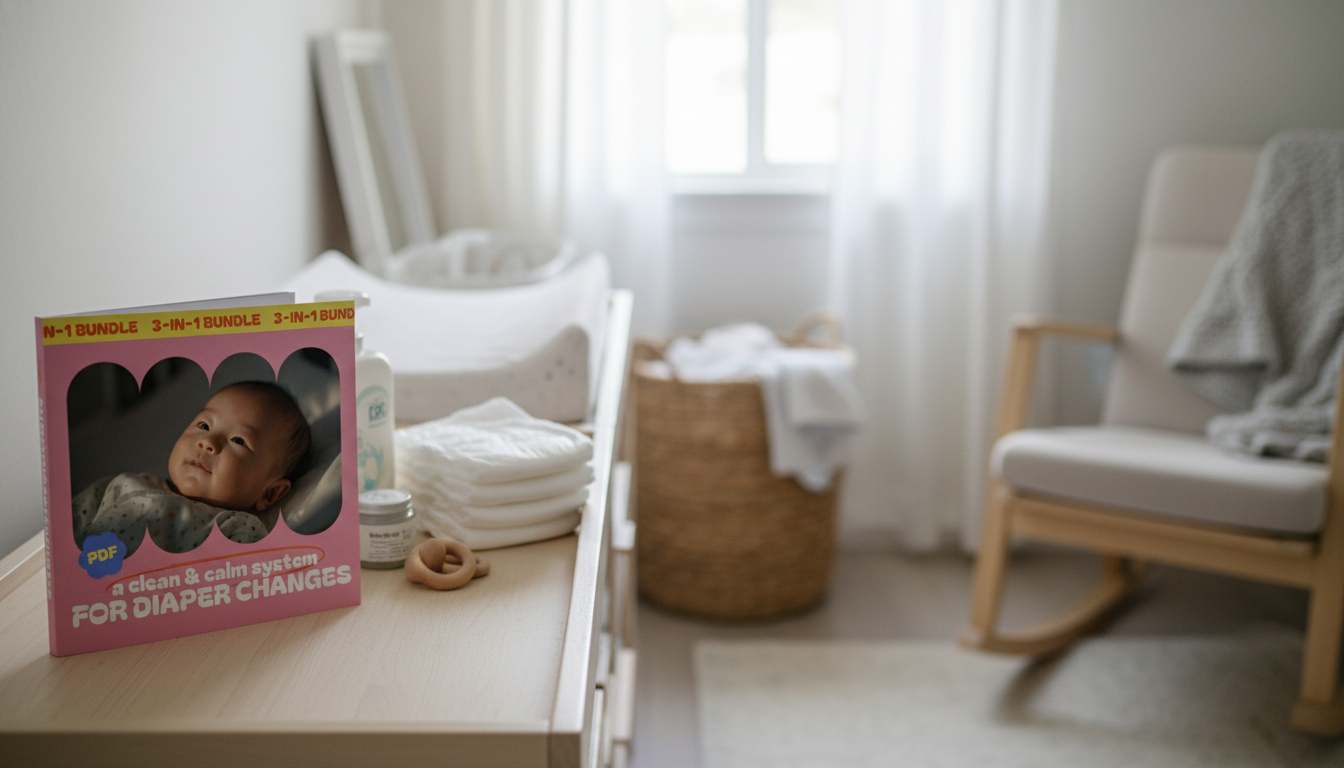
For caregivers who want the same smooth flow every time (and across everyone who helps), the Clean & Calm System for Diaper Changes: 3-in-1 Bundle brings the routine together in one place:
For other everyday parenting routines that benefit from structure, the Peaceful Plates System for Picky Phases can also help bring more consistency to mealtimes when preferences get intense.
Making It Work Across Caregivers
FAQ
How often should diapers be changed?
Many infants do well with diaper changes about every 2–3 hours and immediately after poop to protect skin. Individual needs vary, so follow your baby’s cues and contact a pediatrician if you’re concerned about rash, dehydration, or unusually low wet diapers.
What helps prevent diaper rash during frequent changes?
Use gentle wipes, minimize friction, let skin fully dry, and apply a barrier ointment as needed—especially overnight or during diarrhea. If a rash persists, worsens, or includes open sores, seek medical guidance.
What’s the easiest way to do calm diaper changes at night?
Pre-stage a diaper and wipes, keep the lights dim, and limit talking and eye contact. Move slowly, keep the sequence short and predictable, then reset the station quickly so everyone can get back to sleep.
Recommended for you







Leave a comment