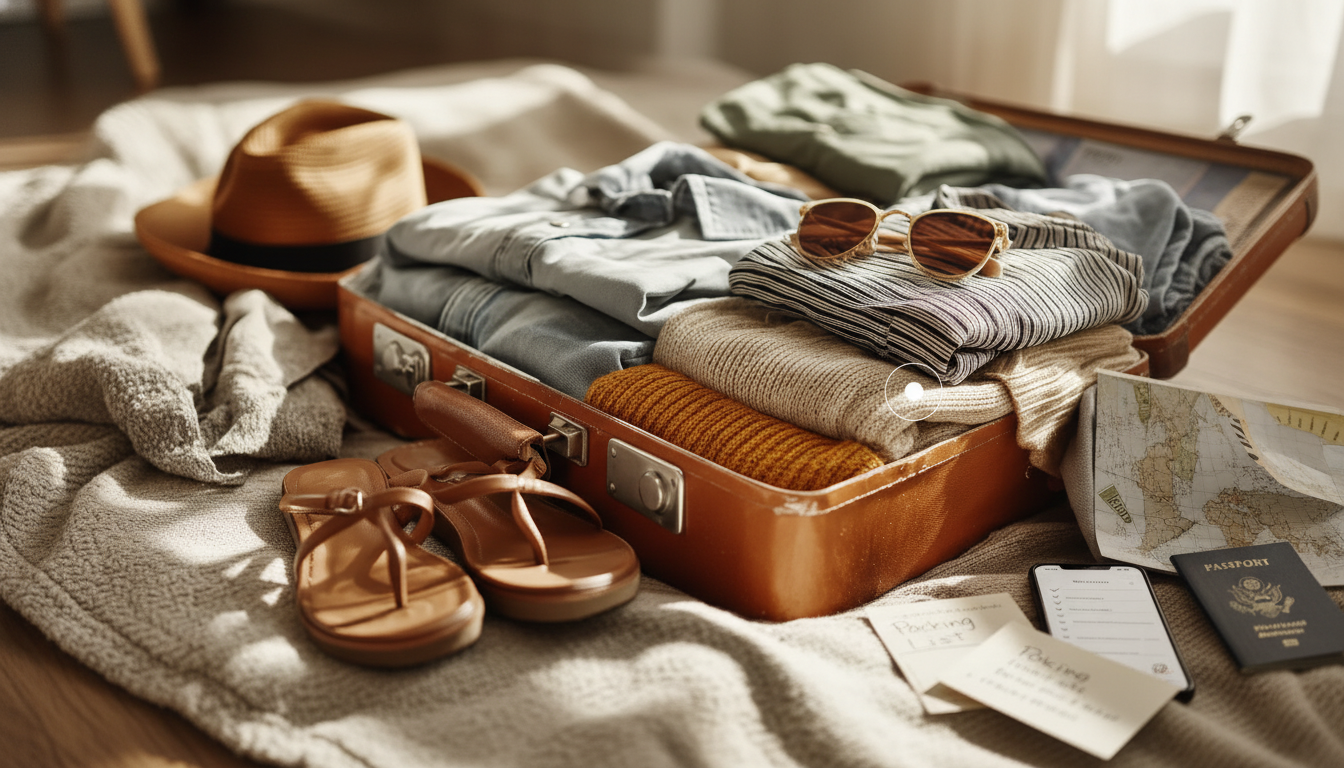
Packing problems usually come down to three things: forgetting essentials, overpacking “just in case” items, and failing to match what’s in the bag to the actual trip plan. This bundle is built to remove the guesswork by turning trip details—destination, weather, trip length, activities, and travel style—into a practical packing list that’s easy to check off and adjust.
If packing always seems to take longer than it should (or you end up buying replacements at the destination), a generator-based system helps you start with a smart baseline and then personalize from there—without ballooning your bag.
For a ready-to-use system, start here: The Ultimate Bundle to Never Guess What to Pack Again – AI Travel Packing List Generator.
| Category | What to include | Common misses to watch for |
|---|---|---|
| Documents & money | ID/passport, visas (if needed), cards/cash, confirmations | Travel insurance details, backup payment method |
| Health & essentials | meds, basic first aid, personal care must-haves | Prescription copies, motion-sickness items |
| Clothing system | core outfits + layers matched to forecast and activities | A packable rain layer, comfortable walking shoes |
| Tech & power | phone, chargers, power bank, adapters as needed | Spare cable, device-specific dongles |
| Activity add-ons | beach/hike/business/gym items based on itinerary | Sunscreen, swim cover-up, small day bag |
| Carry-on basics | items needed if checked bag is delayed | One change of clothes, key toiletries, meds |
A useful mindset shift is treating your bag like a fixed container, not an expandable “maybe.” When you start with a structured checklist, it’s easier to see what’s truly doing a job (warmth, comfort, formality, workout) versus what’s simply adding weight.
For travel-day confidence, it also helps to verify rules for liquids and restricted items before you zip up. The TSA’s “What Can I Bring?” tool is a reliable reference: https://www.tsa.gov/travel/security-screening/whatcanibring/all.
When a destination adds health considerations (vaccines, advisories, or region-specific guidance), checking an authoritative resource ahead of time can prevent last-minute scrambling. The CDC Travelers’ Health hub is a strong starting point: https://wwwnc.cdc.gov/travel.
If pre-trip stress tends to trigger overpacking, pairing a practical system with a steadier routine can help. For a quick mental reset and a simple consistency boost, consider adding Positive Attitude Starter Pack to your pre-travel checklist.
Yes. Use the carry-on essentials subset as the base, then expand the main-bag sections for longer trips, bulkier weather, or specialized activities—while keeping a consistent structure across both bag types.
Build a small capsule around a limited color palette, plan outfits by day and activity, and rely on layers plus re-wear-friendly pieces. If you’ll have laundry access, reduce duplicates and prioritize quick-dry basics.
Have your dates, destination, expected forecast range, activity plan, and any dress codes ready. Add lodging details like laundry access, plus any special needs such as medications, medical documentation, or sport-specific gear.







Leave a comment