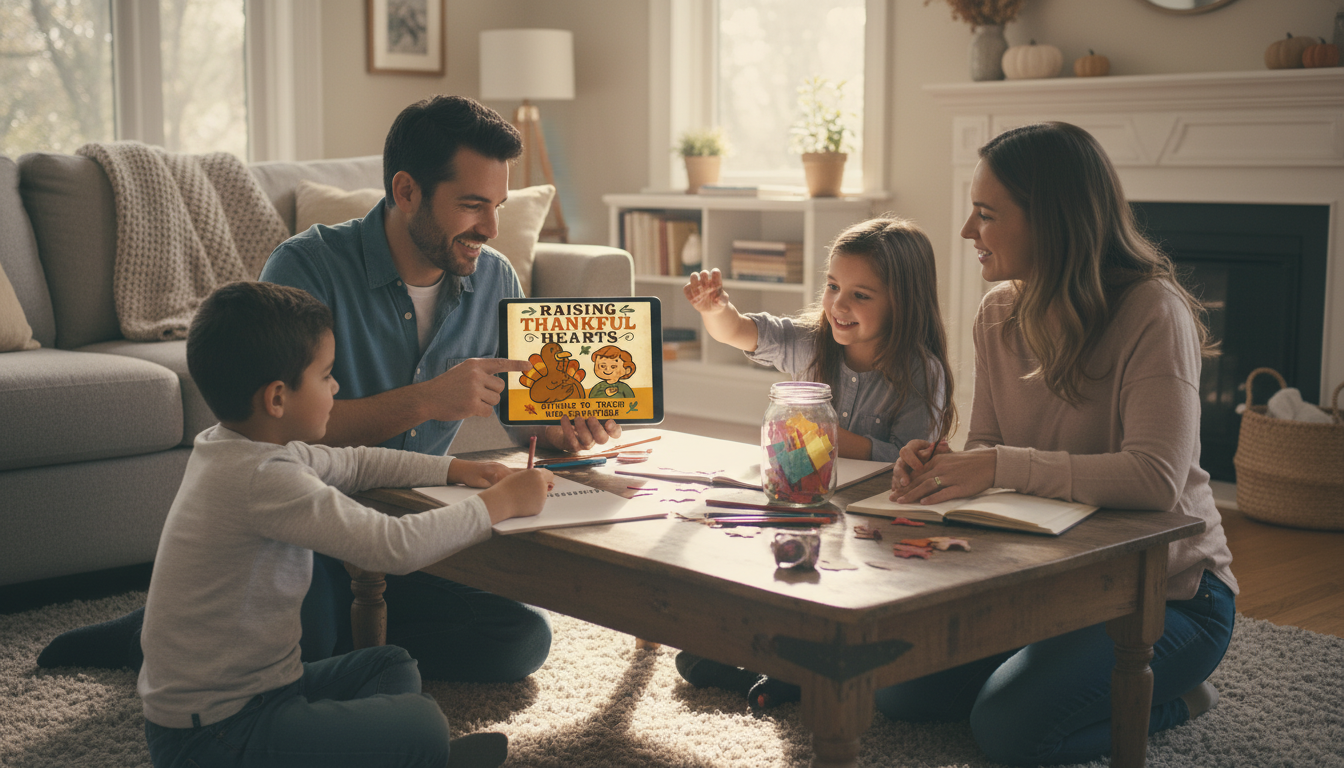
Gratitude grows best when it’s practiced in small, repeatable moments—at the table, on the way to school, or at bedtime. A few consistent rituals can help kids notice what’s going well, express appreciation in age-appropriate ways, and build a calmer family rhythm without adding more to a parent’s plate.
When parents try to “remember to remember,” gratitude can turn into another task that competes with homework, dinner, and bedtime. Rituals remove that friction because the cue is already built in: the same moment (buckling a seatbelt, washing hands, turning out the light) triggers the same tiny action.
Rituals also help kids learn through repetition and modeling. Instead of gratitude feeling performative—something prompted only after a complaint—it becomes part of “how our family talks.” Over time, these short practices build emotional vocabulary: naming people, moments, and supports strengthens perspective-taking and helps kids recognize effort, kindness, and community.
Consistency matters more than length. A 60-second ritual done most days tends to shape habits more effectively than a long conversation that happens once in a while, especially for kids who do best with predictable structure.
Keep it concrete. Invite simple statements like “I’m glad for…” using objects (a favorite cup), pictures, or a one-word prompt (sunny, snack, friend). Young kids often need choices rather than open-ended questions.
Help kids connect gratitude to relationships and actions: “Thanks for helping with…” or “I noticed you tried again when it was tricky.” This is a great age for quick thank-you notes, drawings, or short voice messages to relatives and teachers.
Preteens can handle a little nuance: “What was hard, and what helped?” Encourage genuine detail—specificity keeps gratitude from sounding like a script and helps kids recognize support systems.
Teens often resist anything that feels forced. Offer options: journaling, a private list in a notes app, a meaningful song, or naming supportive friendships and personal growth. The goal is ownership, not a perfect family moment.
Before screens, each person shares one good thing from the day. Keep it short and allow “small wins” (a funny moment, a good lunch, a kind text).
Go around once. Make participation optional for shy kids and normalize “pass” without commentary. Over time, many kids join in once it feels safe.
Spotlight process and kindness, not only outcomes: “I appreciated how you kept trying,” or “Thanks for including your brother.” This teaches kids to value effort and character.
At lights out, name one thing appreciated, then one hope for tomorrow. The pairing keeps it grounded: gratitude and forward-looking calm.
Pick a theme (a person, a place, a small comfort) and take turns. Car rides are naturally contained, which makes them ideal for quick rituals that don’t require eye contact.
| Ritual | Best time | Minutes | Works well for | Example prompt |
|---|---|---|---|---|
| One Good Thing | After school / after dinner | 1–3 | All ages | “What’s one moment you’d like to keep from today?” |
| Thanks for the effort | Dinner / bedtime | 1–2 | Ages 5+ | “Who helped you today, and how?” |
| Gratitude scavenger | Weekend walk / errands | 5–10 | Ages 3–9 | “Find something that makes life easier.” |
| High–Low–Grateful | Bedtime | 3–5 | Ages 6+ | “What was hard, and what supported you?” |
| Message of thanks | Weekly | 5 | Ages 7+ | “Let’s send a quick thank-you to someone.” |
For more background on the benefits and mechanics of thankfulness, the Greater Good Science Center (UC Berkeley) and the American Psychological Association offer helpful, research-informed overviews.
If you want a simple framework that turns “we should do this” into a repeatable pattern, Raising Thankful Hearts: Rituals to Teach Kids Gratitude (digital download) is designed around small, realistic connection points.
A practical use plan: pick one weekday ritual and one weekend ritual, then stick with them for two weeks before adding more. If your family is also navigating mealtime tension, pairing gratitude with calmer routines can help reduce friction; Peaceful Plates System for Picky Phases – a digital bundle for parents is another option families use to create steadier connection around food. For parents who want additional mindset support alongside family rituals, Positive Attitude Starter Pack (3-in-1 digital bundle) can complement a home rhythm focused on noticing what’s good and what’s working.
Keep it optional and allow “pass” without pressure. Shorten it to one prompt and focus on modeling; nonverbal options like drawing or adding a note to a gratitude jar often feel easier.
Consistency matters more than duration. A 1–3 minute practice tied to an existing routine (meals, car rides, bedtime) often works better than occasional longer sessions.
Yes—when paired with validation and gentle prompts. Start with “what helped” or “what felt safe,” avoid forced positivity, and keep the focus concrete and reassuring.




Leave a comment