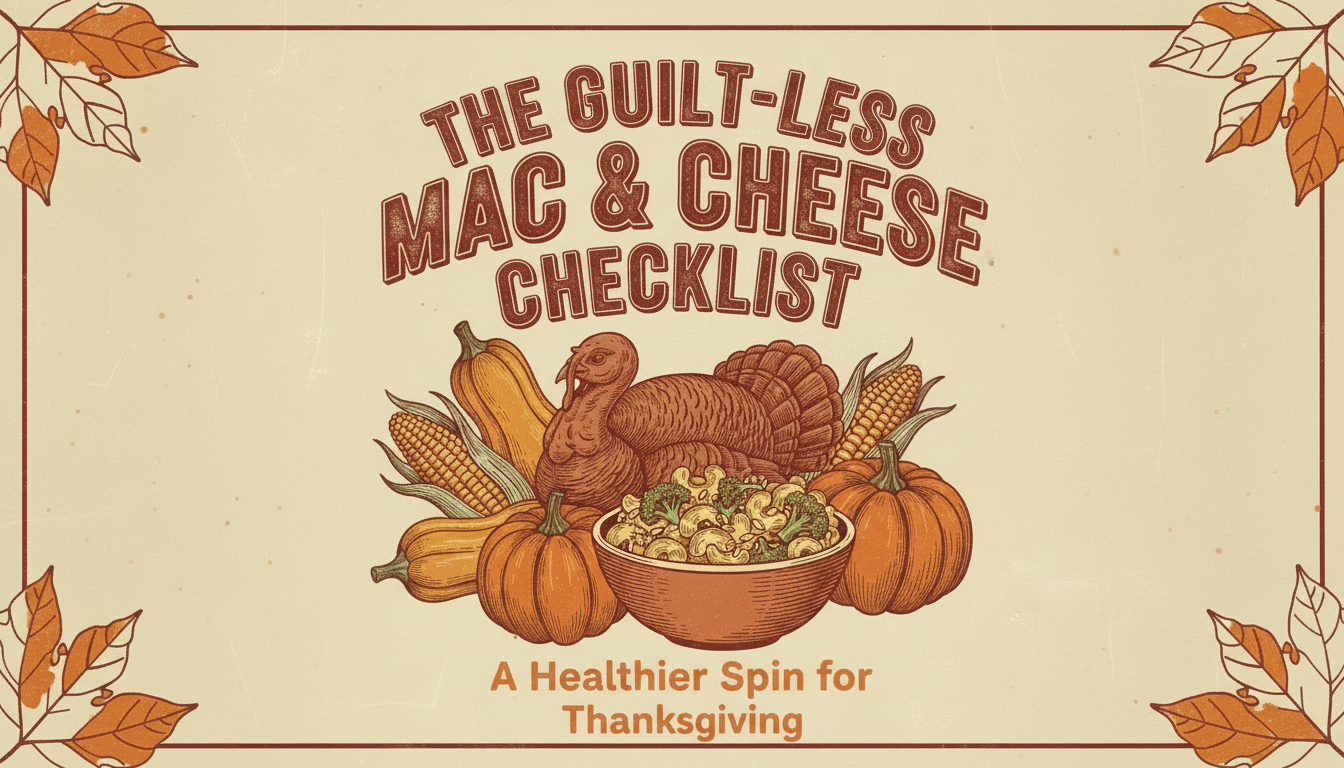
Mac and cheese can still feel like the holiday classic—creamy, cozy, and crowd-pleasing—without leaning on heavy portions of butter, cream, and extra cheese. The easiest way to keep the comfort but lighten the load is to treat the recipe like a checklist: lock in the non-negotiables, choose a couple of high-impact swaps, then follow a few technique rules that prevent greasy sauce and bland flavor.
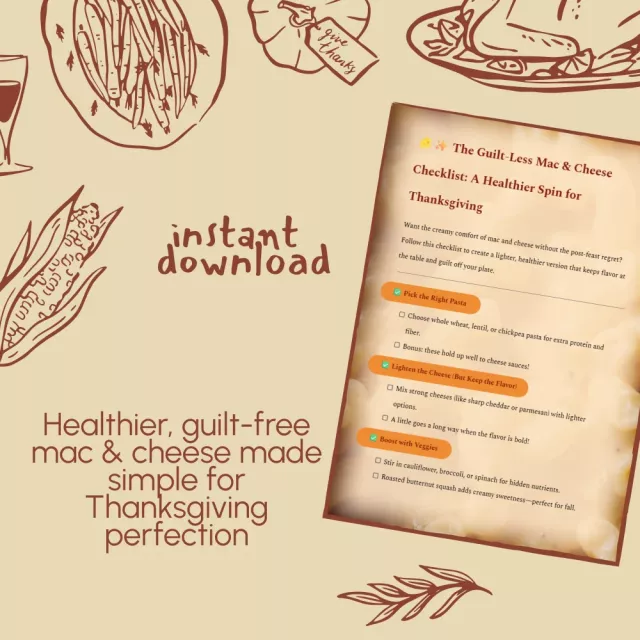
If you like a printable, step-by-step kitchen reference, The Guilt-Less Mac & Cheese Checklist: A Healthier Spin for Thanksgiving (Digital Download) lays out the decisions (pasta, dairy, cheese intensity, veggies, timing) so you can repeat the win every year.
Thanksgiving mac and cheese tends to disappoint when it tries to be “healthy” by subtracting everything that makes it satisfying. Instead, decide what must stay true, then make targeted upgrades.
Try baking in a wider, shallower dish. It naturally encourages smaller scoops while maximizing the crunchy top—so the serving feels satisfying without being massive.
“Lighter” works best when it’s built on flavor concentration, not flavor avoidance. That means bold cheese choices, strategic creaminess, and savory boosters that make reduced-fat versions taste intentional.
Extra sharp cheddar, aged gouda, and pecorino bring more flavor per ounce than mild, younger cheeses. You can often reduce total cheese while keeping the same “mac and cheese” punch.
Keep the sauce gently warm and add these off-heat whenever possible; boiling is usually what turns “creamy” into “grainy.”
Steamed cauliflower blends into a pale sauce nearly invisibly. Butternut squash purée adds an autumn note and an extra-velvety mouthfeel—especially nice alongside Thanksgiving mains.
Cavatappi, shells, and elbows hold sauce in their curves, making each bite feel richer. If you’re considering whole-wheat or chickpea pasta, choose a shape with ridges and test-cook first—some brands soften quickly once baked.
Pull pasta a minute early. It will finish cooking in the oven and stay pleasantly chewy instead of turning soft after it soaks up sauce.
| Classic Choice | Lighter Option | What Stays the Same |
|---|---|---|
| Heavy cream | Evaporated milk or 2% milk + thickener | Creamy mouthfeel |
| Large amounts of mild cheese | Smaller amount of sharp/aged cheese | Strong cheese flavor |
| All butter roux | Partial butter + olive oil, or less fat overall | Silky sauce texture |
| Plain breadcrumbs | Whole-grain breadcrumbs + herbs | Crunchy topping |
| No vegetables | Cauliflower puree or roasted squash blended in | Velvety, cohesive sauce |
For a quick reality check on nutrition changes, ingredient labels can help you compare options side by side; the FDA’s food labeling and nutrition resources explain how to read key numbers. If you like to look up specific ingredients (like evaporated milk or different cheeses), USDA FoodData Central is a solid database.
Holiday cooking gets easier when decisions are made once and reused. The Guilt-Less Mac & Cheese Checklist (Digital Download) organizes the whole process so you can move quickly from pantry to oven.
If you’re also juggling kid-friendly sides or family meals during busy seasons, Peaceful Plates System for Picky Phases (Digital Bundle) can help streamline mealtime decisions so holiday weeks feel less chaotic.
Use stronger flavor per bite: sharp or aged cheese, mustard powder, paprika, and a small amount of parmesan for savoriness. When flavor intensity goes up, you can reduce total cheese without losing that classic comfort-food taste.
Avoid high heat, add finely grated cheese off the heat, and keep the sauce gently warm rather than boiling. If using yogurt or cottage cheese, stir it in at low heat and don’t let the sauce simmer hard.
Yes—assemble it in advance, refrigerate, and bake before serving. When reheating leftovers, add a splash of milk, cover to keep it moist, then uncover briefly to restore a crisp top.






Leave a comment