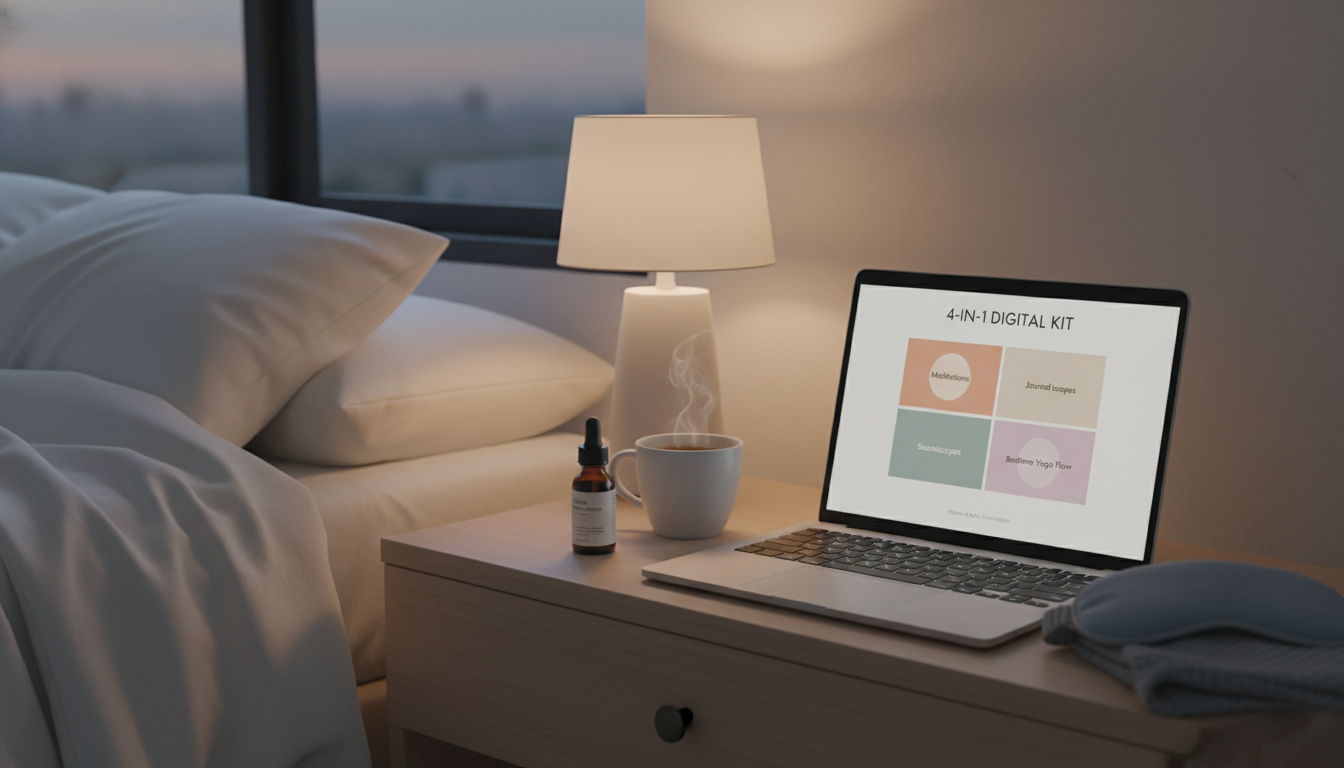
A calming bedtime routine can make the difference between tossing and turning and drifting off smoothly. The Sleep Support Bundle for Falling Asleep with Ease – 4-in-1 Digital Download is built around four practical, repeatable tools designed to help evenings feel less chaotic—even after busy days, racing thoughts, or irregular schedules. Because it’s a digital download, it’s easy to keep on your phone or tablet for consistent use at home or while traveling.
Falling asleep often isn’t about “trying harder”—it’s about giving your nervous system a clear off-ramp from the day. This bundle is designed to support that transition by combining structure and soothing cues that can become familiar over time.
For a helpful overview of sleep-supporting habits and why they matter, see guidance from the CDC and the NHLBI.
On some nights, one calming tactic is enough. On tougher nights, a sequence tends to work better because it addresses the “whole system”—your environment, your body, and your attention. The four parts are designed to layer smoothly without making bedtime feel complicated.
| Time before bed | What to do | Goal |
|---|---|---|
| 60–30 minutes | Dim lights, reduce stimulating content, start the wind-down component | Signal the body that bedtime is approaching |
| 30–15 minutes | Use the physical relaxation technique slowly and comfortably | Lower tension and shift toward calm breathing |
| 15–5 minutes | Do the attention-shifting or mindset practice | Reduce worry loops and mental replays |
| In bed | Follow the structured prompts/routine as needed | Make sleep onset feel simpler and less effortful |
This routine-based approach tends to be a strong match for people who want calmer nights without adding more “work” to their day.
The goal is to make the routine feel almost automatic—something you “step into,” not something you have to perfect. Consistency comes from keeping the steps simple and forgiving.
| Challenge | Why it happens | Adjustment to try tonight |
|---|---|---|
| Racing thoughts | The brain stays in problem-solving mode | Use the attention-shifting practice earlier (15–20 min before bed) |
| Restlessness in the body | Stress tension accumulates during the day | Slow the relaxation technique and lengthen exhales |
| Inconsistent schedule | Bedtime varies widely | Pick a consistent wind-down start time even if bedtime shifts |
| Phone keeps pulling attention | Dopamine-driven scrolling delays sleep cues | Place phone across the room and use the routine prompts instead |
Sleep hygiene basics (like light, noise, timing, and wind-down boundaries) can strengthen any routine-based approach; the National Sleep Foundation provides a clear checklist of habits to consider.
If you want a companion option for relaxation and recovery, consider the Yoga Techniques for Full Relaxation and Recovery: 4-in-1 Digital Download Bundle as a flexible add-on for evenings when your body needs extra unwinding.
Some people feel calmer the first night, but clearer improvements often show up after 1–2 weeks of consistent use as the routine becomes a stronger cue. Keeping the room dark and cool and reducing late-night stimulation can help the tools work better.
Yes—many of the calming components can be reused briefly during nighttime awakenings to reduce alertness and make it easier to settle again. Keep lights low and avoid scrolling so your brain doesn’t shift into “daytime mode.”
It can complement other approaches because it’s routine-based and non-invasive. If you use medications or supplements (or have ongoing insomnia), it’s wise to check with a clinician about interactions and next steps.







Leave a comment