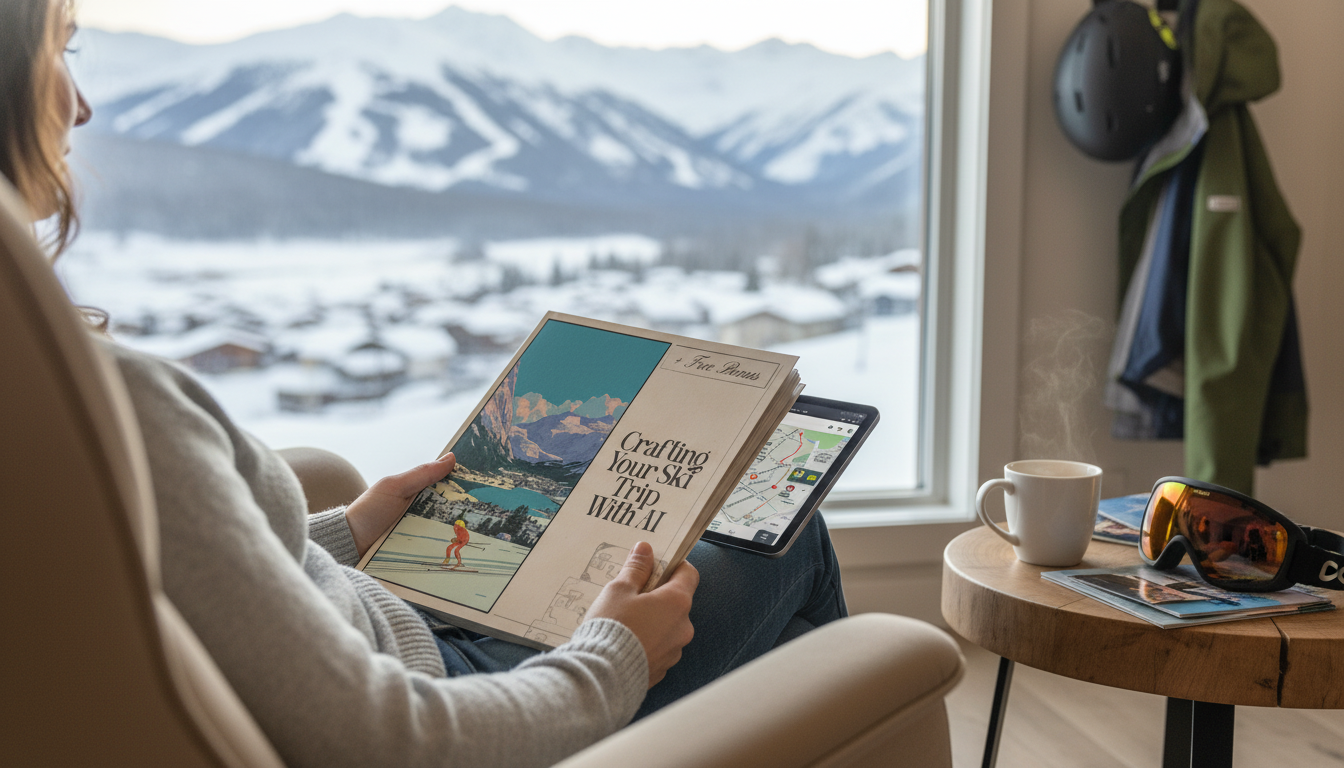
A smooth ski trip comes down to decisions made before the first chairlift: where to go, when to book, what to pack, and how to control costs. With the right AI-assisted workflow, it’s easier to compare resorts, align the trip with snow and weather windows, build a realistic gear plan, and keep a budget that won’t surprise anyone mid-week.
Before anyone starts browsing photos of powder days, build a clear blueprint the whole group can agree on. That one step prevents most “wait, I thought we were…” conflicts later.
If anyone in your crew is new to altitude, plan for a lighter first day and prioritize hydration and sleep; the CDC’s guidance on travel to high altitudes is a helpful reference for safe pacing.
AI is most useful here when it forces apples-to-apples comparisons. Instead of arguing over “best mountain,” evaluate how well a resort matches your people and your logistics.
| Factor | What to look for | Score (1–5) |
|---|---|---|
| Terrain match | Enough runs for every level; beginner zones not isolated | |
| Access | Airport/drive time, winter road closures, shuttle frequency | |
| Value | Pass prices, lodging range, food costs, free parking/shuttles | |
| Weather resilience | Tree skiing, wind holds history, snowmaking coverage | |
| Off-slope ease | Grocery access, rental quality, walkability, nightlife quiet hours |
For weather validation, use an authoritative forecast source like the NOAA National Weather Service to check storm timing, wind, and temperature swings that directly affect lift operations and comfort.
Picking dates isn’t just about snowfall—it’s about price spikes, traffic patterns, and how resilient the mountain is when the weather gets complicated.
| Category | Estimated cost | Ways to lower it |
|---|---|---|
| Flights/Driving | Book midweek, bundle shuttle, share parking, pack light to avoid bag fees | |
| Lodging | Stay 10–20 minutes out, split condos, choose kitchen access for breakfasts | |
| Lift access | Multi-day packs, off-peak days, compare window rates vs bundles | |
| Rentals/Gear | Reserve early online, bring essentials, consider demo only for 1 day | |
| Lessons | Group lessons, half-day options, book early for availability | |
| Food | Grocery run day 1, pack snacks, limit on-mountain meals | |
| Contingency (10–15%) | Set aside upfront; only spend with group agreement |
| Conditions | Recommended setup | Common mistakes |
|---|---|---|
| Cold + windy | Windproof shell, warmer mid-layer, balaclava/neck gaiter, mittens | Thin gloves, no face coverage, cotton layers |
| Snowing (low visibility) | Yellow/rose lens, helmet-compatible hood, waterproof mitts | Single dark lens, no spare gloves |
| Sunny spring | Light mid-layer, vented shell, sunglasses for breaks, SPF | Overheating, forgetting sunscreen, no hydration plan |
If you’re flying with skis or a boot bag, check current rules before you pack; the TSA’s winter sports equipment guidance can help you avoid airport surprises.
For peak weeks and popular resorts, lodging and lift products often price best when booked months ahead, while rentals and lessons should be reserved as soon as dates are firm. For shoulder season, you can sometimes book later, but choose cancellation-flexible lodging to keep options open if weather or snow conditions shift.
Commonly missed items include goggles (or a spare lens), glove liners, a neck gaiter/balaclava, sunscreen and lip balm, hand warmers, and extra ski socks. Buying these on-mountain usually costs more due to limited selection and resort pricing, so packing them upfront protects both comfort and budget.
In-town rentals are often cheaper and may offer faster service, but they require transport planning (especially if you’re shuttling). Resort rentals are convenient for swaps and support during the day, yet they can cost more—reserving early online usually improves both price and availability either way.







Leave a comment