A Cleaning Checklist System for Busy Weeks That Keeps the Whole Home on Track
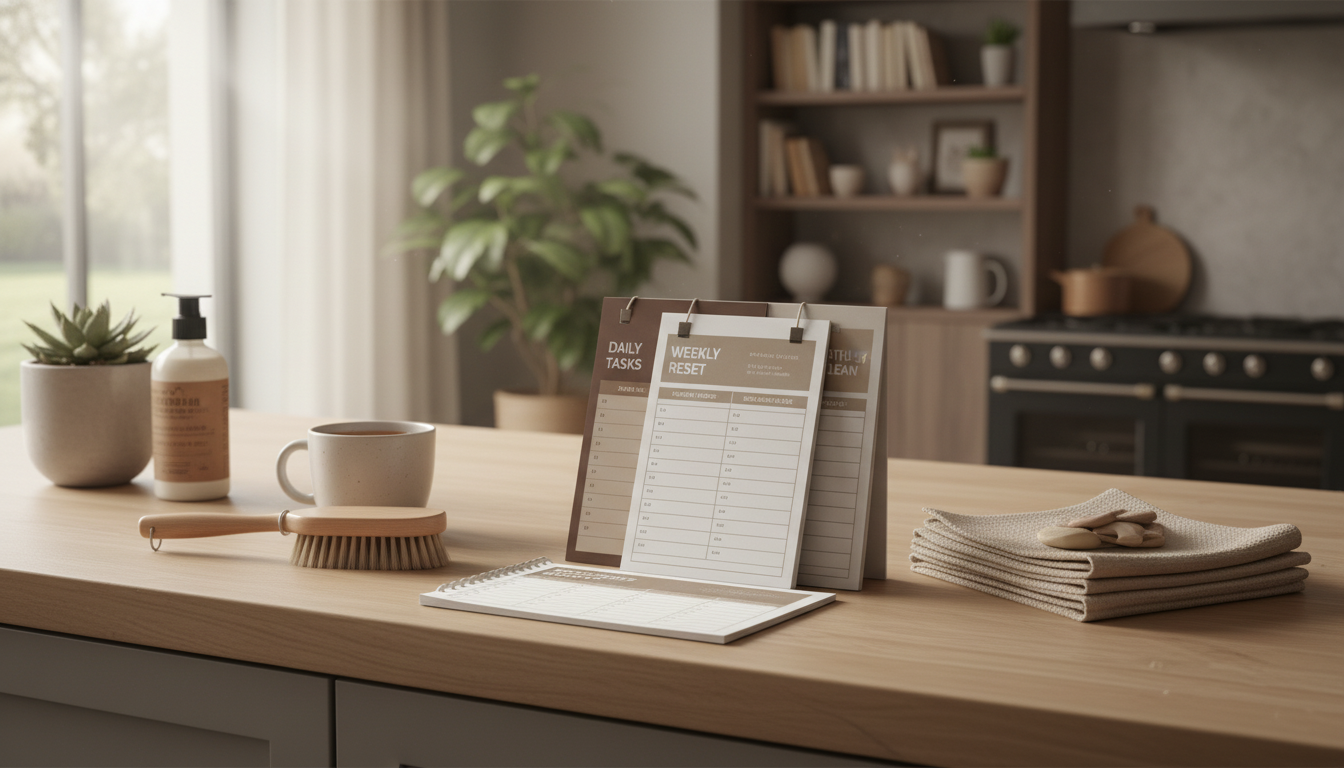
When the calendar is packed, cleaning often turns into a stressful, all-or-nothing sprint. A simple checklist system breaks home care into small, repeatable actions—so the house stays livable even during the busiest weeks, without spending hours deciding what to do next.
Why busy weeks make cleaning feel impossible
Busy seasons don’t just reduce time; they also reduce mental bandwidth. That’s why a home can feel like it falls apart “all at once,” even when the mess built up slowly.
- Decision fatigue: too many “what should I clean first?” moments create delays and skipped tasks.
- Hidden build-up: small messes compound into bigger resets that require more time and energy later.
- Uneven effort: one person becomes the default cleaner when roles and expectations aren’t clear.
- No end point: without a defined “done,” cleaning expands to fill whatever time is available.
What a checklist system changes (and what it doesn’t)
A checklist system isn’t about turning your home into a showroom. It’s about creating a reliable baseline so the week doesn’t spiral.
- Creates a realistic baseline: a minimum clean that protects hygiene and comfort during hectic stretches.
- Turns cleaning into routines: repeatable steps reduce mental load and help habits stick.
- Makes progress visible: checking items off builds momentum and prevents the “nothing got done” feeling.
- Doesn’t require perfection: the goal is consistency and control, not magazine-ready rooms.
For guidance on cleaning vs. disinfecting (and when each matters), refer to the CDC’s cleaning and disinfecting recommendations and the American Cleaning Institute’s cleaning tips.
The 3-part rhythm: daily resets, weekly focus, and monthly catch-up
The easiest way to keep the whole home on track is to separate tasks by frequency. That keeps you from scrubbing everything every weekend—or ignoring everything until it’s overwhelming.
Daily resets (5–15 minutes)
- Dishes (load/run dishwasher or wash the sink-clear minimum)
- Quick counter wipe
- Clutter sweep (one basket, one bin, or one “drop zone”)
- Fast floor spot-check in high-traffic areas
Weekly focus (20–45 minutes)
- Rotate a few deeper tasks (bathroom wipe-down, dusting, bedding, floors)
- Avoid marathon weekends by choosing only one “focus” per session
- Keep the rotation moving even if the order shifts
Monthly catch-up (45–90 minutes)
- Schedule overlooked zones: baseboards, vents, fridge cleanout, cabinet wipe-down
- Use “one zone per month” to prevent grime from becoming a full-day project
- Keep it optional during peak weeks—resume when the baseline is stable
Example checklist structure for a busy week
| Time available |
Daily must-dos |
Weekly focus pick |
Monthly add-on (optional) |
| 10 minutes |
Dishes + counter wipe + 1 basket pickup |
Toilet + sink wipe |
Trash can rinse |
| 20 minutes |
Dishes + sweep high-traffic area |
Shower quick scrub |
Fridge shelf wipe |
| 30–45 minutes |
Dishes + tidy surfaces + quick vacuum |
Bedding change + bathroom reset |
Baseboards in one room |
| Weekend 60–90 minutes |
Full reset in main living area |
Floors + dusting rotation |
Declutter one drawer/zone |
How to set up the system in one evening
You don’t need a perfect plan—just a repeatable one. A single setup session can carry you through months of busy weeks.
- Choose the “non-negotiables”: pick 3–5 items that keep the home functional (for many homes: dishes, trash, counters, toilet, one clutter basket).
- Assign zones: decide who owns which spaces (kitchen, bathrooms, entry, living area) to reduce resentment and “handoff” confusion.
- Pick trigger times: attach resets to habits already happening (after dinner, before bedtime, right after morning coffee).
- Keep tools where the work happens: a wipe kit in each bathroom, microfiber cloths in the kitchen, and a quick-grab vacuum in reach.
- Plan for interruptions: define a “minimum viable clean” for late nights: dishes + trash + a 60-second pickup.
If disinfecting is part of your routine, use products as directed and follow reputable guidance such as the EPA’s information on List N disinfectants.
Making it work with kids, roommates, or partners
A checklist is only as strong as the shared expectations behind it. The goal is fewer reminders and fewer arguments about what “counts.”
- Use clear definitions: “tidy” can mean items in bins, dishes to sink, and surfaces cleared—no guessing.
- Use short sprints: 5–10 minute timers reduce resistance and create quick wins.
- Create a handoff rule: for example, whoever starts the dishwasher also wipes counters, or whoever cooks doesn’t clean floors that day.
- Keep a visible home base: one central checklist location (fridge, entry console, shared app) reduces repeated asking.
- Reward consistency, not intensity: steady small wins beat occasional overhauls that burn everyone out.
Bundle option for structured checklists and home organization
If you want to skip the setup work, a ready-to-use bundle can make the system feel “plug-and-play” for busy weeks.
Cleaning Checklist System for Busy Weeks – 3 in 1 Bundle for Easy Home Organization
For a calmer end-of-day reset when motivation is low, pairing your routine with a short wind-down can help you follow through. Consider: Yoga Techniques for Full Relaxation and Recovery: 4-in-1 Digital Download Bundle
Common sticking points and quick fixes
FAQ
How long should a daily reset take during a busy week?
Plan on 5–15 minutes. Prioritize dishes, a quick counter wipe, trash if needed, and a fast pickup; on late nights, do a minimum version (dishes + 60-second clutter sweep) and stop.
What if the checklist gets skipped for several days?
Restart with the minimum non-negotiables for a day or two, then add one weekly focus task. Postpone monthly items until your baseline feels steady again.
How do you split chores fairly without constant reminders?
Assign zones, define what “done” looks like, and keep one shared, visible checklist so the plan is clear without nagging. Short timed sprints make it easier to follow through consistently.
Recommended for you






Leave a comment