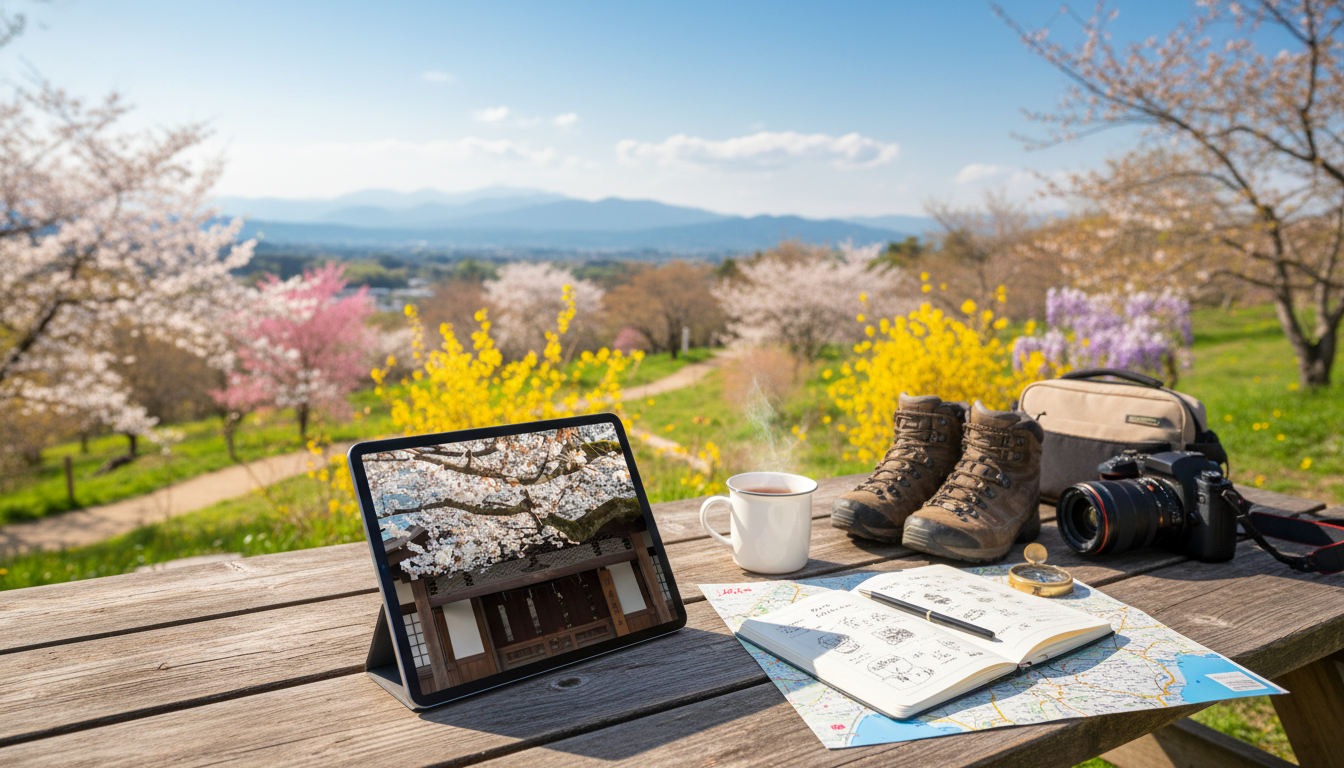
Spring shifts across latitudes and elevations, which means “spring weather” and peak blooms can be timed almost like a moving target. This travel guide bundle is built for planning a season of fresh air, shoulder-season value, and standout nature—whether that means cherry blossoms, wildflowers, or clear, mild hiking days. Use the sections below to map a spring route, align destinations with the right month, and pack for fast-changing conditions.
Spring doesn’t flip on everywhere at once. It rolls—sometimes quickly, sometimes in waves—depending on geography and local patterns.
If you’re planning around blossoms, follow local bloom trackers close to departure. For example, Japan’s sakura timing varies widely year to year and by region, so it helps to cross-check official updates like the Japan National Tourism Organization’s cherry blossom guidance.
| Month | Best-fit regions | What to plan around | Packing note |
|---|---|---|---|
| March | Southern Europe, parts of Japan, US South, coastal Mediterranean | Early blossoms, city breaks, mild seaside hikes | Light layers + rain shell; mornings can be chilly |
| April | Japan/Korea peak bloom areas, Netherlands/Belgium, Spain/Portugal, US Southwest | Tulips and gardens, shoulder-season city touring, desert wildflowers | Comfortable walking shoes; windproof outer layer |
| May | Alps foothills, UK/Ireland, Pacific Northwest, Canada’s milder corridors | Longer daylight, waterfalls, spring hiking, late blooms at elevation | Add warmer mid-layer; expect fast weather swings |
For classic garden energy with a dependable infrastructure for visitors, it’s hard to beat a major botanical institution with clear seasonal highlights and practical visitor info, such as Royal Botanic Gardens, Kew.
Choose a single country or compact area and limit yourself to 2–3 bases. This keeps your schedule flexible for the best bloom day and reduces the chance that a stormy forecast derails the entire trip.
Pair a walkable city (museums, markets, neighborhoods) with a nature-heavy region (coasts, valleys, parks). If rain hits, the city days absorb it; if sunshine arrives, you’ll be glad you saved the longer hikes for your nature segment.
Start in warmer coastal zones, then shift northward or upward in elevation. This “ladder” approach helps extend spring conditions rather than arriving after peak bloom. Keep an eye on seasonal variability basics using a reference like NOAA Climate.gov to understand how patterns can swing from year to year.
Start with the main hub: Chase Spring Around the World – where to go in spring Travel Guide Bundle. Use it as a decision tool first, then as a day-by-day organizer once you’ve chosen your route.
It depends on latitude, elevation, and the year’s weather, but a practical approach is March for early blossoms, April for peak garden scenes in many regions, and May for later blooms and higher-elevation spring. Check local bloom forecasts and park updates 1–2 weeks before departure for the best timing.
For blossom hotspots and school-holiday weeks, booking several months ahead is common, especially for well-located hotels. For less iconic shoulder-season destinations, deals can appear closer in, but refundable lodging and flexible flights help protect your schedule.
Pack a layering system (base, mid, and a light warm layer), a waterproof shell, and comfortable walking shoes that handle wet surfaces. Add a compact day bag so you can adjust to temperature swings and passing showers without heading back to your hotel.







Leave a comment