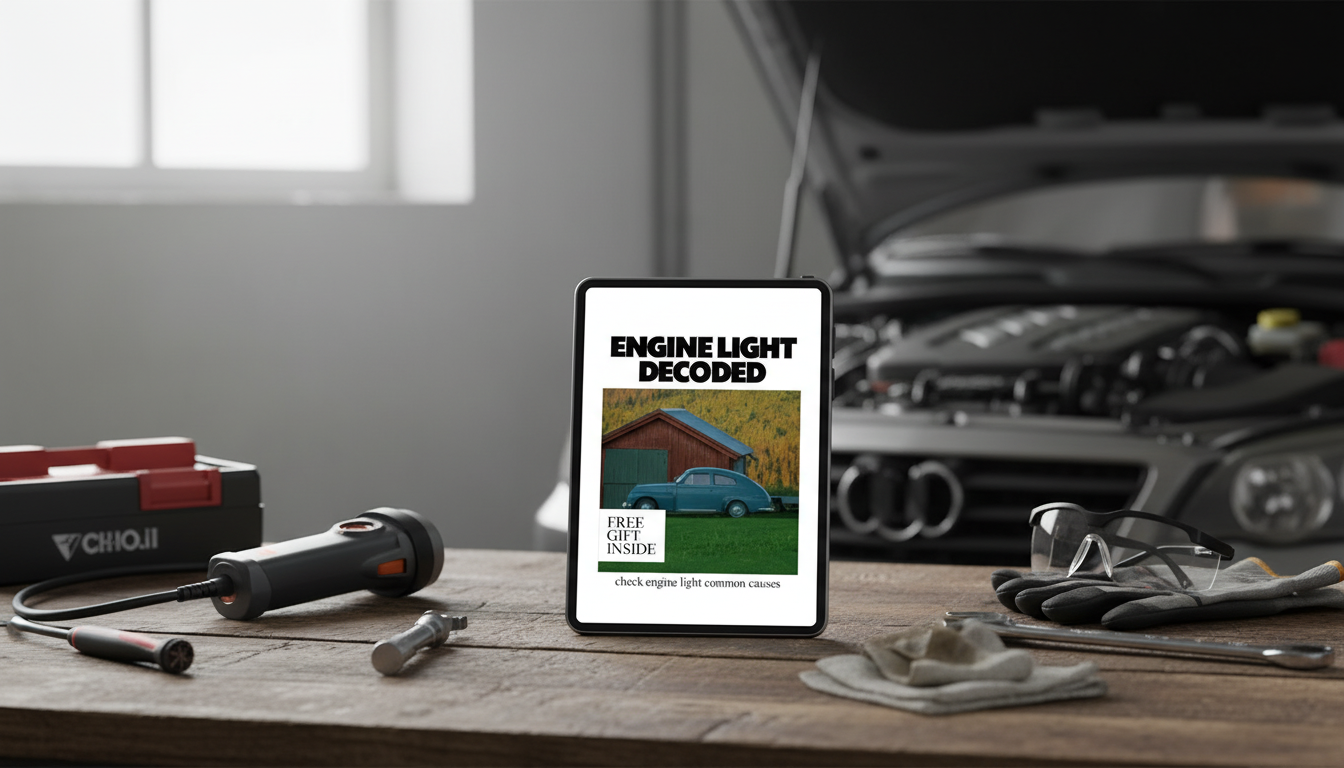
A check engine light can mean anything from a loose gas cap to an issue that needs immediate attention. The key is to slow down mentally before you speed up the guessing. With a quick safety check, a basic OBD-II scan, and a few simple observations, most drivers can make a solid plan: keep driving (carefully), schedule service soon, or stop and tow.
The check engine light is triggered by your vehicle’s onboard diagnostics system (OBD) when it detects a fault that can affect emissions, performance, or sensor readings. In other words: it’s a warning that something is out of spec—not a precise diagnosis.
Before you buy parts or book a tow, do a fast, practical triage. The goal is to prevent expensive damage (and keep you safe) while you gather useful info.
| Light & symptoms | Likely risk level | What to do next |
|---|---|---|
| Flashing light + shaking/misfire | High | Stop driving when safe; avoid further damage; scan codes and arrange service/tow |
| Steady light + car feels normal | Low to medium | Tighten gas cap; scan codes; schedule service if it returns |
| Steady light + reduced power (limp mode) | Medium to high | Drive gently to a safe location; scan codes; service soon |
| Steady light + fuel smell/poor mileage | Medium | Avoid long trips; scan codes; check for EVAP/fuel system codes |
| Steady light + overheating/steam | High | Pull over and shut off engine; do not continue driving; address cooling system first |
If your vehicle is 1996 or newer in the U.S., it almost certainly supports OBD-II. A simple scanner (or Bluetooth dongle with a reputable app) can turn a vague light into actionable information. The EPA provides a solid overview of how OBD systems work here: EPA — Onboard Diagnostics (OBD).
Many check engine lights come from a short list of repeat offenders. A few minutes of inspection can help you avoid “parts cannon” repairs.
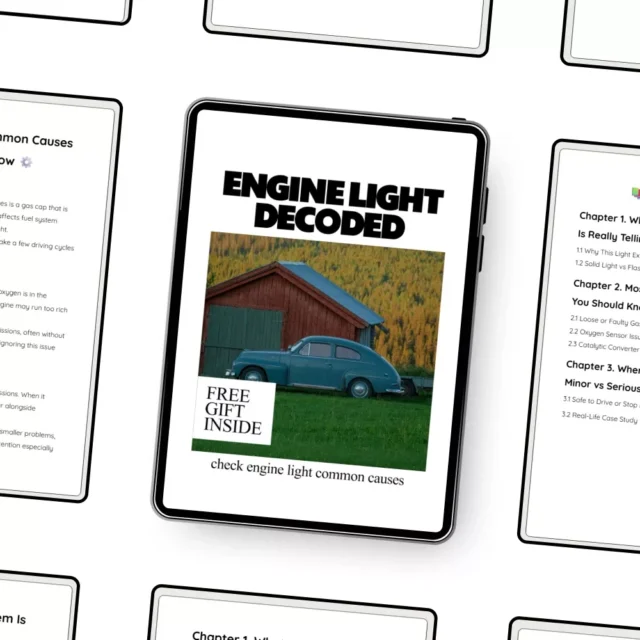
If you prefer a step-by-step reference you can pull up quickly, Engine Light Decoded – Check Engine Light Guide, Car Diagnostic eBook, Engine Warning Light Checklist for Drivers is designed to help drivers organize codes, symptoms, and the right questions to ask before authorizing repairs.
For drivers who want an extra layer of calm after a stressful dashboard warning (and better sleep before the shop visit), the Guided Imagery Toolkit for Sleep and Relaxation – 4-in-1 Bundle for Restful Nights can be a helpful reset while you plan your next steps.
A steady light is often safe for short, gentle driving if the car feels normal, but you should scan codes soon. If the light is flashing or you notice overheating, severe shaking/misfire, strong fuel smell, or major power loss, stop driving when safe and arrange service or a tow.
Yes. The EVAP system checks for fuel vapor leaks, and a loose or damaged cap can look like a leak to the computer. Tighten the cap until it clicks (or replace it if the seal is cracked), and note that it may take a few drive cycles for the light to clear—scanning codes can confirm the cause.
No—save the codes and freeze frame data first because they’re often the best clues. Clear codes after repairs (or when you’re specifically verifying a fix), since clearing can reset readiness monitors and affect emissions-test status.






Leave a comment