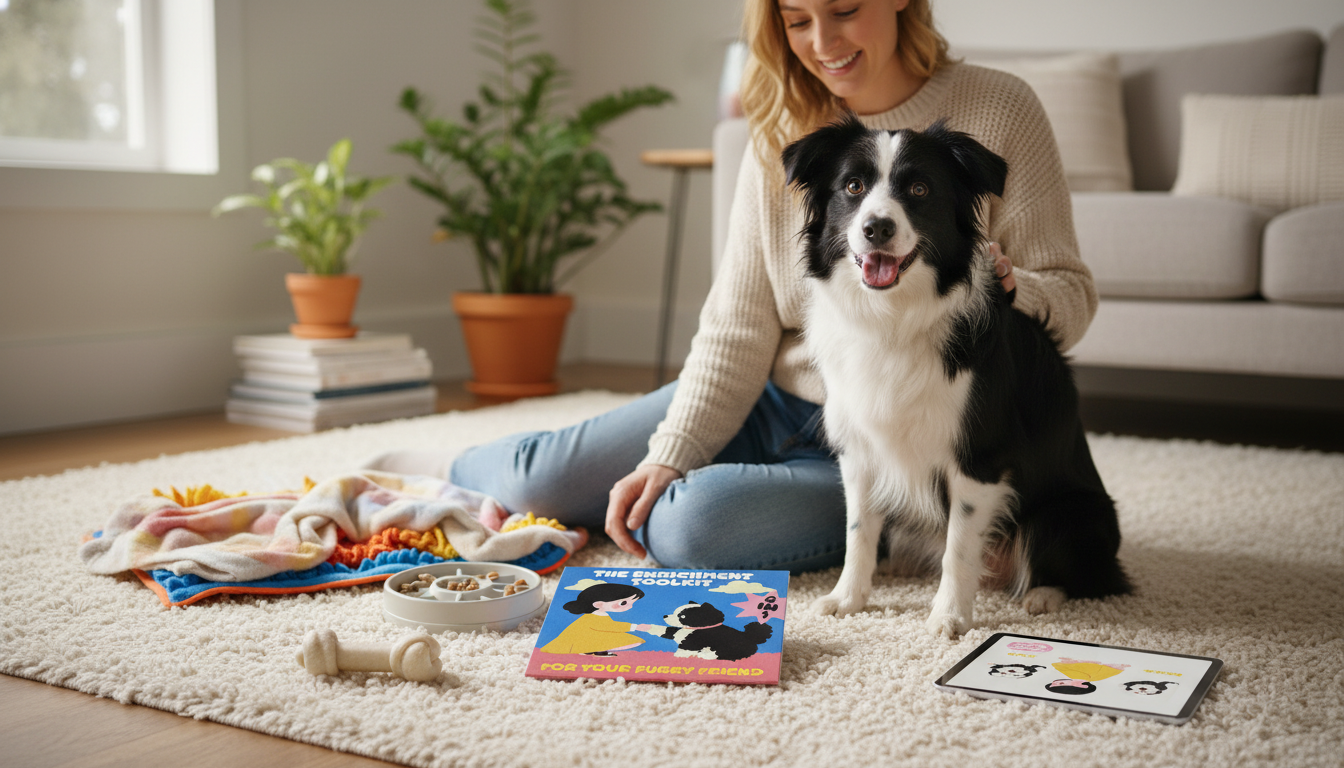
A structured enrichment routine can reduce boredom behaviors, support confidence, and make indoor time feel more engaging. When pets have consistent ways to sniff, forage, solve, and decompress, everyday life often feels smoother—especially on busy days or during bad weather. A simple digital toolkit makes it easier to keep those options ready without constantly hunting for new ideas or buying new toys. For more guidance, see Top 10 free DIY enrichment activities for pets.
Enrichment is more than “something to do.” It supports the instincts pets are born with—sniffing, hunting/foraging, exploring novelty, and problem-solving. Those outlets can translate into calmer behavior at home because energy and curiosity have appropriate places to go. For further reading, see Canine DIY Enrichment – ASPCA.
Variety is a key detail that’s easy to miss. When the same game happens the same way every time, it can lose its effect. Rotating types (scent, puzzle, training, chew, calming) keeps the brain engaged and helps prevent routines from becoming background noise.
Enrichment also doesn’t have to be high-energy. Calm, focused activities—like slow sniffing games or low-pressure puzzles—can be just as valuable as a big play session, particularly for pets that get overstimulated.
For more on the benefits and principles of enrichment, see resources from the American Veterinary Medical Association (AVMA), the RSPCA, and practical brain-game inspiration from the American Kennel Club (AKC).
The Enrichment Toolkit for Your Furry Friend – 4-in-1 Digital Bundle for Pet Enrichment is designed as a system: four downloadable resources that work together as a practical toolkit rather than isolated tips. It helps match activities to real-life constraints like time available, space, and your pet’s preferences.
Instead of relying on memory, you get repeatable support: checklists, planning pages, and ready-to-use activity ideas that can be mixed and matched into short sessions or longer enrichment blocks. Use it digitally on a phone/tablet, or print the pages for quick grab-and-go reference.
| Bundle piece | Primary use | Best for | Typical session length |
|---|---|---|---|
| Guide | Explains enrichment types and how to sequence them | New routines, choosing the right activity | 10–30 minutes to plan |
| Activity ideas | Provides ready options to rotate | Preventing boredom, adding variety | 5–20 minutes |
| Checklists | Tracks what worked and what didn’t | Consistency, pattern spotting | 2–5 minutes |
| Planner pages | Builds a weekly rotation with balance | Busy households, multi-pet homes | 5–15 minutes |
A sustainable plan beats an ambitious plan that falls apart by Thursday. A simple weekly rhythm can look like this:
Keep sessions short at first. Ending while your pet is still interested prevents frustration and helps maintain motivation for the next day. The toolkit’s checklists make it easier to log quick notes like engagement level, difficulty, and how long it took your pet to settle afterward.
A smart rotation also alternates difficulty. Pair an easy “win” day (high success, low effort) with a slightly more challenging day (a new puzzle step, a longer scent search). That balance builds confidence while still providing novelty.
For multi-pet homes, plan separate sessions when needed. This is especially helpful for pets that guard resources or compete around food-based activities. A brief solo enrichment session can reduce tension and make shared time calmer.
Pets aren’t one-size-fits-all. The fastest way to build consistency is choosing activities that fit the way your pet naturally prefers to engage.
Prioritize scent games, scatter feeding, and safe novelty: a new “find it” setup, a different route on a walk, or new textures to investigate. These pets often look “busy” in a satisfying way after a good sniff session—and they tend to settle more easily.
Offer appropriate chew options and supervised shredding outlets. Rotate items so novelty stays high, and choose materials that match your pet’s chew style. If a pet starts hunting for cardboard, shoes, or couch corners, that’s often a clue to add a safer outlet before the habit grows.
When a calmer baseline is the missing piece, consider adding a structured support plan like Pet Stress Relief Toolkit for Happier, Relaxed Pets – 5-in-1 Bundle. Combining calmness-building with easy enrichment choices can help pets recover faster after activity and feel more stable day to day.
Short daily options (about 5–15 minutes) plus a few longer sessions each week work well for many pets. Rotate enrichment types and adjust based on your pet’s engagement during the activity and how easily they settle afterward.
Yes—when you start with calm, predictable activities and keep difficulty low. Avoid high-arousal games at first, then gradually increase challenge while monitoring for stress signals and stepping back if frustration shows up.
The core principles apply to both: foraging, hunting instincts, and problem-solving. Choose species-appropriate activities and materials, keep sessions safe and supervised when needed, and tailor difficulty to your pet’s comfort level.






Leave a comment