Creamy pies, tender cakes, and glossy sauces can still feel classic without dairy. With a few dependable ingredient swaps and a plan for make-ahead prep, dairy-free Thanksgiving desserts can come out rich, smooth, and celebration-ready—no “alternative” vibes required. The goal is to rebuild what dairy usually provides: fat for richness, emulsifiers for silkiness, acidity for lift, and enough structure for clean slices.
“Dairy-free” typically means avoiding ingredients made from milk. The most common baking culprits include butter, milk, cream, half-and-half, sour cream, cream cheese, condensed milk, and ghee. It can also hide in less obvious forms like whey, casein, lactose, and “milk solids,” so label-reading matters—especially when baking for someone with a milk allergy. For a clear overview of milk allergy basics and labeling concerns, refer to Food Allergy Research & Education (FARE).
In shared kitchens, cross-contact is the sneaky problem. Wash mixers, paddles, rolling pins, and pans thoroughly, use separate butter knives and measuring cups, and label dairy-free components (like whipped topping or crusts) so they don’t get swapped mid-rush.
When replacing dairy, aim for these outcomes:
Not every non-dairy substitute behaves the same way, so matching the swap to the dessert is the difference between “pretty good” and “nobody noticed.”
Dark chocolate and cocoa powder are often dairy-free, but many bars and chips contain milk solids. Scan labels carefully so a “dairy-free pie” doesn’t end with a surprise ingredient.
| If a recipe uses | Swap with | Best for | Notes |
|---|---|---|---|
| Butter (1:1) | Plant-based butter sticks | Pie crust, cookies, frostings | Use sticks (not tub) for better water/fat balance |
| Whole milk | Oat or soy milk | Custards, cakes, puddings | Choose unsweetened; oat = creamier, soy = more structure |
| Heavy cream | Full-fat coconut milk/cream | Ganache, mousse, whipped topping | Chill overnight; refined coconut reduces coconut flavor |
| Sour cream | Coconut yogurt | Cakes, quick breads, cheesecake-style fillings | Adds tang and moisture; avoid heavily sweetened varieties |
| Condensed milk | Dairy-free condensed alternative or coconut reduction | Bars, caramel-style fillings | Reduce coconut milk + sugar gently; stir often to prevent scorching |
For a classic texture, use full-fat coconut milk for richness or oat milk for a more neutral creaminess. A small amount of starch (like cornstarch or arrowroot) can help the pie slice neatly. Bake until the edges are set but the center still has a slight jiggle; it will finish setting as it cools.
Let brown sugar and maple deliver the caramel flavor so you don’t miss butter. If adding chocolate chips, verify they’re dairy-free. A plant-based butter stick crust keeps the vibe traditional and flaky.
For food safety reminders on refrigeration timing and temperature, the USDA Food Safety and Inspection Service offers clear guidance.
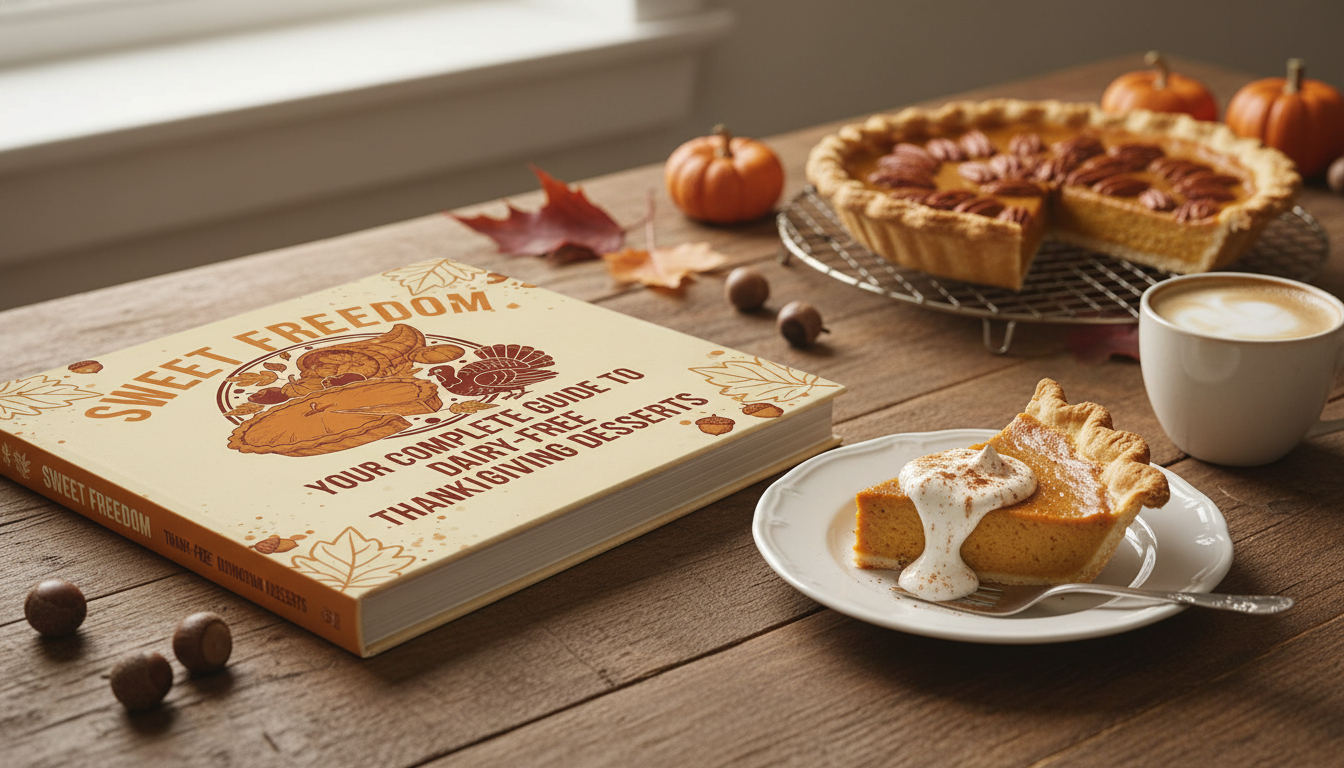
If you want a single, organized collection of dairy-free Thanksgiving dessert recipes plus practical swap guidance and troubleshooting, Sweet Freedom: Your Complete Guide to Dairy-Free Thanksgiving Desserts – Recipes, Tips & Troubleshooting keeps everything in one place for planning and last-minute saves.
For a full holiday vibe beyond the dessert table, add a little after-dinner fun with Creative Games and Challenges for Thanksgiving.
Full-fat coconut milk gives the richest, most traditional custard texture, while oat milk stays creamy with a more neutral flavor. If using a thinner milk, add a touch more thickener and bake gently to avoid a soft or runny center.
Chill coconut cream overnight, and keep your bowl and beaters cold while whipping. A small amount of powdered sugar can help stabilize it, and it should stay refrigerated until serving time.
Hard crusts usually come from overworking the dough, using fat that warmed up too much, or adding excess flour while rolling. Handle the dough minimally, chill it before baking, and use stick-style plant butter for a more butter-like texture.





Leave a comment