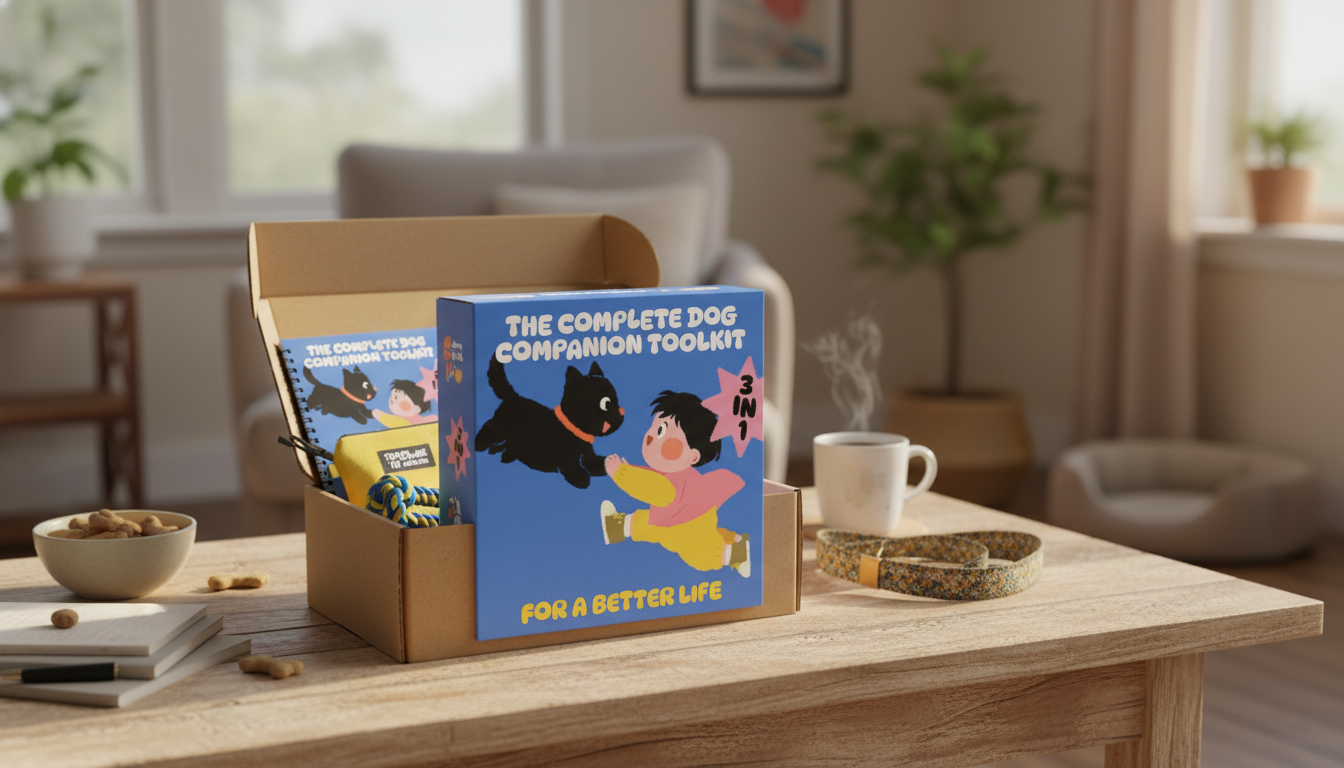
A calmer home, a healthier routine, and a more confident dog usually come from small habits done consistently. The The Complete Dog Companion Toolkit for a Better Life – 3-in-1 Bundle for Dog Owners is built to help organize training, enrichment, and day-to-day care into simple repeatable steps—so progress feels steady instead of overwhelming.
Dogs learn best when expectations are clear and routines repeat. A structured toolkit supports the daily “basics” that often make the biggest difference long-term.
For foundational training principles and humane methods, it’s helpful to cross-reference trustworthy resources like AKC Dog Training Basics and the ASPCA Dog Behavior and Training hub.
This type of system is most useful when life is busy, multiple people share dog duties, or the dog’s skills are still “in progress” outside low-distraction settings.
A 3-part bundle works best when it doesn’t just “teach,” but also makes follow-through easier on real days (workdays, rain days, visitor days). A practical structure typically includes:
If stress or over-arousal is part of the picture (whining, restlessness, difficulty settling), pairing structured routines with calmness-focused resources can help. Consider the Pet Stress Relief Toolkit for Happier, Relaxed Pets – 5-in-1 Bundle as a complementary option for building relaxation habits.
The goal isn’t to “do everything.” It’s to pick one priority, practice it in small doses, and keep the rest of the day predictable.
| Timeframe | Care & routine | Training focus | Enrichment idea | What to track |
|---|---|---|---|---|
| Morning (5–20 min) | Potty, water check, quick body scan (ears/paws/coat) | 1 skill (sit-stay, leash start, name response) | Sniff walk or scatter feeding | Distractions, responsiveness, stool/energy notes |
| Midday (3–10 min) | Short break, calm settling after movement | Impulse control (wait at door, drop it) | Chew/lick mat or safe chew time | Calmness duration, chewing choices |
| Evening (10–30 min) | Walk, dinner routine, grooming touch-ups | Real-life practice (greetings, recall games) | Puzzle feeder, hide-and-seek, “find it” | Triggers encountered, success rate, recovery time |
| Weekly (15–30 min) | Nail/coat care, weigh-in if needed, restock supplies | Review progress and pick next week’s priority | Rotate toys and activities to keep novelty | What improved, what plateaued, next steps |
When a routine includes both skill-building and quality downtime, dogs tend to settle faster and respond more reliably.
For a broader overview of day-to-day responsibilities that support long-term well-being, the AVMA guidance on responsible pet ownership is a solid reference point.
For owners who like keeping life organized in bundles and checklists, the same “small daily actions” approach also appears in other categories. For example, the Positive Attitude Starter Pack | 3-in-1 Digital Bundle follows a similar structure—short steps, repeatable routines, and progress-friendly tracking.
Yes for most households; adjust duration and difficulty. Keep sessions shorter for puppies, prioritize socialization and calm handling, and scale enrichment to safe, age-appropriate options.
Many owners notice small improvements within days (better focus, calmer transitions), while reliable behavior changes typically take weeks of consistent practice. Tracking helps identify early wins.
It can support daily habits and foundational skills, but it doesn’t replace a vet for medical concerns or a qualified trainer/behavior professional for aggression, anxiety, or complex behavior cases.






Leave a comment