Crowded landmarks can be memorable, but the most local moments usually happen elsewhere: a morning market stall, a quiet riverside path, a family-run café that doesn’t advertise in English, or a small museum with no line. Planning a less-touristy Europe trip is less about “secret places” and more about building days around neighborhoods, timing, and simple logistics that keep you calm and curious. Below are practical ways to choose bases, move between regions, eat well without locking your whole trip into reservations, and keep enough flexibility for those happy surprises that feel like real life.
Local-feeling travel is a mindset and a rhythm, not a checklist. It prioritizes daily life—markets, parks, small galleries, local festivals, neighborhood cafés, and long, unhurried walks where you notice how a place works.
It also means building around regions and towns instead of capital-city highlight reels. You might still see a famous cathedral or museum, but you place it inside a day that includes ordinary streets, lunch spots people actually use, and time to sit without a plan.
What it isn’t: racing from sight to sight, changing hotels every night, or hunting “hidden gems” so aggressively that you miss the point. A good rule is one anchor sight per day at most—then leave space for wandering. Respect local rhythms too: quiet hours, dress codes in sacred sites, and reservation culture where it’s standard.
For a 10–14 day trip, two to three bases typically feels best. You’ll spend less time packing and more time learning how a place flows—where people buy fruit, when the streets quiet down, which cafés are full at 8 a.m. Using short day trips instead of constant hotel changes keeps your energy for exploring.
| Base type | Best for | Typical trade-off |
|---|---|---|
| University town | Affordable food, lively evenings, local culture | Term-time crowds and limited summer schedules |
| Regional capital | Museums, transit, day-trip reach | Some tour groups in peak season |
| Coastal small city | Sea walks, seafood, calm mornings | Higher prices in summer and weekend congestion |
| Mountain hub | Hikes, lakes, scenic trains | Weather volatility and early closures off-season |
Instead of designing each day around a list of attractions, start with one neighborhood and let the day build itself. Choose three anchors: a market (or bakery street), a park/viewpoint, and a casual meal spot. The rest becomes connective tissue—small shops, side streets, a church with an open door, a local bookshop, a bench with a view.
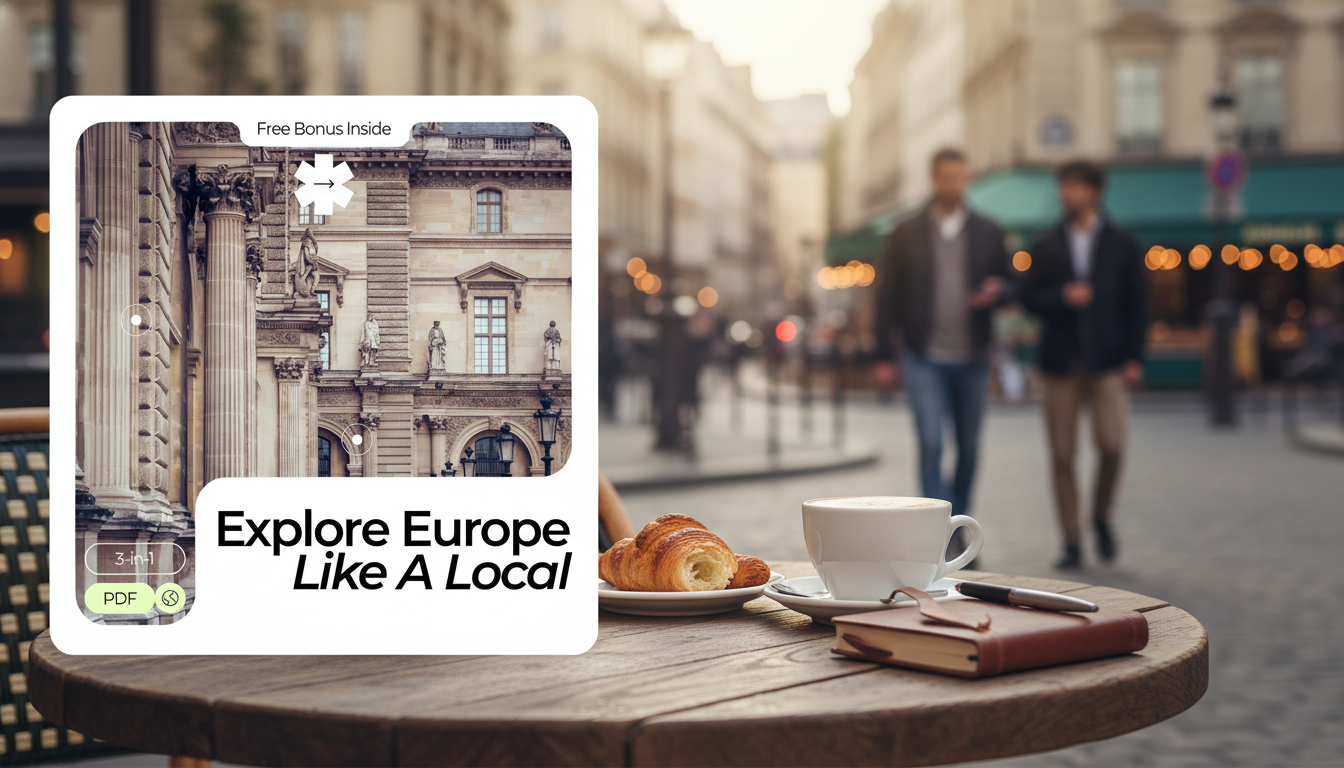
For travelers who want calmer days and better routines on the road, the Explore Europe Like a Local | hidden gems in europe less touristy Travel Bundle is built as a planning toolkit rather than a rigid itinerary. It’s designed to help structure bases, build neighborhood-first days, and keep logistics simple—especially when you’re mixing rail/bus hops, market meals, and flexible exploration.
If you’re traveling with a pet before or after your trip (or handing care off to someone else), the Pet Stress Relief Toolkit for Happier, Relaxed Pets – 5-in-1 Bundle of Guide, eBooks, and Checklist can help you set up calmer routines. For family travel where meals can get complicated, the Peaceful Plates System for Picky Phases – A Digital Bundle for Parents of Picky Eaters is a practical way to reduce friction around eating on the go.
| If the goal is… | This approach helps by… |
|---|---|
| Fewer crowds | Choosing timing, bases, and routes that avoid peak bottlenecks |
| More authentic meals | Leaning on markets, specials, and neighborhood patterns |
| Smoother travel days | Reducing transfers and building days around one area |
| Better memories | Leaving room for unplanned discoveries and local events |
For entry rules, health updates, and cross-border changes, consult Re-open EU. For consumer and travel rights basics within Europe, the European Consumer Centre Network (ECC-Net) is a useful reference. U.S. travelers can also review advisories and destination guidance via the U.S. Department of State – International Travel.
Plan one major sight per day and visit early or late, then wrap it in neighborhood time—markets, parks, and low-key meals nearby. The goal is balance: enjoy the big moments without letting them dictate the whole day.
Wander in daylight in residential areas, verify opening hours on official sites, and read recent reviews for any spot you’re unsure about. Keep a simple safety routine—know your last train/bus, and share your location with someone when heading out of town.
It works for both: first-timers can avoid overstuffed itineraries and build calmer days, while repeat travelers can go deeper with region-based trips and neighborhood routines that feel more grounded than top-10 lists.







Leave a comment