Freeze-Ahead Thanksgiving Checklist: What to Prep, When to Freeze, and How to Reheat
A calm Thanksgiving starts weeks earlier—when the freezer does the heavy lifting. With a freeze-ahead plan, you can spread prep across a few weekends, protect oven space on the big day, and still serve sides that taste freshly made. Use the checklist below to decide what freezes well, how far ahead to prep each dish, and how to reheat everything so it lands on the table hot and flavorful (not sad and “leftover-y”).
The freeze-ahead game plan (so nothing tastes like leftovers)
- Freeze components, not just finished dishes: turkey stock, gravy base, shaped roll dough, pre-chopped onions/celery, and fully assembled casseroles (minus crunchy toppings) give you the biggest payoff.
- Create a “reheat runway”: write down what needs oven space versus stovetop space, then assign time blocks so the oven doesn’t become a bottleneck at 4:30 p.m.
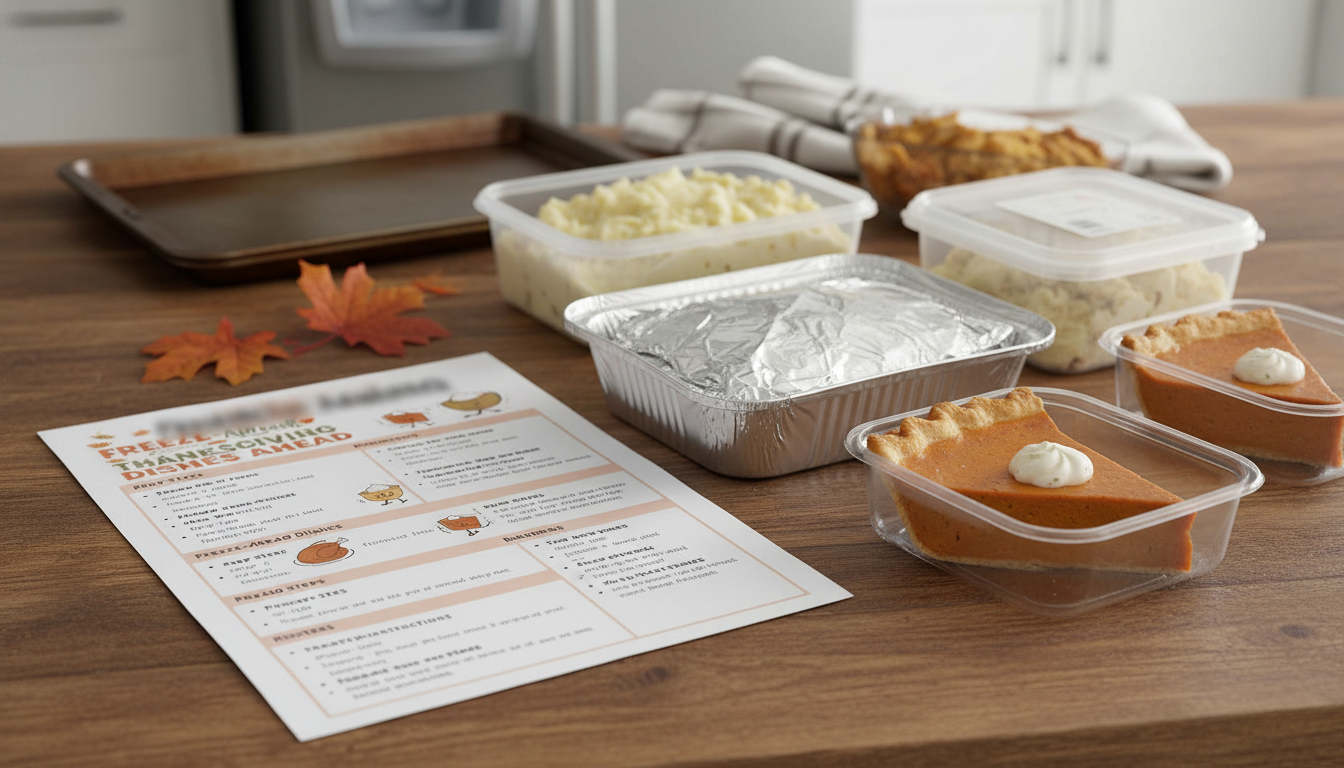
- Label for success: include dish name, date frozen, thaw plan (fridge overnight), and reheat temp/time. Future-you will thank you.
- Portion with purpose: freeze in the same sizes you’ll reheat—family-size pans for big gatherings, smaller containers for faster thawing and easy “backup” servings.
What freezes well (and what to keep fresh)
Not everything belongs in the freezer. Aim for dishes where reheating restores the texture (or at least doesn’t harm it), and keep the crisp, delicate, and airy elements for the finish.
- Freezes well: turkey stock, gravy base, cranberry sauce, dinner rolls (baked or shaped), cornbread, pie dough, many casseroles (stuffing/dressing, mac & cheese), mashed potatoes (with enough butter/cream), soups, compound butters.
- Freeze with caution: creamy sauces that can break (reheat gently and whisk), roasted veggies (they soften), salads (dressings separate), fresh herbs (better added after reheating).
- Avoid freezing: crisp salads, raw potato dishes (can discolor and turn grainy), fully assembled cold platters, and anything meant to be crunchy throughout (save crunch for the end).
- “Finish fresh” elements: herb garnish, fried onions, toasted breadcrumbs, flaky crust edges, fresh whipped cream.
Freeze-ahead suitability guide
| Dish or component |
Freeze-ahead rating |
Best approach |
Reheat or finish note |
| Turkey stock |
Excellent |
Freeze in 1–2 cup portions |
Thaw and simmer; reduce for richer flavor |
| Gravy (base or finished) |
Very good |
Freeze without drippings if possible |
Reheat low; whisk; add drippings day-of |
| Cranberry sauce |
Excellent |
Freeze in airtight container |
Thaw overnight; stir before serving |
| Stuffing/dressing (baked) |
Very good |
Bake, cool, wrap tight |
Reheat covered; uncover to crisp top |
| Mashed potatoes |
Good |
Add butter/cream; freeze in shallow container |
Reheat gently; add warm dairy to loosen |
| Mac & cheese (assembled) |
Very good |
Freeze before baking or par-bake |
Bake from thawed for best texture |
| Dinner rolls |
Excellent |
Freeze baked or shaped dough |
Warm briefly; brush with butter |
| Pumpkin pie |
Good |
Freeze baked, well-wrapped |
Thaw in fridge; serve chilled or room temp |
| Green bean casserole |
Very good |
Freeze base; keep topping separate |
Add fried onions after reheating |
A simple timeline: 3 weeks out to Thanksgiving morning
- 3–4 weeks out: make turkey stock; prep and freeze pie dough; bake and freeze cornbread; portion compound butter (garlic/herb) for later.
- 2 weeks out: assemble casseroles that freeze well (leave off crunchy toppings); freeze gravy base; freeze cranberry sauce.
- 1 week out: freeze rolls (baked or shaped); prep mashed potatoes (or potato mix-ins); test-run one casserole so timing feels predictable.
- 3–4 days out: move key items to the fridge to thaw; confirm pan sizes, oven rack positions, and serving dishes.
- Day before: bake items that are best freshly baked but hold well; set up a labeled “reheat map” with temperatures and start times.
- Thanksgiving morning: reheat in waves (longest first), hold finished dishes warm in a low oven, and add fresh garnishes last.
Freezer-safe packing that prevents freezer burn and soggy textures
Thawing rules that keep food safe and stress low
For food-safety specifics, follow guidance from USDA FSIS on freezing and food safety and safe defrosting methods in USDA FSIS: The Big Thaw.
Reheating tips by category (so everything finishes together)
A master checklist for the week of Thanksgiving
Printable planning support for a smoother holiday
FAQ
How far ahead can Thanksgiving sides be made and frozen?
Most stocks, sauces, and gravy bases can be frozen 2–4 weeks ahead, while casseroles and rolls are typically best frozen 1–2 weeks ahead for peak texture. Label each item with a thaw plan and aim for airtight wrapping to prevent freezer burn.
What Thanksgiving dishes should not be frozen?
Skip freezing crisp salads, dishes built on raw potatoes, and crunchy toppings that need to stay crisp (like fried onions or breadcrumbs). When in doubt, freeze the base and add delicate or crunchy elements fresh right before serving.
What’s the best way to reheat a frozen casserole without drying it out?
For best results, thaw in the fridge, then bake covered with foil until hot in the center, finishing uncovered to brown the top. If baking from frozen, use a lower oven temperature and longer time, and consider adding a small splash of stock or milk when appropriate to keep it moist.
Recommended for you




Leave a comment