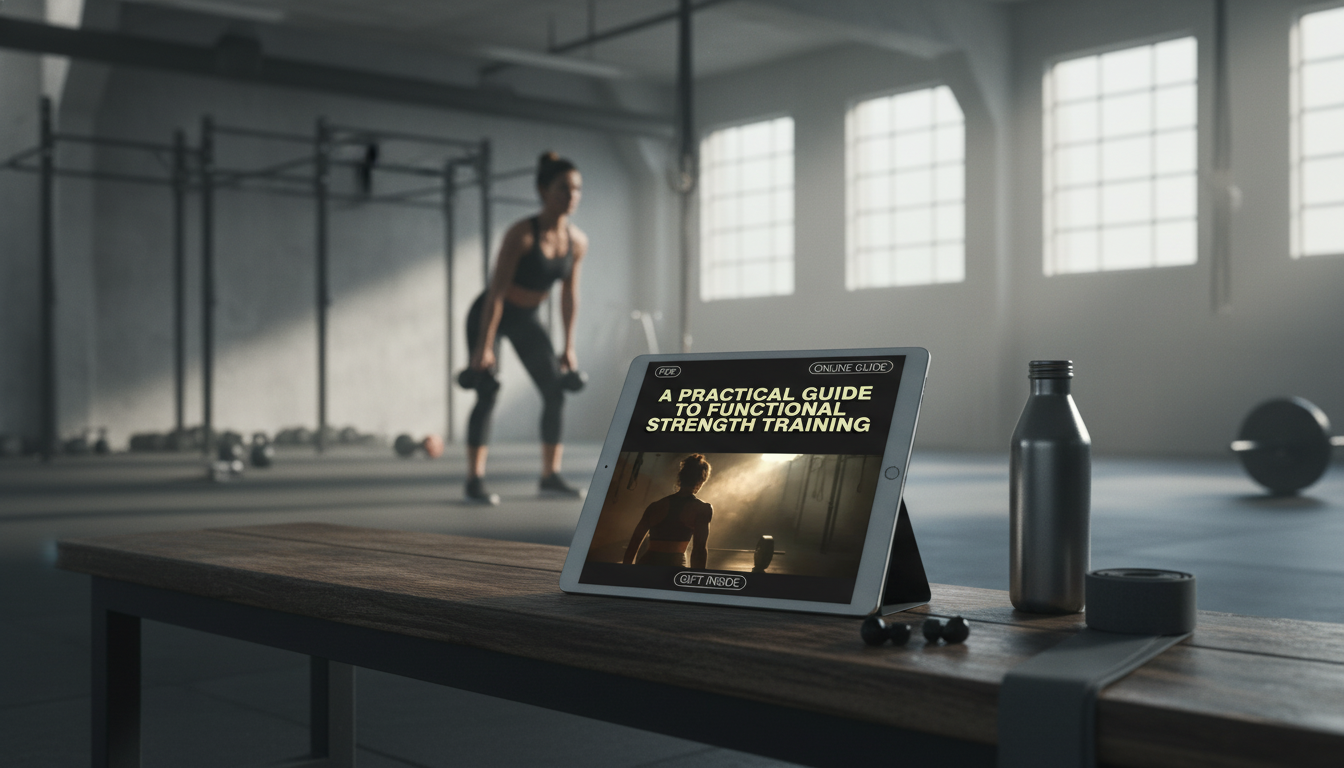
Functional strength training focuses on building strength, stability, and mobility that carries over to everyday movement—lifting, carrying, reaching, walking, and getting up from the floor. Rather than chasing numbers that only matter in one or two gym lifts, a practical functional approach builds repeatable movement skill, joint-friendly strength, and the confidence to move well under load. For more guidance, see [PDF] Pavel Tsatsouline Workout – mail.yany.org.
A Practical Guide to Functional Strength Training | Digital eBook Download for Real Life Strength & Mobility Workouts is designed around the patterns people use daily, with clear progressions and workout templates that work at home or in a full gym. For further reading, see [PDF] Functional Training.
Functional training is “functional” when it improves how you move outside the gym. That typically means training the major movement patterns (squat, hinge, lunge, push, pull, rotate, carry) while keeping joints happy and positions strong.
| Pattern | Examples | Everyday carryover |
|---|---|---|
| Squat | Goblet squat, box squat, split squat | Sitting/standing, getting in/out of a car |
| Hinge | Romanian deadlift, hip hinge drill, kettlebell deadlift | Picking items up, lifting from the floor |
| Lunge/Step | Reverse lunge, step-ups, lateral lunge | Stairs, stepping over obstacles, balance |
| Push | Push-ups, overhead press, incline press | Reaching, pushing doors, placing items overhead |
| Pull | Rows, pulldowns, band pulls | Posture support, pulling objects toward the body |
| Carry | Farmer carry, suitcase carry | Carrying bags, stabilizing the trunk while walking |
A practical functional program works best when it meets you where you are—and gives you a simple way to progress without beating up your joints.
For recovery support on nights when training (or life) keeps your nervous system running hot, consider pairing your plan with Guided Imagery Toolkit for Sleep and Relaxation – 4-in-1 Bundle for Restful Nights.
General resistance training and weekly activity guidance from ACSM and the CDC reinforce a consistent, whole-body approach—built around manageable weekly volume and good technique.
Many people thrive on three repeatable sessions per week: enough frequency to improve quickly, enough recovery to keep joints feeling good.
Useful mobility shows up as cleaner reps, better positions, and less “pinchy” end range—not just longer stretching time. The goal is to build strength in the ranges you need, so your nervous system trusts those positions.
A Practical Guide to Functional Strength Training | Digital eBook Download for Real Life Strength & Mobility Workouts is available as a digital download for building real-life strength and mobility with structured workouts and progressions. It’s best used with a simple routine: three strength-focused sessions per week, plus short mobility work on off days. Pair it with basic tracking (notes app or training log) to monitor load, reps, and how movement quality feels session to session.
Most people do well with 2–4 days per week depending on recovery and schedule. A 3-day template is often a sweet spot, with short mobility sessions on off days to stay loose and reinforce positions.
Yes—when strength work is done through controlled, usable ranges of motion. Tempo reps, pauses, and targeted warm-up drills improve active mobility (control in a position), which is different from simply being more flexible.
No. Many functional programs scale well to home training using bodyweight, bands, dumbbells, or kettlebells, since the core focus is movement patterns and progressive overload rather than specific machines.






Leave a comment