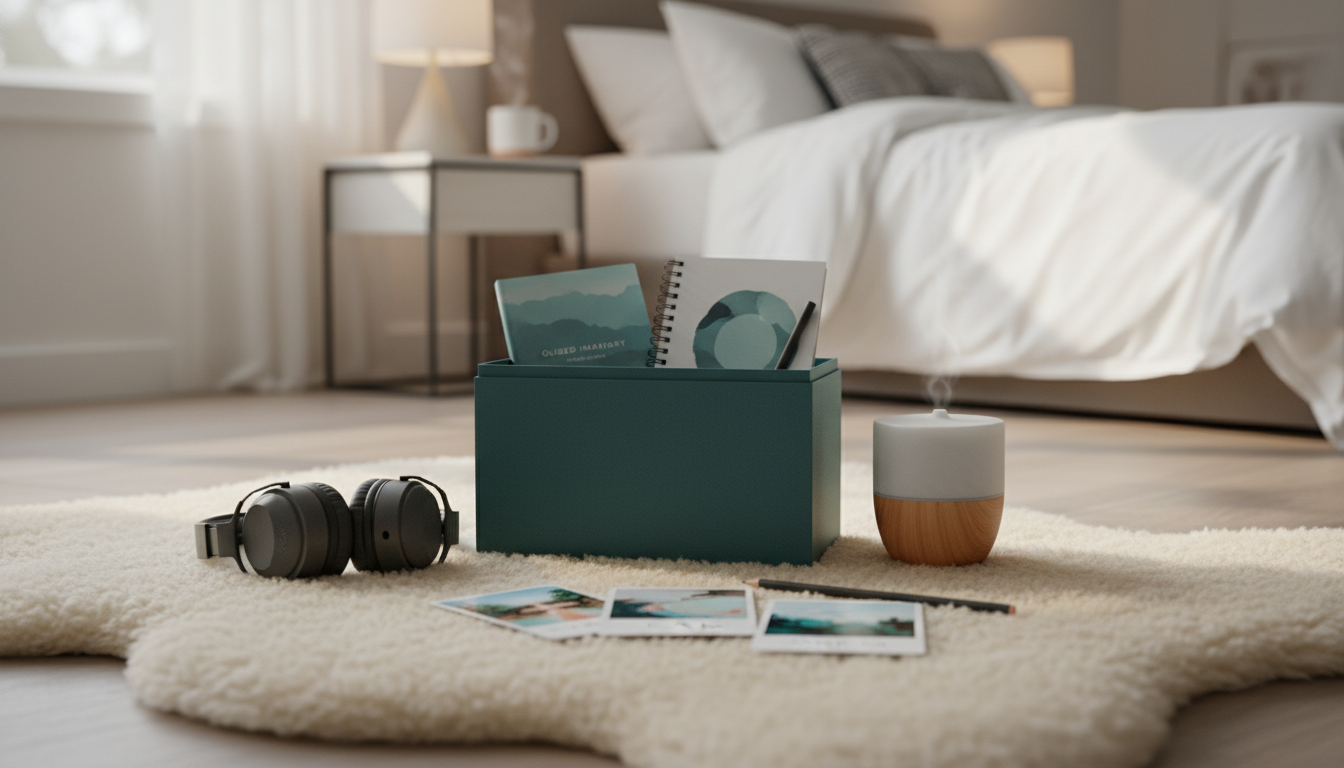
Rest can feel out of reach when the mind keeps scanning for problems and the body stays keyed up. Guided imagery uses calming mental pictures and sensory cues to help shift the nervous system toward a sleep-ready state. This 4-in-1 bundle is designed to fit into a simple nightly wind-down, whether sleep is disrupted by stress, racing thoughts, or difficulty relaxing at bedtime.
Guided imagery is a relaxation technique that invites your attention to land on soothing scenes and sensations, giving the brain a gentle “job” that isn’t problem-solving. Instead of replaying conversations, planning tomorrow, or scanning for what’s wrong, you practice following a calm mental pathway.
Many guided imagery sessions pair soft prompts (visual, auditory, and body-based cues) with slow breathing to encourage a quieter physiological state. That matters because sleep tends to arrive when arousal drops—when breathing slows, muscles soften, and attention stops chasing urgency. For a helpful overview of relaxation practices and why they can support health, see the National Center for Complementary and Integrative Health (NCCIH).
Unlike forcing sleep (which often adds pressure), imagery supports the transition into rest by reducing mental effort. It can also fit alongside basic sleep hygiene habits—like keeping lights low, setting a comfortable bedroom temperature, and following a consistent routine.
The bundle is structured to meet different “sleep moments,” from the first attempt at bedtime to the frustration of waking up at 2:00 a.m. The goal is not perfection; it’s repeatable calm.
| Bundle piece | Best time to use | Goal | Good fit for |
|---|---|---|---|
| Guided imagery session | Lights-out or in bed | Quiet racing thoughts | Overthinking at bedtime |
| Relaxation exercise | 30–60 minutes before bed | Downshift from stress | Busy evenings, late work |
| Short reset practice | After nighttime waking | Return to calm | Middle-of-the-night rumination |
| Longer wind-down flow | Consistent nightly routine | Build a sleep cue | Irregular sleep patterns |
When sleep is inconsistent, the most helpful routine is often the one that’s realistic. This 20-minute plan is meant to feel doable on most nights.
If sleep doesn’t arrive right away, keep the focus on comfort rather than checking the clock. If you wake during the night, a shorter reset practice can help you re-enter calm without turning wakefulness into a full “problem-solving session.” For a clear breakdown of insomnia and when to seek additional support, the American Academy of Sleep Medicine offers practical education.
Guided imagery isn’t one-size-fits-all. The best style is the one your attention naturally accepts as “safe” and easy to follow.
Stress can keep the body in a high-alert state that makes drifting off harder. The American Psychological Association explains how stress affects the body—useful context when you’re trying to understand why “just relax” doesn’t work on command.
Nightly use for 1–2 weeks is a practical way to notice change, especially when you repeat the same track to build familiarity. Even a single session can reduce arousal, but consistency tends to improve how quickly you settle over time.
Use other senses besides sight: focus on sound (rain, waves), touch (softness, warmth), and body cues (heaviness, relaxed jaw). Simple, familiar scenes usually work better than trying to “see” something detailed.
It can be a supportive tool, but it’s not a replacement for prescribed treatment or professional care. If insomnia is chronic, a sleep disorder is suspected, or anxiety/depression feels unmanageable, consult a qualified clinician.







Leave a comment