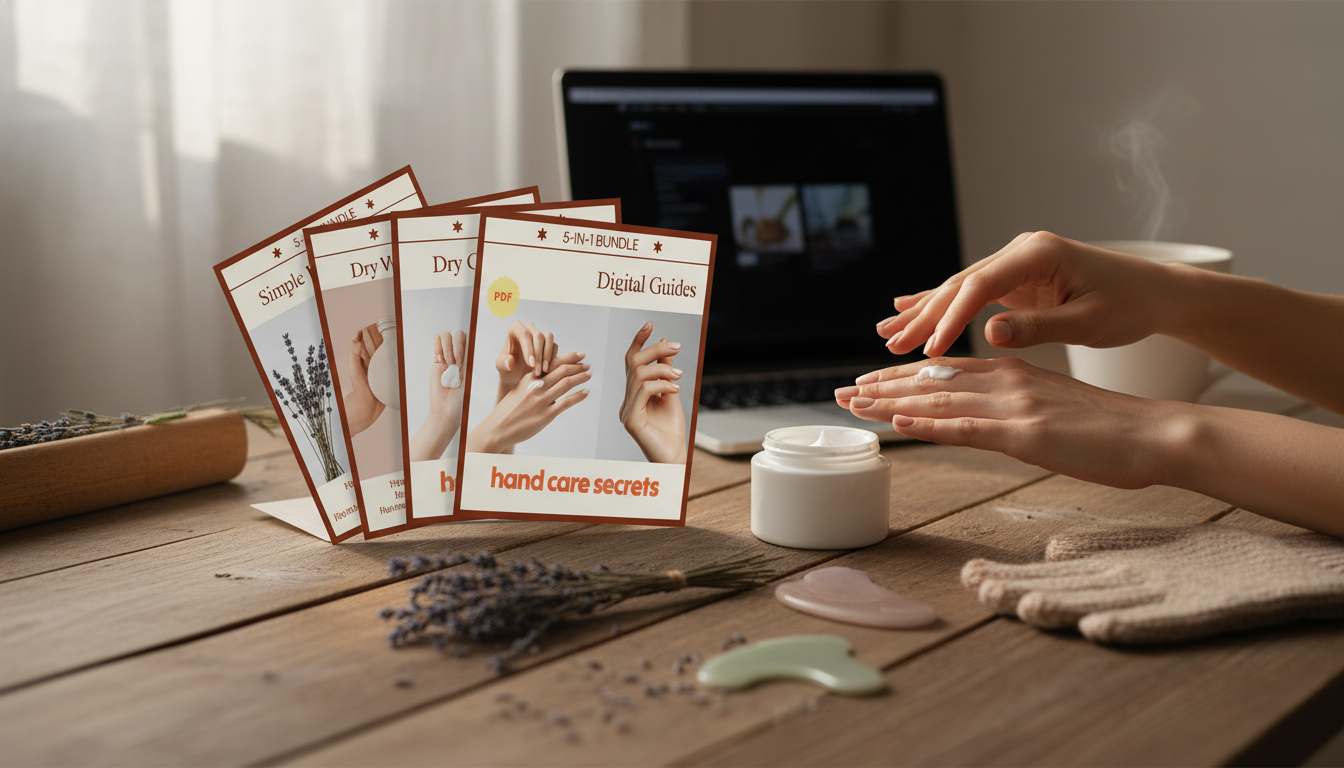
Hands face constant exposure to water, detergents, friction, sun, and dry air—so even a solid body-care routine can leave palms, knuckles, and cuticles looking stressed. A focused plan that combines barrier support, gentle cleansing, and targeted repair can make a noticeable difference. The Hand Care Secrets Bundle gathers practical, step-by-step guidance into a convenient digital set designed to help build consistent habits for smoother skin and healthier-looking nails. For more guidance, see [PDF] Guide to Hand Hygiene Programs for Infection Prevention – ICPSNE.
Hand skin works hard. It’s frequently washed, rubbed, and exposed—often without the same daily protection given to the face. Common reasons hands look and feel dry include: For further reading, see [PDF] MEASURING HAND HYGIENE ADHERENCE – CDC Stacks.
For foundational dry-skin self-care guidance, the American Academy of Dermatology Association has a helpful overview of practical habits that support moisture retention: Dry skin—self-care.
The Hand Care Secrets Bundle – 5-in-1 Digital Guides with Hand Care Tips is built around repeatable routines—because results usually come from what happens after the tenth handwash, not just the first “good” day.
| Concern | Daily focus | 2–3× weekly | When it flares up |
|---|---|---|---|
| Tight, dry hands after washing | Gentle cleanse + moisturize immediately | Add a richer cream at night | Use an occlusive layer and cotton gloves before bed |
| Rough knuckles and texture | Moisturize after every wash | Mild exfoliation (non-scrubbing approach) | Pause exfoliation; prioritize barrier repair |
| Brittle nails and dry cuticles | Cuticle oil + hand cream | Short nail shaping + hydration reset | Protect from solvents; keep nails short temporarily |
| Redness/sensitivity from products | Fragrance-minimized routine and lukewarm water | Patch-test new items | Simplify to basics; avoid irritants until calm |
If hands are dry, the most effective routine tends to be the least dramatic: protect the barrier, reduce unnecessary irritation, and moisturize at the moments that matter most.
If frequent handwashing is part of daily life, it helps to follow evidence-based technique and timing from public health guidance, then pair it with immediate moisturization: CDC: Handwashing—when and how.
Weekly maintenance is where many routines go off track—usually by getting too aggressive. The goal is a smoother look and stronger-feeling skin, not a “scrubbed raw” finish.
For a deeper understanding of why barrier support matters (especially when skin is irritated or sensitized), the National Eczema Association offers a clear explanation of barrier basics: Skin barrier basics.
Comfort often improves within a few days when moisturizing happens right after washing and nighttime repair is consistent. Visible smoothing typically takes a few weeks, depending on how dry the skin is, ongoing exposure (cleaners, cold air), and how steady the routine stays.
Cuticle oil usually goes first to condition the nail fold and surrounding edges, followed by hand cream to hydrate and soften the skin around it. At night, a thin occlusive layer on top can help reduce moisture loss while you sleep.
Avoid hot water, harsh scrubs, strong fragranced products if sensitivity is present, and over-trimming or picking at cuticles. Stick with gentle cleansing, barrier-focused moisturizing, and protective gloves for chores until the skin feels calm again.






Leave a comment