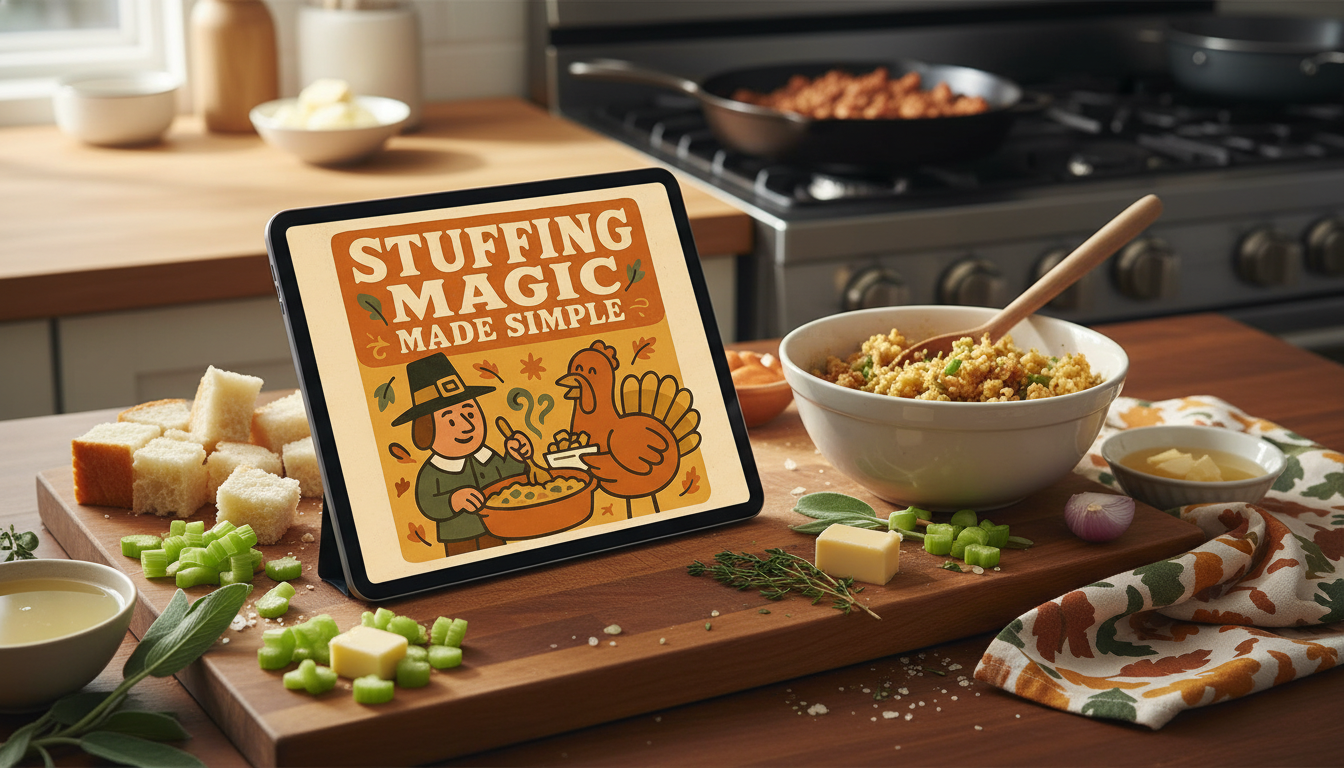
Homemade stuffing is one of the easiest ways to make Thanksgiving feel special, even for brand-new cooks. The best results come from a few simple choices—bread texture, balanced aromatics, the right amount of broth, and a baking method that delivers a crisp top with a tender center. This guide breaks the process into clear steps, offers flavor variations, and includes a quick-reference table for timing and texture so stuffing turns out reliably every time.
Great stuffing isn’t complicated—it’s a smart balance of structure, moisture, and seasoning. When the basics are right, even a simple recipe tastes like it came from a seasoned holiday kitchen.
Use what’s available and adjust with confidence. Stuffing is forgiving as long as you manage moisture and season well.
If you like having a simple blueprint you can repeat every year (with swaps that still feel classic), the Stuffing Magic Made Simple | Ultimate Guide on How to Make Stuffing from Scratch | Thanksgiving Cooking eBook for Beginners & Food Lovers is an easy reference to keep on your phone or tablet while you cook.
Cube the bread and leave it out overnight, or dry it on a sheet pan in a low oven (around 250°F) until the surface feels dry. You’re not making croutons—just removing enough moisture so it can absorb broth later.
Sauté onion and celery in butter until soft and fragrant. Keep heat moderate and avoid heavy browning; you want sweet, savory aromatics that melt into the bread instead of tasting toasted.
Add herbs, salt, and pepper to the pan. Taste the sautéed mixture before it touches the bread—this is the best moment to correct salt and herb balance.
Toss bread cubes with the aromatics so each piece gets coated. A wide bowl helps you mix without crushing the bread.
Pour in warm broth a little at a time, tossing between additions. Stop when the cubes are evenly moistened but there’s no standing liquid. Different breads drink differently, so go by feel—not just a number.
Whisk eggs into a small amount of broth, then fold that mixture into the stuffing. This helps everything set into a cohesive bake that can be scooped neatly (or even sliced).
| Goal | Moisture Level Before Baking | Covered Bake | Uncovered Finish | Doneness Clue |
|---|---|---|---|---|
| Soft and spoonable | Moist throughout, no puddles | 25–35 min | 5–10 min | Steams when lifted; center is hot |
| Classic balance | Moist with a few drier edges | 20–30 min | 10–20 min | Top is golden; edges lightly crisp |
| Extra crispy top | Slightly drier (still cohesive) | 15–25 min | 20–30 min | Deep golden crust; center still tender |
For leftovers, follow trusted guidance on cooling and reheating; the USDA overview is a helpful quick read: USDA FSIS: Leftovers and Food Safety.
If you’re hosting, the best stuffing is even better when the table feels lively. Keep dinner fun with Creative Games and Challenges for Thanksgiving | Fun Thanksgiving Games or Challenges eBook for Families, Friends & Virtual Gatherings—an easy way to fill the time while the casserole finishes crisping.
Sturdy loaves like country bread or sourdough work best because they hold their shape while absorbing broth. Whatever bread you use, dry the cubes first so they soak up flavor without turning gummy; cornbread and gluten-free loaves can work too, but add broth more slowly.
Aim for evenly moistened bread with no standing liquid in the bowl. A good test is squeezing a handful: it should hold together but not drip, and the cubes should still look distinct.
Yes—dry the bread and cook the aromatics 1–2 days ahead, then assemble and bake the day you serve for the best texture. If you bake it fully ahead, refrigerate promptly and reheat until steaming hot before serving.





Leave a comment